
Last updated October 30, 2026
 Water damage drying
 Fire & smoke cleanup
 Mold remediation
 Storm response
 Sewage cleanup
 Reconstruction
Free visual inspection and a written scope of work before any mitigation begins - photos, moisture readings, and drying logs go in your claim file
The scope we write is the scope we bill. Anything new gets shown to you, in writing, before we touch it.
Get your free estimateThe Complete Water Damage Restoration Guide for Costa Mesa Homeowners
Drywall feels dry within 24 to 48 hours of water exposure, but the structural cavity behind it can hold dangerous moisture levels for 7 to 10 days. Most Costa Mesa homeowners never discover this because nobody showed them how to read a moisture map. This guide walks through the full technical sequence of Water Damage Restoration services in Costa Mesa, from the first minutes of an emergency to the final inspection, so you understand what’s happening behind your walls and what questions to ask the people you hire.
Restoration work we handle
Quick Answer
Water damage restoration in Costa Mesa follows a three-phase sequence: emergency mitigation (stopping the water source and extracting standing water), structural drying (bringing building materials to IICRC S500 moisture targets), and reconstruction (restoring affected surfaces to pre-loss condition). The restoration standard that matters is dry to specification, not dry to the touch. Hiring an IICRC-certified specialist with industrial-grade drying equipment ensures the cavity inside your walls actually reaches the moisture content required to prevent mold and material degradation.
Table of Contents
- How Costa Mesa’s Coastal Climate Changes Drying Timelines
- The Three-Phase Restoration Sequence (And Why Skipping Validation Voids Claims)
- What an IICRC S500 Drying Goal Actually Means
- Why Category 2 Water Gets Misclassified in Costa Mesa’s Older Housing Stock
- The Insurance Documentation Checklist Adjusters Actually Require
- How Industrial Drying Equipment Changes Outcomes
- Common Mistakes to Avoid
- When to Call a Professional
- Frequently Asked Questions
- The Bottom Line
How Costa Mesa’s Coastal Climate Changes Drying Timelines
Costa Mesa’s marine layer is not just fog that burns off by noon. It’s a persistent atmospheric condition that affects how water evaporates from building materials. When outdoor relative humidity sits at 70 to 85 percent during much of the year, the air simply cannot absorb much more moisture. That means water in drywall, framing lumber, and subflooring has to be pulled out mechanically rather than air-dried passively.
Property managers and homeowners who have dealt with water damage in Riverside or Temecula often expect the same drying timelines they experienced inland. Those expectations break down in Costa Mesa. Inland, a flooded bedroom might dry in 3 to 4 days with fans and open windows. In Costa Mesa’s coastal air, the same room can take 5 to 7 days under controlled drying conditions, and longer if someone runs residential fans without dehumidification.
The relevant difference is vapor pressure. Warm air holds moisture. When the air indoors is already humid from the marine layer, evaporation from a wet wall slows down because the air cannot take on much additional water. Professional restoration in Costa Mesa uses refrigerant or desiccant dehumidifiers to create artificially dry air in the affected space, lowering the vapor pressure so moisture from structural materials migrates outward. That’s the technical reason equipment settings differ from inland jobs, and it’s why a restoration specialist familiar with Costa Mesa’s microclimate matters.
Neighborhoods closer to the coast, like Mesa Verde and College Park, feel this more than areas slightly inland like portions of Eastside Costa Mesa near the Newport Beach border. The difference is measurable even across a few miles. A drying plan that works in one part of the city may need adjusted dehumidification capacity in another.
The Three-Phase Restoration Sequence (And Why Skipping Validation Voids Claims)
Water damage restoration follows a defined sequence. Each phase has a measurable endpoint, and moving between phases without validating the previous phase’s completion is where most disputes with insurance carriers begin. Here is the sequence as it should be executed:
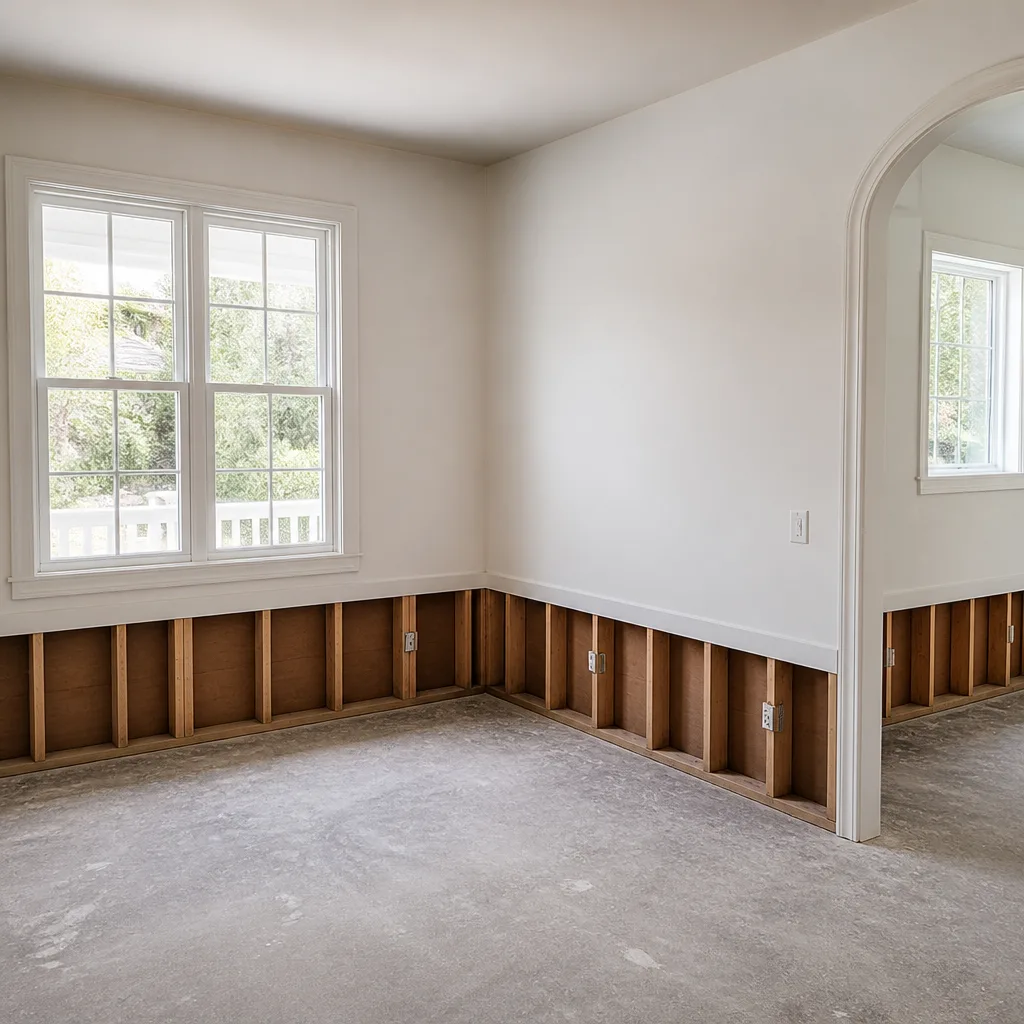
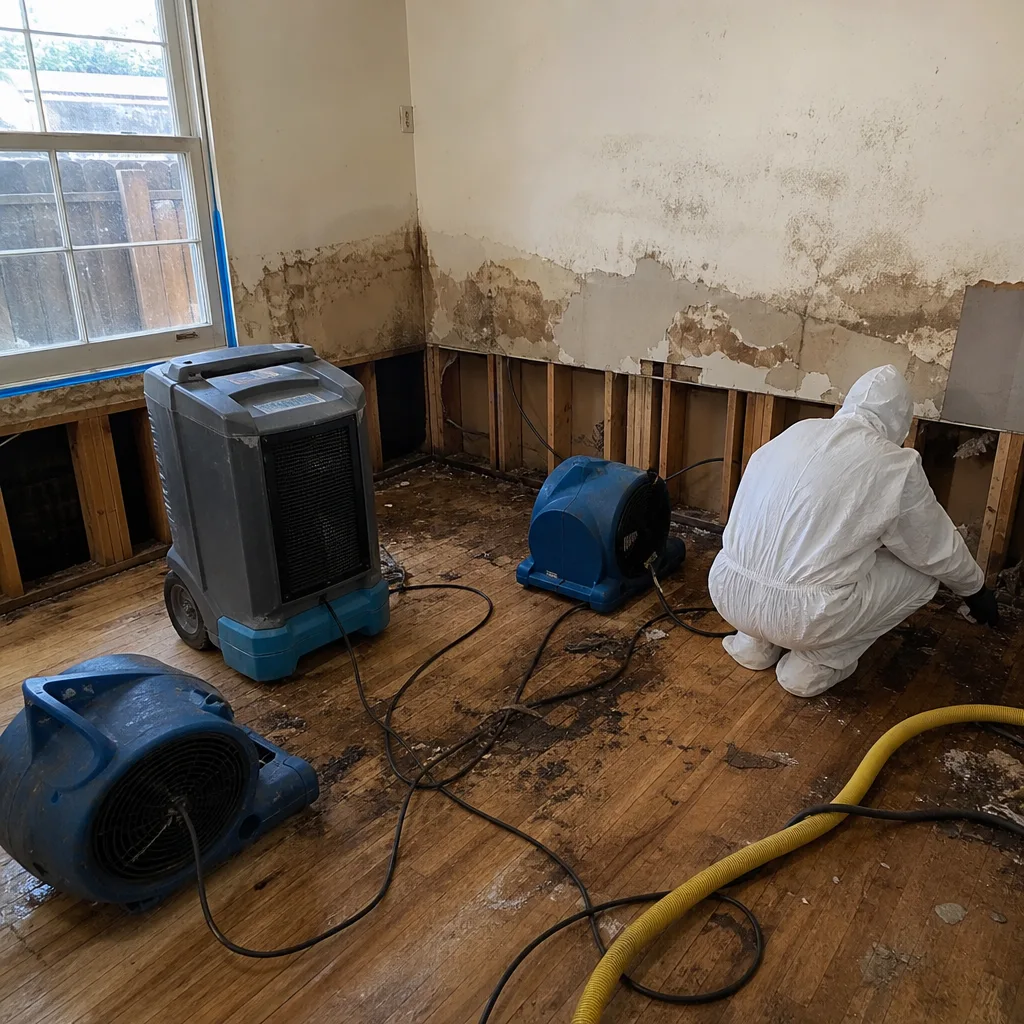
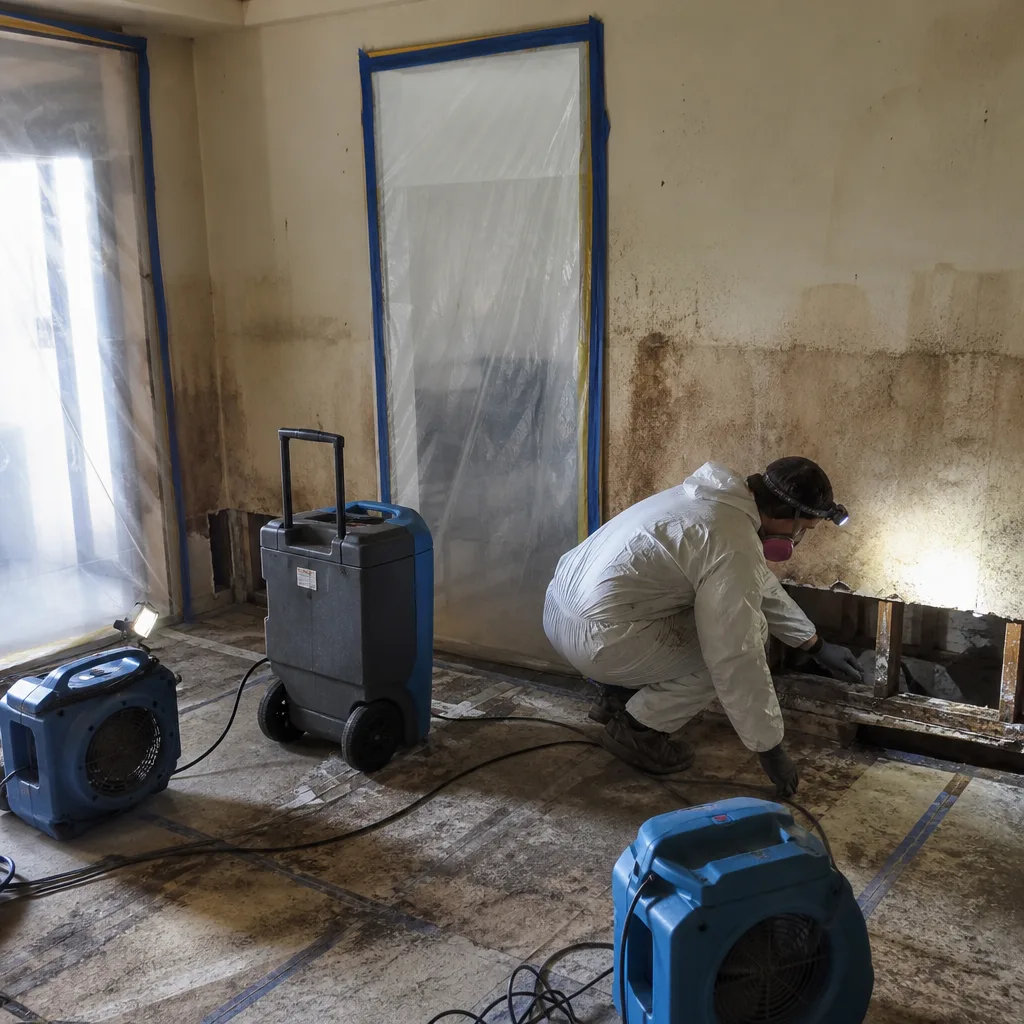
- Emergency mitigation. This covers everything from the moment water is discovered until standing water is extracted and the source is stopped. It includes shutting off the water supply, extracting visible water with truck-mounted or portable extraction units, removing saturated materials that cannot be dried (like soaked carpet pad or compromised drywall), and setting up containment to prevent contaminants or moisture from spreading to unaffected areas. In Costa Mesa, this phase usually takes 1 to 2 days.
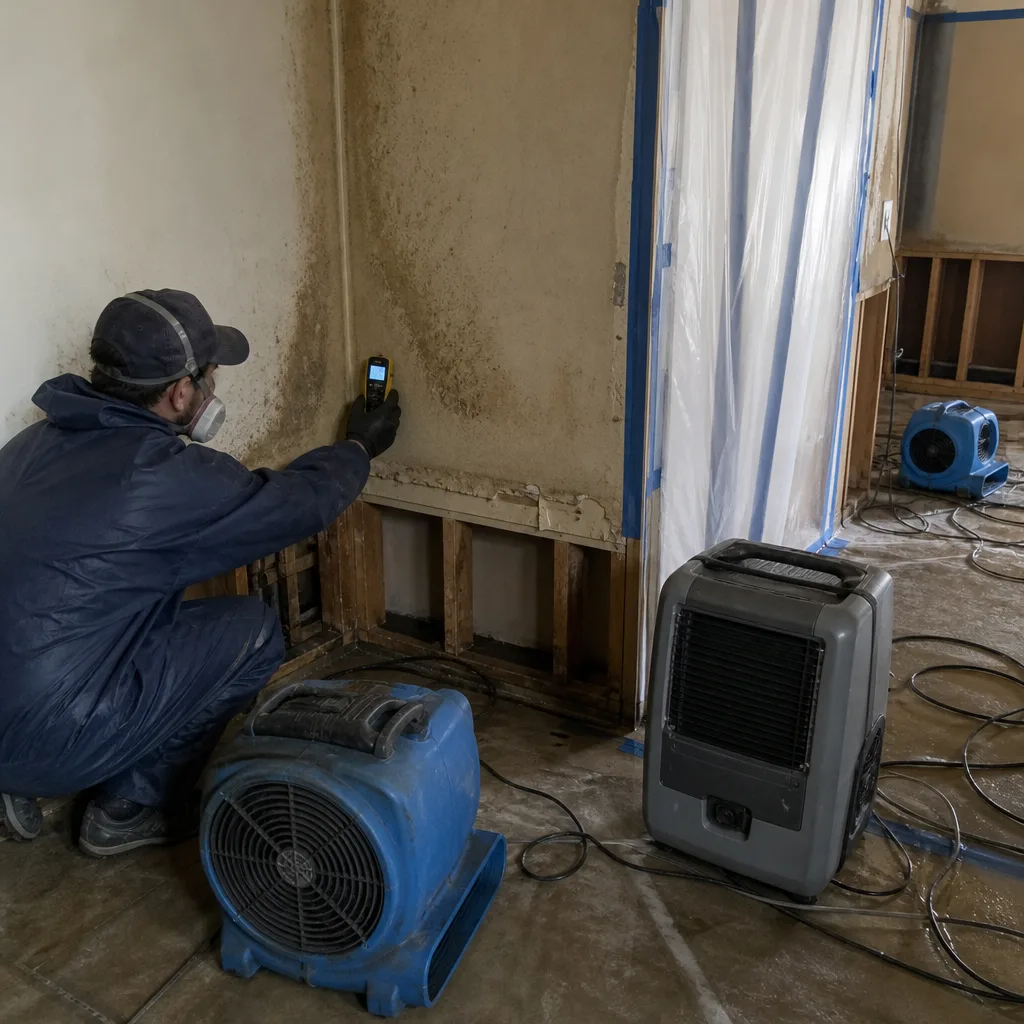
- Structural drying. This begins once extraction is complete. Technicians place air movers and dehumidifiers, drill drying holes into wall cavities and under cabinets where needed, and take daily moisture readings with penetrating and non-penetrating meters. The drying phase continues until all affected materials meet their IICRC S500 target moisture content. In Costa Mesa’s coastal humidity, this typically takes 3 to 7 days, sometimes longer for hardwood subfloors or multi-layer assemblies.
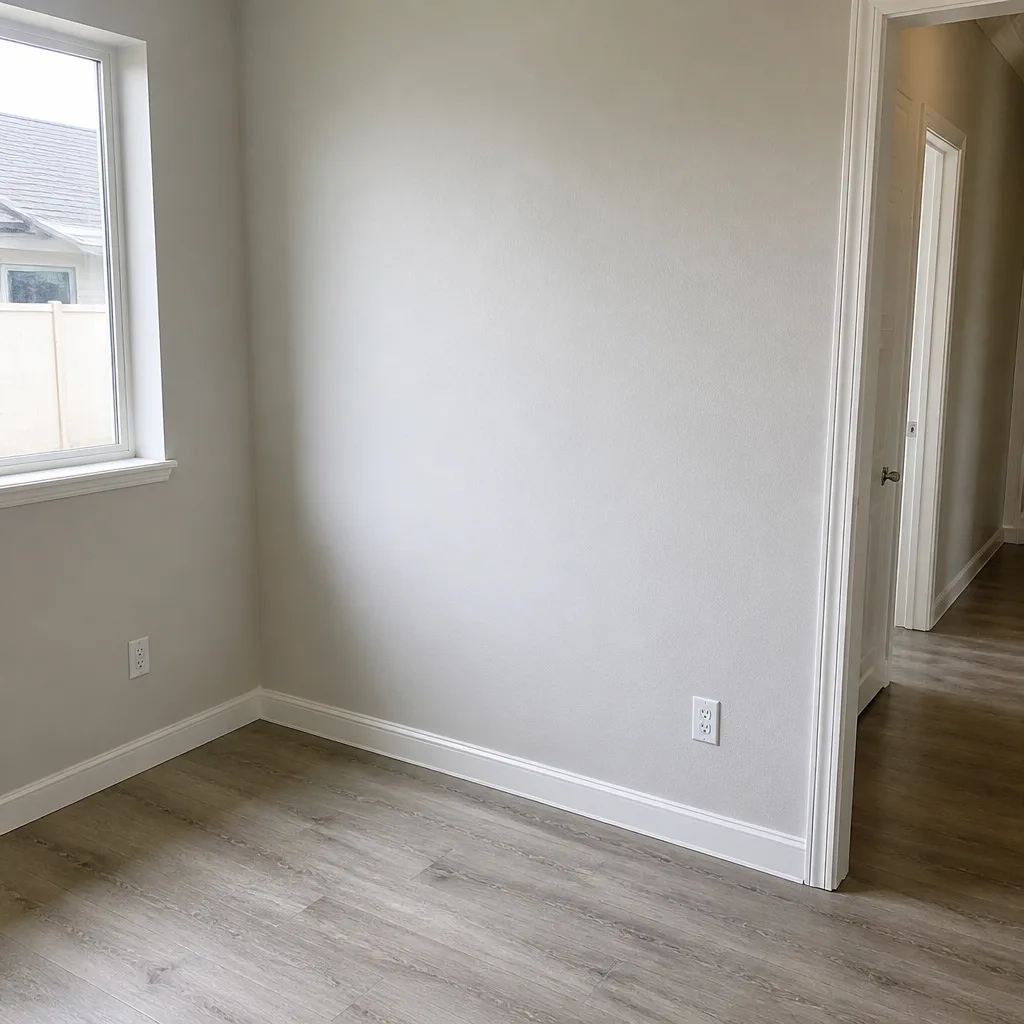
- Reconstruction. This is the final phase, where dried and salvaged materials are restored and removed materials are replaced. It includes drywall replacement, painting, flooring installation, trim work, and any other cosmetic or structural return to pre-loss condition. Reconstruction only begins after the drying phase has been formally closed out with a final moisture map documenting that all materials meet the drying standard.
The mistake most homeowners make is treating the drying phase as something that happens by feel. They see the drywall is white again, the baseboards look fine, and they tell the contractor to move on to rebuild. Without a documented moisture verification, the insurance adjuster reviewing the claim has no evidence that the underlying structure was dry before finishes went back on. If mold appears six months later, the carrier may deny the secondary claim because the first restoration was never validated. Phase validation is not paperwork theater. It’s the protection between you and a denied claim.
Oxford Restoration Co’s IICRC-certified process includes a written moisture map at the close of the drying phase before any reconstruction begins. The standard is that a material is dry when its moisture content is at or below the pre-loss baseline for that material type in Costa Mesa’s ambient conditions. We never call a job dry until the meters say it is dry.
What an IICRC S500 Drying Goal Actually Means
The Institute of Inspection, Cleaning and Restoration Certification publishes the S500 Standard and Reference Guide for Professional Water Damage Restoration. It defines drying goals by material type and equilibrium conditions. That is a long way from the “dry to the touch” test most homeowners apply.
Here is what dry actually means under an IICRC S500 framework:
- Drywall: Moisture content at or below the unaffected baseline reading taken from a dry area of the same wall, typically below 1 percent on a penetrating meter scale in ambient conditions. The paper face may read slightly higher due to ambient humidity absorption even when the gypsum core is dry.
- Wood studs and framing: Below 16 percent moisture content using a penetrating meter. Structural lumber in Costa Mesa typically sits at 8 to 12 percent in unconditioned spaces depending on the season and proximity to the coast.
- Hardwood flooring: Within 2 to 4 percentage points of the equilibrium moisture content for the installation environment. This varies by species and whether the home is air conditioned. In Costa Mesa, a coastal home with minimal HVAC use in mild months will have a different baseline than a conditioned inland property.
- Concrete slab: Relative humidity testing below acceptable thresholds for the flooring reinstalled on top of it. Slab moisture in Costa Mesa’s older slab-on-grade homes takes longer to return to baseline because the soil beneath the foundation holds moisture from the marine layer.
The S500 standard recognizes that drying does not mean removing all moisture from a material. It means returning the material to a moisture content equal to or lower than its pre-loss state, which is determined by taking baseline readings from unaffected materials in the same structure. A professional drying log records these baselines at the start of the job and compares affected materials against them daily.
The equipment matters here. Consumer-grade box fans and a rental dehumidifier from a hardware store cannot maintain the consistent pressure differential that meets S500 targets on a structural scale. The RIA and IICRC communities have spent decades refining drying science, and the professional equipment fleet operated by Oxford Restoration Co reflects that standard. We work with Dri-Eaz, Phoenix, and Injectidry systems specifically because they produce the controlled, measurable conditions needed for structural drying documentation.
Why Category 2 Water Gets Misclassified in Costa Mesa’s Older Housing Stock
Water damage is categorized by contamination level. Category 1 is clean water from a sanitary source like a supply line or a bathtub overflow. Category 2 is water with some contamination, such as dishwasher discharge, washing machine overflow, or HVAC condensate. Category 3 is grossly contaminated water from sewage, flooding, or standing water that has supported microbial growth.
In Costa Mesa’s older housing stock, Category 2 water is frequently misclassified as Category 1. The reason is structural: many homes built in the 1950s through 1970s have drain lines, supply lines, and HVAC condensate lines running through shared wall cavities and floor assemblies. When a dishwasher leaks Category 2 water, that water travels through wall cavities that may contain decades of accumulated dust, insulation debris, and occasional past pest activity. By the time the water is discovered, it has absorbed contaminants from the building structure itself, pushing it into Category 2 territory even if the source water started cleaner.
The health implication is that treating Category 2 water as Category 1 means fewer antimicrobial treatments, less aggressive material removal, and a relaxed drying timeline. That creates an environment where mold can establish itself, particularly in Costa Mesa’s humidity. The industry standard for Category 2 water includes antimicrobial application on affected surfaces and the removal of certain absorptive materials that would be salvageable under Category 1 protocols.
As an RIA-affiliated restoration specialist, we see this misclassification most often in neighborhoods with the oldest housing stock, including stretches of College Park, Eastside, and the Liberty area of Costa Mesa. Homeowners who suspect their water damage involved anything beyond a clean supply line should ask the restoration firm to document the water category determination and explain the reasoning. Oxford Restoration Co includes a written category classification as part of every initial assessment.
The Insurance Documentation Checklist Adjusters Actually Require
Insurance adjusters process thousands of water damage claims. They look for specific documentation that validates the loss and the restoration work. Here is what adjusters actually need, compared to what many contractors hand over:
- Pre-existing condition documentation. The adjuster needs evidence of what the area looked like before the loss. Photos from the day of the event, showing the source of the water and the initial condition of affected rooms, establish the scope. A contractor who starts demolition without photographing the pre-damage state creates a gap the adjuster will note.
- Category and class determination. The water category (1, 2, or 3) and the class of water damage (1 through 4, based on extent and absorption) must be documented at the initial assessment. This determination drives the entire restoration plan and the line items the carrier will consider.
- Daily moisture readings. Adjusters expect a moisture log showing daily readings from each affected room, taken with both penetrating and non-penetrating meters, plotted against the baseline readings from unaffected areas. This log proves the drying was monitored and completed to standard. A final moisture map showing all areas at or below baseline is the key document.
- Equipment and drying chamber documentation. A list of equipment placed, placement dates, removal dates, and the size of the affected area relative to the drying system’s capacity. Adjusters know that a single air mover in a 400-square-foot room is inadequate. Documentation showing adequate equipment placement from Dri-Eaz or Phoenix units supports the scope claim.
- Material salvage versus replacement log. A line-by-line list of materials removed, materials salvaged, and materials replaced, with photos of each. Adjusters question contractors who replace materials without documenting why they could not be dried.
- Antimicrobial treatment records. For Category 2 or 3 losses, documentation of the antimicrobial products used, where they were applied, and the basis for the application. This becomes relevant if microbial growth is later a point of dispute.
- Final invoice aligned with the original scope. The invoice should match the documented scope. Inflated invoices that do not align with the documented moisture map and material logs trigger adjuster scrutiny and can delay payment for months.
Oxford Restoration Co provides photo documentation at every phase, a written scope of work before work begins, and a final file with the moisture map and material log. This is the standard we maintain because we’ve seen what happens when restoration firms hand over a two-page invoice with no supporting documentation. The claim stalls, the homeowner is stuck in the middle, and the carrier requests more information. Documentation is not extra work. It is the work.
How Industrial Drying Equipment Changes Outcomes
The equipment used for structural drying determines whether the job takes 4 days or 10 days, and whether materials are salvaged or replaced. Consumer-grade equipment cannot create the drying conditions required for structural cavities.
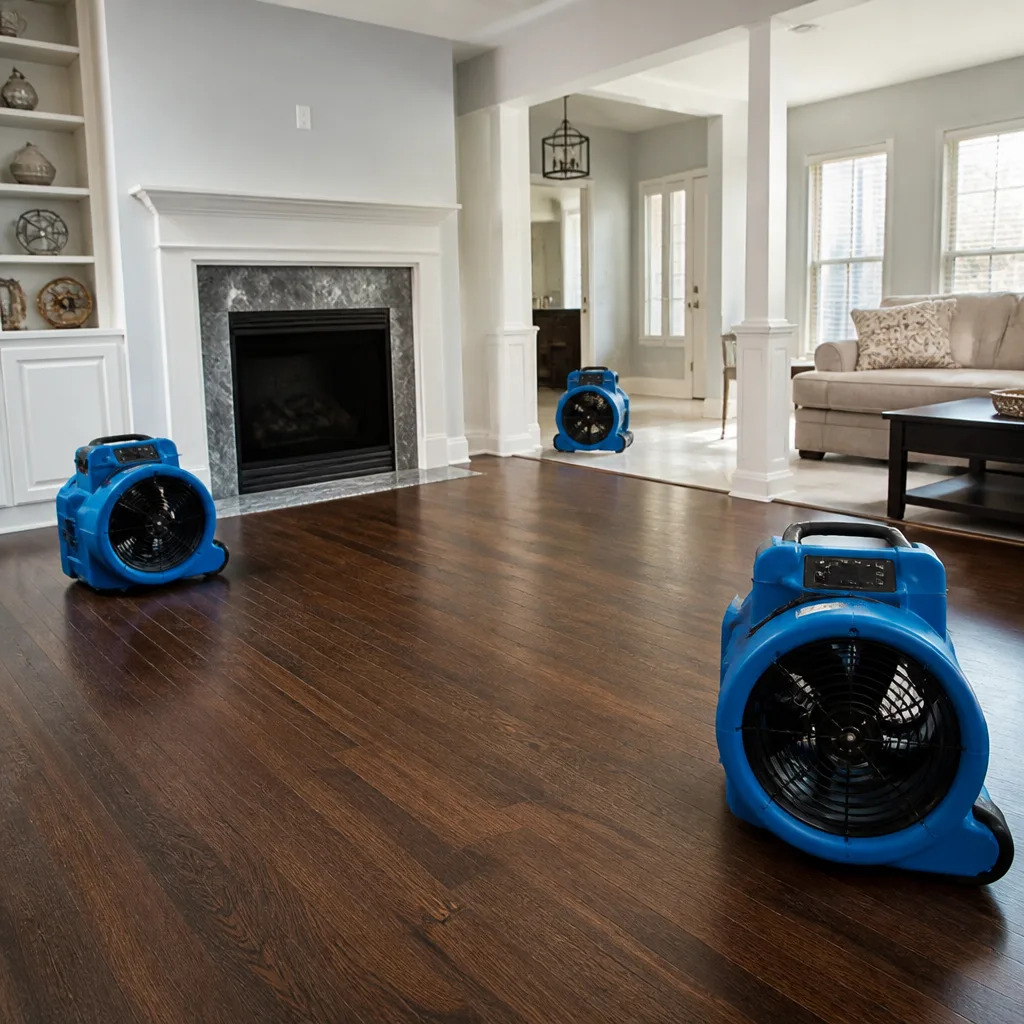
Professional restoration firms use air movers that push air across wet surfaces at high velocity, paired with dehumidifiers that pull moisture from the air. The key is the ratio: enough airflow to force moisture from materials into the air, and enough dehumidification capacity to remove that moisture from the air so it does not simply reabsorb into the building. In Costa Mesa’s coastal humidity, the dehumidification side matters even more than inland jobs because the ambient air already carries significant moisture.
Some drying situations require more than air movement. Injectidry systems dry wall and ceiling cavities from the inside, using hoses that inject dry air into enclosed spaces behind finished surfaces. This means a saturated wall cavity behind intact drywall does not need to be demolished just to get air to the framing. The Injectidry approach reduces repair scope and lets homeowners keep more of their original finishes, which is particularly important in Costa Mesa homes with plaster walls or custom trim that would be expensive to replace.
Oxford Restoration Co maintains a fleet of Dri-Eaz, Phoenix, XPOWER, B-Air, and Injectidry equipment. We run the same industrial-grade systems large commercial restoration firms use because Costa Mesa’s housing stock deserves that standard. A general contractor who shows up with two box fans and a rental dehumidifier may get your surfaces dry to the touch, but the cavity behind the wall remains a problem waiting for the right conditions to bloom.
For homeowners in need of a broader view on restoration standards, our Oxford Restoration Co home page explains the full scope of our IICRC-certified process.
Common Mistakes to Avoid
- Stopping at “dry to the touch.” The face of drywall can feel dry while the gypsum core and the framing behind it hold enough moisture for mold growth. Costa Mesa’s humidity makes this worse because the drywall face pulls moisture from the air and feels dry even when the core is wet.
- Running household fans without a dehumidifier. Moving humid air around a wet room does not dry the structure. It spreads moisture to other rooms and creates ideal mold conditions inside wall cavities. A dehumidifier matched to the space is non-negotiable.
- Not documenting the pre-loss condition. Once demolition starts, the evidence of what was damaged disappears. Take photos of the water source, the affected areas, and any pre-existing conditions the adjuster should know about before anyone removes material.
- Treating Category 2 water as Category 1. Appliance overflows, HVAC condensate, and washing machine leaks carry enough contamination to require antimicrobial treatment and more aggressive material removal. Skipping this step saves a day and creates a problem that lasts years.
- Letting a contractor skip the final moisture map. If the restoration firm cannot produce a moisture map showing all affected materials at or below baseline before rebuild starts, you do not have evidence the job was done correctly. This is the most common reason insurance carriers deny secondary claims.
- Hiring a general contractor for emergency drying. A contractor who does remodels does not necessarily understand IICRC drying standards. Water damage restoration is a specialized field with its own science, and the RIA exists because this work requires specific training. Use a specialist like our team for Water Damage Restoration in Lakeview or the broader Costa Mesa area.
- Waiting to call. Water damage compounds by the hour. What starts as a soaked bathroom floor becomes a structural drying job and a mold concern within 48 hours. Early mitigation reduces total damage and final cost, and it preserves more original materials.
When to Call a Professional
Call a professional restoration company when water has soaked into drywall, flooring, or structural framing, when the water source is anything other than a clean supply line, or when water has been present for more than a few hours. If you can see water stains on the ceiling below a bathroom, water has already saturated the floor assembly. If baseboards are swelling, the drywall behind them is wet. If you smell a musty odor days after a leak, mold is establishing itself.
Professional restoration matters most when insurance is involved, because the adjuster will require documentation only a specialist produces. Oxford Restoration Co offers free estimates in Costa Mesa. Call (877) 265-8058 and we’ll assess the scope, classify the water, and give you a written plan before any work starts. We also handle related damage types, including Mold Remediation in Lakeview and Fire Damage Restoration in Lakeview, so one specialist handles the full sequence without handoffs.
Frequently Asked Questions
Water damage restoration in Costa Mesa typically ranges from $2,500 to $8,000 for moderate Category 1 or 2 losses involving a single room, while whole-house flooding or Category 3 contamination can exceed $15,000 depending on the scope of material removal and rebuild. For a detailed look at pricing factors, see our Damage Restoration Cost Breakdown: The Costa Mesa Homeowner’s Reference for 2026. The cost depends on the water category, the affected square footage, the drying time required in Costa Mesa’s coastal humidity, and how much material can be salvaged versus replaced. Call (877) 265-8058 for an exact quote based on your property.
Structural drying in Costa Mesa typically takes 3 to 7 days under professional equipment, though materials like hardwood subfloors or multi-layer wall assemblies can take longer due to the city’s coastal humidity. The drying phase ends when moisture readings on all affected materials meet their IICRC S500 target, not when surfaces feel dry. A professional moisture map documents this endpoint.
Most Costa Mesa homeowner’s policies cover sudden and accidental water damage from covered perils, such as a burst supply line or appliance overflow, but they generally exclude water from flooding, seepage, or long-term leaks. For preparation tips before disaster strikes, read our Damage Restoration Emergency Preparedness Guide for Costa Mesa Homes. The restoration documentation matters as much as the policy language: an adjuster reviewing your claim needs the category determination, moisture logs, and material documentation that a specialist produces. A written scope from a credentialed firm like Oxford Restoration Co supports the claim from day one.
You can start the drying process with a household dehumidifier and fans, but without professional equipment you will not achieve the drying conditions needed inside wall cavities and under flooring in Costa Mesa’s humidity. Consumer equipment moves air but does not create the pressure differential or moisture removal capacity of industrial Dri-Eaz or Phoenix systems. Partial drying that stops at “dry to the touch” leaves moisture inside structural materials and creates a mold risk.
Category 1 water comes from a sanitary source like a supply line or bathtub overflow, while Category 2 water contains some contamination from sources like dishwasher discharge, washing machine overflow, or HVAC condensate. In Costa Mesa’s older homes, Category 2 water is frequently misclassified because its contamination level rises after passing through aging wall cavities. The water category determines antimicrobial treatment and material removal standards.
Oxford Restoration Co responds to Costa Mesa emergencies the same day they are reported, with initial assessment, water source identification, and emergency mitigation starting upon arrival. The speed of response matters because water damage compounds quickly in Costa Mesa’s coastal air, where humidity accelerates mold establishment. Call (877) 265-8058 for immediate dispatch.
The Bottom Line
Water damage restoration in Costa Mesa is a technical process with measurable standards, not a cleanup task. The IICRC S500 standard defines dry by material type and baseline moisture content, not by feel. Costa Mesa’s coastal humidity slows evaporation and requires professional dehumidification equipment. The three-phase sequence of mitigation, drying, and reconstruction demands validation between phases, and the documentation from that validation is what insurance adjusters actually review. Homeowners who understand this sequence make better decisions under stress, and can find more guides & resources on our blog. Homeowners who hire an IICRC-certified specialist with industrial-grade equipment and a documented process protect their property and their claim.
Written by the team at Oxford Restoration Co, serving Costa Mesa since 2011.
See the difference
 Before
 After
 Before
 After
 Before
 After