
Last updated October 30, 2026
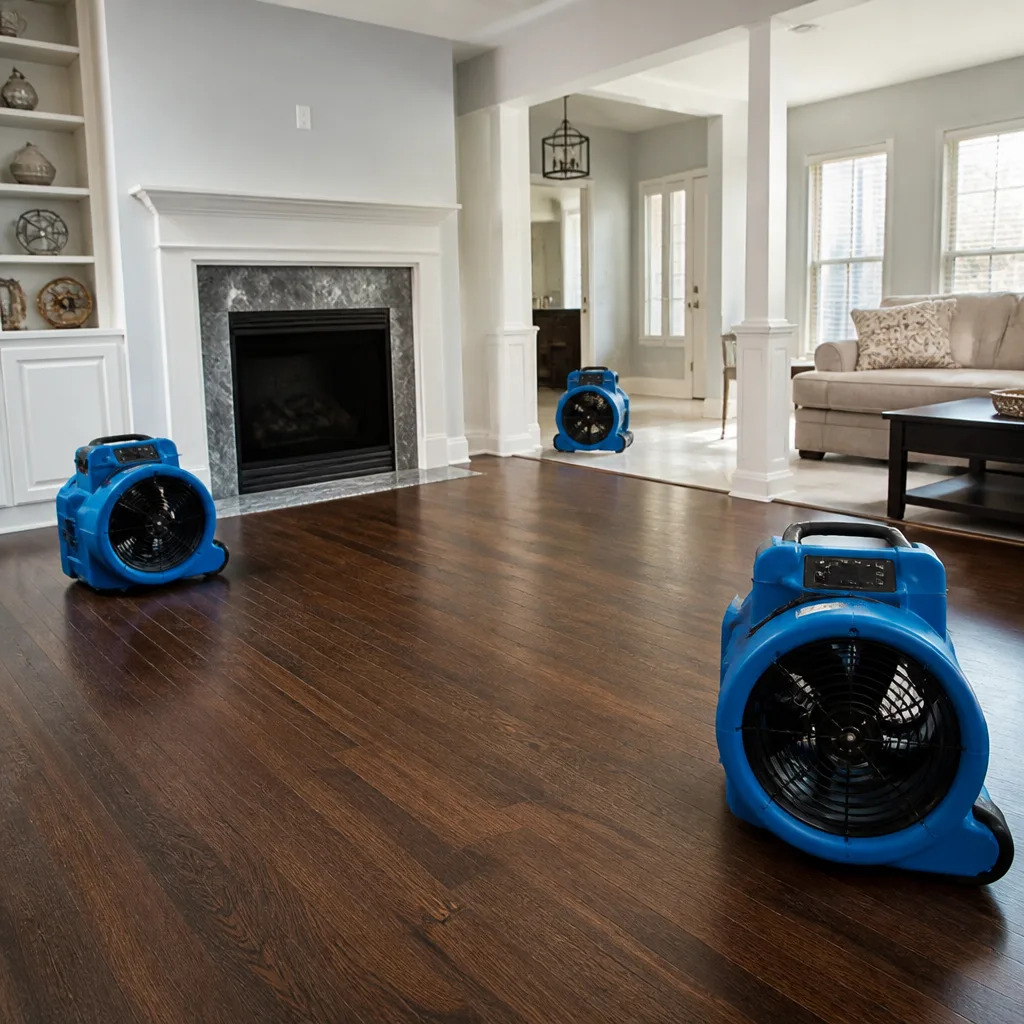 Water damage drying
 Fire & smoke cleanup
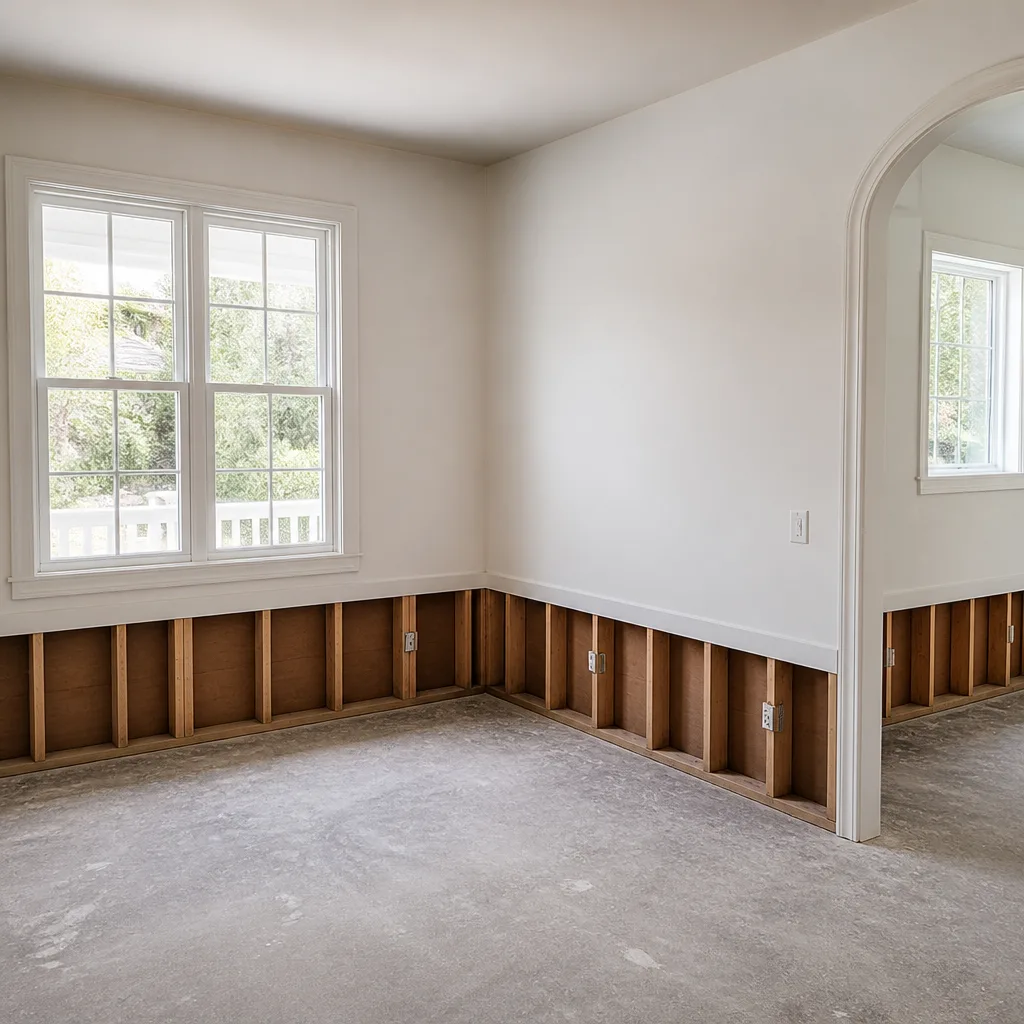 Mold remediation
 Storm response
 Sewage cleanup
 Reconstruction
Free visual inspection and a written scope of work before any mitigation begins - photos, moisture readings, and drying logs go in your claim file
The scope we write is the scope we bill. Anything new gets shown to you, in writing, before we touch it.
Get your free estimateDamage Restoration Warning Signs: A Costa Mesa Homeowner’s Reference Guide
Here’s a number that should get your attention: in our experience across Costa Mesa, roughly 7 out of 10 water damage jobs we walk into were active for at least two weeks before anyone noticed. Not because homeowners were careless. Because the early signals are quiet, easy to misread, and often hide behind furniture, inside wall cavities, or under slab foundations where Costa Mesa’s marine-layer humidity keeps things damp longer than you’d expect. This guide is built to change that ratio. You’ll learn which warning signs actually appear first, which ones are already late, and how to check your own home before a $400 repair becomes a $14,000 restoration. We’ve structured it around what we see on job sites throughout Costa Mesa neighborhoods like Mesa Verde, College Park, and the Eastside, where construction era and foundation type change how damage presents.
Quick Answer
The earliest reliable warning signs of hidden damage in a Costa Mesa home are: paint that bubbles, blisters, or peels in the absence of a leak you can see; baseboards that pull away from the wall or darken at the bottom edge; a persistent earthy or musty odor that strengthens in specific rooms; doors or windows that suddenly stick or swing on their own; and elevated moisture readings on interior walls or floors using a consumer-grade moisture meter showing 17% or higher on drywall. If you’re seeing any of these, the damage is likely already active. The question is scope, not whether something’s wrong.
Restoration work we handle
Table of Contents
- Lagging vs. Leading Indicators: Why Most Homeowners Catch Damage Late
- The Visual Patterns: Paint, Baseboards, and Door Geometry
- Efflorescence on Stucco: Salt, Dirt, or Active Moisture Intrusion?
- HVAC Supply Air and Duct Leaks: The Tell Costa Mesa Homes Hide
- Toilet Wax Ring Failure: The Slow Upgrade from Category 1 to Category 2
- Using a Consumer Moisture Meter: What Readings Actually Mean
- The Odor Threshold: When Smell Alone Confirms a Colony
- Slab Foundations vs. Wood-Frame: Different Structures, Different Tells
Lagging vs. Leading Indicators: Why Most Homeowners Catch Damage Late
Most of what gets labeled a water damage warning sign is actually a lagging indicator. Water stains on the ceiling. Warped flooring. Visible mold on drywall. By the time these show up, the moisture event that caused them has been active for days, weeks, or months. The stain is not the beginning of the problem. It’s the end of the early phase. In Costa Mesa, where daytime temperatures swing 20-plus degrees between morning marine layer and afternoon sun, materials expand and contract daily. That cycle accelerates how quickly hidden moisture telegraphs through finishes, but it also masks it, because homeowners write off minor paint cracks and baseboard movement as normal settling.
Leading indicators, by contrast, show up while the moisture is still contained. They’re subtle. A closet that smells slightly different from the room it opens into. A section of baseboard that’s pulled 1/16 inch from the wall while the rest sits flush. A door that latches fine in the morning but rubs by late afternoon. Individually, each one is easy to dismiss. Together, they form a pattern that a trained eye reads the way a mechanic reads engine noise. Our Oxford Restoration Co home team regularly maps these patterns during inspections, and the homes that catch damage early almost never need full-scale remediation. That’s the goal of this guide: to shift you from reacting to visible damage to responding to the signals that precede it.
The distinction matters because of cost. A Category 1 water loss caught in the first 48 hours is typically a drying job. The same loss left for two weeks becomes a Category 2 or Category 3 contamination event requiring antimicrobial treatment, material removal, and possibly mold remediation. In Costa Mesa’s clay-heavy soils, slab foundation homes add another wrinkle: moisture wicking up through the slab doesn’t always present as obvious water. It presents as humidity, as odor, as flooring adhesive failure. Those are the signals we’re teaching you to read.
The Visual Patterns: Paint, Baseboards, and Door Geometry
Paint and baseboards are the most honest materials in your house. They don’t lie, but they do speak a language most homeowners never learned. Here’s what to look for, room by room, in a Costa Mesa context where stucco exteriors and slab foundations dominate the housing stock built between 1950 and 1980, and wood-frame construction fills most of the newer builds.
- Paint blistering or bubbling: When moisture migrates through drywall or plaster, it pushes against the paint film from behind. The result is a raised bubble, sometimes soft to the touch, sometimes hard and cracked. On exterior stucco, this is a red flag for failed flashing or a cracked parapet cap. On interior walls, especially on the lower third, it points to slab wicking or a plumbing leak inside the wall cavity.
- Paint peeling in sheets rather than flakes: Flaking is age. Peeling in sheets is moisture. When humidity inside a wall cavity stays elevated, the bond between paint and substrate fails, and paint comes off in strips. This is especially common in Costa Mesa bathrooms with poor ventilation fans and in laundry rooms where dryer vents have disconnected inside the wall.
- Baseboards pulling away from the wall at the bottom edge: Wood baseboards absorb moisture through capillary action. When a slab is emitting moisture, or when a leak is running along the bottom plate of a wall, the baseboard swells and pulls its top edge away from the drywall while the bottom stays fixed. The gap is small at first, often less than 1/8 inch. Run your finger along the top edge of each baseboard in rooms adjacent to plumbing walls. A consistent gap in one room but not another is information.
- Baseboard staining that rises from the floor: Dark staining at the very bottom of a baseboard, extending upward in a soft gradient, is wicking. Gravity pulls water down, but capillary action pulls it up. A stain that starts at the floor and climbs is moisture moving upward through porous material. A stain that starts at the top of the baseboard and moves down is usually from above, like a window leak or a supply line in the wall.
- Door frames out of square: Wood door frames are surprisingly precise instruments. When the relative humidity in a wall cavity shifts, the framing members swell, and the door that used to close with a 1/8 inch reveal at the top now rubs at the latch side. In Costa Mesa, seasonal humidity shifts do cause minor seasonal changes. But a door that sticks on the same edge year-round, or one that shifts by more than 1/8 inch, is telling you about moisture where there shouldn’t be any.
- Caulking that cracks repeatedly at the same joint: Caulk is flexible by design. When it cracks along a tub-to-tile seam, a window-to-wall joint, or a baseboard-to-floor line, it’s usually being worked by movement. That movement, in a home that’s otherwise stable, is frequently moisture-driven expansion of the underlying material.
None of these signals, individually, confirms a water loss. But two or more in the same room, especially on a shared wall with plumbing, is enough to justify pulling out a moisture meter. Which is exactly what the next section covers. For water-specific damage patterns across Costa Mesa’s older housing stock, see our Water Damage Restoration in Lakeview guide for how these presents in slab-era homes.
Efflorescence on Stucco: Salt, Dirt, or Active Moisture Intrusion?
Costa Mesa stucco does something concrete block never does as dramatically: it grows a white, chalky crust that looks exactly like dust but isn’t. That crust is efflorescence, and understanding the difference between cosmetic efflorescence and active moisture intrusion could save you a five-figure stucco remediation bill down the line.
Efflorescence forms when water moves through masonry or stucco, dissolving salts from the material itself. When that water reaches the surface and evaporates, the salts are left behind as a white deposit. Here’s the diagnostic key: efflorescence is only produced by moving water. If salts are appearing on the surface, water is actively traveling through the wall assembly. The question is whether it’s a one-time event, like a heavy rain season that soaked the stucco, or an ongoing condition, like a failed weep screed or missing kickout flashing that’s been feeding water into the wall for years.
How to distinguish efflorescence from dirt in Costa Mesa’s dry, dusty climate, where fine particulate from the 55 freeway settles on everything:
- Look at the pattern. Dirt deposits evenly across broad surfaces. Efflorescence follows the path of water: it concentrates at mortar joints, around window sills, along the bottom 12 inches of a wall, or weeping out of stucco cracks in a branching pattern.
- Check the texture. Dirt wipes off with a dry finger. Efflorescence is crystalline and slightly crusty. It doesn’t smear the way dust does. If you wet it, it may dissolve partially, but it leaves a slightly greasy, mineral feel.
- Look for the recurrence pattern. This is the big one. Clean efflorescence off with a dry brush. If it returns within weeks or months, especially during Costa Mesa’s winter rain season or summer sprinkler irrigation, you have active moisture movement. Seasonal recurrence on the same wall section is not cosmetic.
- Check the stucco beneath. Active efflorescence is often accompanied by softening stucco. Probe with a non-marring tool at the base of the wall. If the substrate feels spongy or crumbly, water has been weakening the material matrix for a long time.
Here’s what most Costa Mesa homeowners don’t hear from a general contractor: efflorescence on the exterior of a slab foundation home often traces back to water being introduced at the interior, like a slab leak or a shower pan failure, that’s traveling outward through the wall. It doesn’t always mean rain is getting in. It can mean water is getting out. A proper assessment requires moisture mapping the affected wall from both sides, which is standard practice in our IICRC-certified approach. Efflorescence on stucco is a leading indicator, but only if you know to look for it before the stucco itself begins to fail.
HVAC Supply Air and Duct Leaks: The Tell Costa Mesa Homes Hide
Costa Mesa’s marine layer means that from May through July, your HVAC system may run in cooling mode while the outdoor air sits at 85% relative humidity. That combination, humid outdoor air plus a running air conditioner, is exactly when duct leaks do their worst work. And they do it silently, inside walls and attic cavities where no one’s looking.
Here’s the mechanism. Your supply ducts carry conditioned air, typically 55 to 60 degrees Fahrenheit, through unconditioned spaces. If a supply duct has even a one-inch separation at a joint, two things happen simultaneously. First, conditioned air escapes into the wall cavity or attic, which you pay for as lost efficiency. Second, and more importantly for damage, the escaping cold air chills the surrounding surfaces. When warm, humid Costa Mesa air contacts those chilled surfaces, it condenses. Inside a wall cavity, that condensation has nowhere to go. It soaks into insulation, wets the back side of drywall, and over weeks or months creates the exact conditions mold needs.
The early warning signs are measurable before they’re visible:
- Supply air temperature differences between rooms: On a cooling day, go room to room with an inexpensive infrared thermometer or probe thermometer and measure the air coming out of each supply register. A difference of more than 5 degrees Fahrenheit between adjacent rooms on the same floor, with the same thermostat setting, suggests duct leakage in the warmer room. The air is losing its cool before it reaches the register.
- Rooms that feel humid even when the AC is running: Air conditioning dehumidifies. A properly sealed and balanced system should produce supply air at 45 to 55 percent relative humidity. If one room feels sticky while the rest of the house feels dry, that room may be receiving air that’s been compromised by condensation inside a leaking duct run, or the duct is pulling humid outdoor air into the air stream.
- Dust streaks on supply registers and nearby ceiling areas: Duct leaks pull attic dust and insulation particles into the air stream. If you notice dark streaks radiating from a supply register, especially on the ceiling within a foot or two, that’s not normal dust accumulation. That’s attic air being entrained through a hole in the duct or a poorly sealed boot.
- Cold spots on walls or ceilings in hallways: Run your hand along the ceiling of a hallway that runs to a bedroom wing. If one spot feels noticeably cooler than the surrounding area, you may be feeling the back side of a leaking supply duct chilling the drywall from above. This is a leading indicator that condenses into a water stain a few weeks later.
The humid, marine-influenced climate of Costa Mesa makes duct leakage more consequential here than in drier inland cities. A duct leak in a Palm Springs attic dries quickly. A duct leak in a Costa Mesa attic stays wet through the entire summer marine layer season. If your HVAC system is over 15 years old and you’ve never had duct leakage testing done, it’s worth the few hundred dollars to have it checked. It’s cheaper than opening a wall.
Toilet Wax Ring Failure: The Slow Upgrade from Category 1 to Category 2
Of all the chronic leaks we see in Costa Mesa homes, toilet wax ring failure is the most consistently underestimated. Homeowners see a small water spot on the ceiling below a bathroom and assume a flapper leak or a supply line drip. The wax ring, which seals the toilet to the waste pipe, is not on their radar until the damage is already significant.
Here’s the problem with wax rings. They fail slowly. A wax ring doesn’t usually blow out suddenly. Instead, it develops a slow seep, often initiated by toilet movement. A toilet that rocks even slightly, because the flange is set too high, too low, or the mounting bolts are loose, flexes the wax ring with every use. Over months, the wax develops a channel. Water begins to escape, not with every flush, but when the toilet is sat on, when the bowl is under load, when the flush volume is highest. That water is Category 1, clean water from the supply or the bowl. But here’s the catch: the seep is so slow that it soaks into the subfloor, the underlayment, and the framing around the flange, and it’s almost never caught in the Category 1 phase.
What happens next is a textbook progression. The wet subfloor under a toilet, in a dark, warm cavity with no airflow, becomes a microbial incubator. The clean water that started the problem picks up contaminants from the building materials it saturates: adhesives, old wood treatments, dust, skin cells. Within days to weeks, what was a Category 1 clean water loss has biologically upgraded to a Category 2, gray water condition. The contamination now requires antimicrobial treatment and material removal. The repair scope has tripled.
Early warning signs of wax ring failure, in the order they typically appear:
- The toilet rocks, even slightly, when you push against it from the side. Not a wobble from the tank. A movement at the base. This is the mechanical failure that starts the wax ring compromise.
- You smell sewage odors near the base of the toilet, but only occasionally. Not every day. When the wind blows, when the house pressure shifts, when someone’s in the shower. Sewer gas is heavier than air and tends to seep out at floor level.
- The vinyl or tile floor around the toilet base looks slightly darker or feels cool to the touch in the morning. Coolness indicates moisture below the surface that’s evaporating slowly.
- Water stains appear on the ceiling of the room below the bathroom. This is the lagging indicator. By the time a ceiling stain forms, the leak has been active for weeks.
In Costa Mesa’s slab foundation homes, the same failure often never shows a ceiling stain because there’s no floor below to catch the water. Instead, the moisture wicks into the slab and travels laterally, appearing as damp carpet, lifting vinyl, or efflorescence at the base of an exterior wall ten feet from the toilet. We cover this failure mode in depth in our Mold Remediation in Lakeview guide, because a missed wax ring leak is one of the most common root causes of bathroom subfloor mold.
Using a Consumer Moisture Meter: What Readings Actually Mean
A consumer-grade, non-penetrating moisture meter, the type that reads through the surface using radio frequency, is the single most useful diagnostic tool a Costa Mesa homeowner can own for under $60. It’s not a substitute for a professional moisture map, which uses penetrating probes and thermal imaging to establish the full extent of a water event. But it will tell you whether a suspected moisture zone is real or imagined, and that’s the difference between calling a contractor and losing sleep.
Here’s a practical protocol for using one effectively, developed from years of field assessments across Costa Mesa housing stock of every era.
- Establish a baseline first. Before you check a suspect area, take readings in multiple locations of the same material that you know to be dry. An interior wall in the center of the house, away from exterior walls, plumbing, and windows. A floor area in a hallway. Write down those numbers. In Costa Mesa’s climate, interior drywall typically reads 7 to 12 percent moisture content. Wood subflooring, 8 to 14 percent. You need to know your own home’s baseline before a reading means anything.
- Scan in a grid pattern. Holding the meter flat against the surface, take readings every 12 to 18 inches across the suspect area. Move slowly. Non-penetrating meters read through the material, and moving too quickly causes false lows. You’re building a picture of where moisture is concentrated, not just whether it exists.
- Watch for the gradient, not just the number. A single high reading might be a false positive from a nail, a metal stud, or wiring behind the drywall. A gradient pattern, where readings climb steadily as you approach a specific point, is real moisture. The highest reading is your leak source or the point of maximum saturation.
- Interpret the readings on drywall: 7 to 12 percent is normal. 13 to 16 percent is elevated and worth monitoring. 17 to 20 percent is a confirmed moisture problem that requires professional assessment. Anything over 20 percent in drywall is saturated material. Drywall at 20 percent or higher loses structural integrity and should not be saved.
- Interpret readings on wood: 8 to 14 percent is normal for interior wood in Costa Mesa. 15 to 19 percent indicates active water contact. 20 to 27 percent is the danger zone where wood-destroying fungi and mold begin to colonize. Above 28 percent, wood is at fiber saturation point and will not dry naturally in a reasonable timeframe without professional drying.
- Check the same spot on both sides of the material if possible. A wall that reads 11 percent from the interior but 19 percent from the exterior side is telling you the moisture is entering from outside, and the interior finish hasn’t caught up yet. This is the leading-indicator scenario you want to catch before paint starts bubbling.
One caution from experience: consumer meters are calibrated for specific material types and read through non-metallic surfaces only. If you get consistently high readings in a wall, but the wall is exterior-facing, you may be reading ambient humidity trapped in the stucco or siding from Costa Mesa’s marine layer, not a plumbing leak. Cross-check with neighboring interior walls and look for the gradient pattern. When in doubt, a professional moisture assessment with penetrating probes and thermal imaging costs far less than opening a wall based on a misread.
The Odor Threshold: When Smell Alone Confirms a Colony
That musty smell in a Costa Mesa home is not a humidity quirk. It’s microbial volatile organic compounds, the byproducts of mold metabolic activity, off-gassing from an active colony. By the time this odor reaches the threshold of human detection, the colony has typically been established for weeks, not days. And here’s what most homeowners don’t realize: your nose detects mold VOCs at concentrations far below what your eyes can see. The smell is the leading indicator. Visible mold is the lagging one.
The odor signature of active mold is distinct from other household smells. It’s earthy, organic, like damp soil or wet cardboard. It sharpens in specific rooms or corners, and it persists even after cleaning, airing out, and running air purifiers. It’s often stronger when the HVAC system cycles on, because the air handler is pulling air through contaminated cavities and distributing it. It’s worse in the morning, before ventilation dilutes the concentration.
Here’s how to use odor as a diagnostic tool in a Costa Mesa home:
- Map the odor by room, not just by intensity. Stand in each doorway and take two or three slow breaths. Which room smells strongest? Is it strongest at the floor level, which indicates the source is low, maybe a slab emission or wet carpet pad? Or is it strongest near the ceiling, which points to an attic issue, a roof leak, or a bathroom exhaust fan that’s not actually venting outside?
- Track the odor over time in relation to weather. In Costa Mesa, mold odor often spikes two to three days after rain, when the soil around slab foundations saturates and water begins wicking upward. If you notice the smell reliably intensifies after winter storms, you’re likely dealing with a foundation moisture issue, not a plumbing leak.
- Compare one closet to the adjacent room. Closets have limited airflow, which concentrates VOCs. A closet that smells noticeably mustier than the room it opens from is often the cavity where moisture is trapped, especially if the closet is on an exterior wall or under a bathroom.
- Trust the smell even when you can’t find the water. We’ve assessed dozens of Costa Mesa homes where the homeowner reported a musty smell but couldn’t see any water, any stain, any mold. In the majority of those cases, professional moisture mapping found active moisture inside a wall cavity, under a slab, or in an inaccessible attic space. The nose is a detection instrument. Use it.
The mistake homeowners make is treating the odor as a housekeeping issue. They clean more, buy a dehumidifier, maybe an air purifier. But no amount of cleaning addresses a colony that’s actively growing inside a wall cavity. The odor persists because the source persists. For a deeper look at how mold odor correlates with remediation scope, see our Mold Remediation in Lakeview resource, which includes the specific conditions that produce the strongest VOC signatures.
Slab Foundations vs. Wood-Frame: Different Structures, Different Tells
Costa Mesa’s housing stock is split roughly into two categories: slab-on-grade construction, common in the post-war tract developments of the 1950s through 1970s, and raised wood-frame construction, more typical of newer builds and custom homes in the mesa-adjacent neighborhoods. The two structure types fail differently under moisture, and if you’re looking for the wrong tells in the wrong house, you’ll miss early damage.
In slab foundation homes, water moves laterally and upward. A plumbing leak under the slab doesn’t present as a puddle. It presents as moisture wicking up through the concrete, through the flooring adhesive, and into the living space as vapor. The early signs are:
- Vinyl flooring that lifts at the seams or develops a cloudy, white haze underneath.
- Carpet that feels damp or cool in rooms adjacent to bathrooms, kitchens, or laundry areas.
- Wood flooring that cups, with the edges of boards rising higher than the centers, indicating moisture from below.
- Baseboards that show dark staining starting at the bottom edge and climbing.
- Efflorescence on the exterior walls, particularly near the base, even when the interior of that wall seems dry.
- A persistent musty odor that’s strongest at floor level.
In wood-frame raised foundation homes, water moves downward and sideways. Leaks run along joists, soak into insulation, and present as ceiling stains on the floor below, or as soft spots in the subfloor. The tells are different:
- Ceiling stains that grow slowly and change shape over days, indicating active water movement above.
- Soft spots in the floor, particularly near toilets, tubs, and exterior doors.
- Insulation in the crawlspace that’s sagging, wet, or missing below specific rooms.
- Floor joists that show dark staining or fungal growth when viewed from the crawlspace.
- Drafty floors that suddenly feel colder in one room, indicating wet insulation that’s lost its thermal performance.
The Costa Mesa climate complicates both. The marine layer pushes ambient relative humidity to 70 percent or higher through much of the year, which slows natural drying and extends the window in which mold can germinate, typically 24 to 48 hours for most species. A slab leak that would dry naturally in a week in Riverside can remain active for a month in Costa Mesa’s humid microclimate. That extended moisture window is why early detection matters more here than in drier Orange County cities. If you suspect moisture in either structure type, the assessment protocol is the same: establish a baseline, map the readings, and get a professional moisture assessment before the damage accumulates. Our Fire Damage Restoration in Lakeview page covers a different kind of damage, but the same structural assessment logic applies when evaluating post-event moisture from suppression water.
Common Mistakes to Avoid
- Assuming a stain is old and therefore inactive. We see this constantly. A homeowner notices a ceiling stain, decides it’s from a past leak, and ignores it. A stain with a darker ring, a stain that’s still growing, or a stain that feels soft or cool to the touch is active. Old stains are uniform in color. Active stains have a gradient.
- Treating musty odor as a cleaning problem. Cleaning, dehumidifying, and air purifying address the symptoms, not the source. If the smell returns within days of a deep clean, the colony is still active inside a cavity.
- Using a bathroom or kitchen exhaust fan that doesn’t actually vent outdoors. We’ve inspected Costa Mesa homes where the fan was venting directly into the attic, a common shortcut in older construction. The fan creates the illusion of ventilation while pumping humid air into an unconditioned space.
- Waiting for a plumbing leak to present as dripping water. Many of the most expensive losses we handle never produced a visible drip. Slab leaks, slow supply line seeps, and wax ring failures all present as moisture, not running water.
- Repainting over water damage without addressing the moisture source. Paint traps moisture. A fresh coat of paint over a still-wet wall cavity accelerates drywall degradation and mold growth by sealing the moisture in.
- Assuming mold comes from flooding or major water events. In Costa Mesa’s climate, the most common mold sources we find are chronic, low-volume leaks: condensation in walls, wax ring seeps, AC condensate lines, and failed bathroom seals. No single dramatic event required.
- Skipping the moisture assessment and going straight to a repair bid. A drywall contractor who patches a wet wall without a moisture map is guessing. The patch looks fine for a month. Then the stain returns. Then the scope doubles.
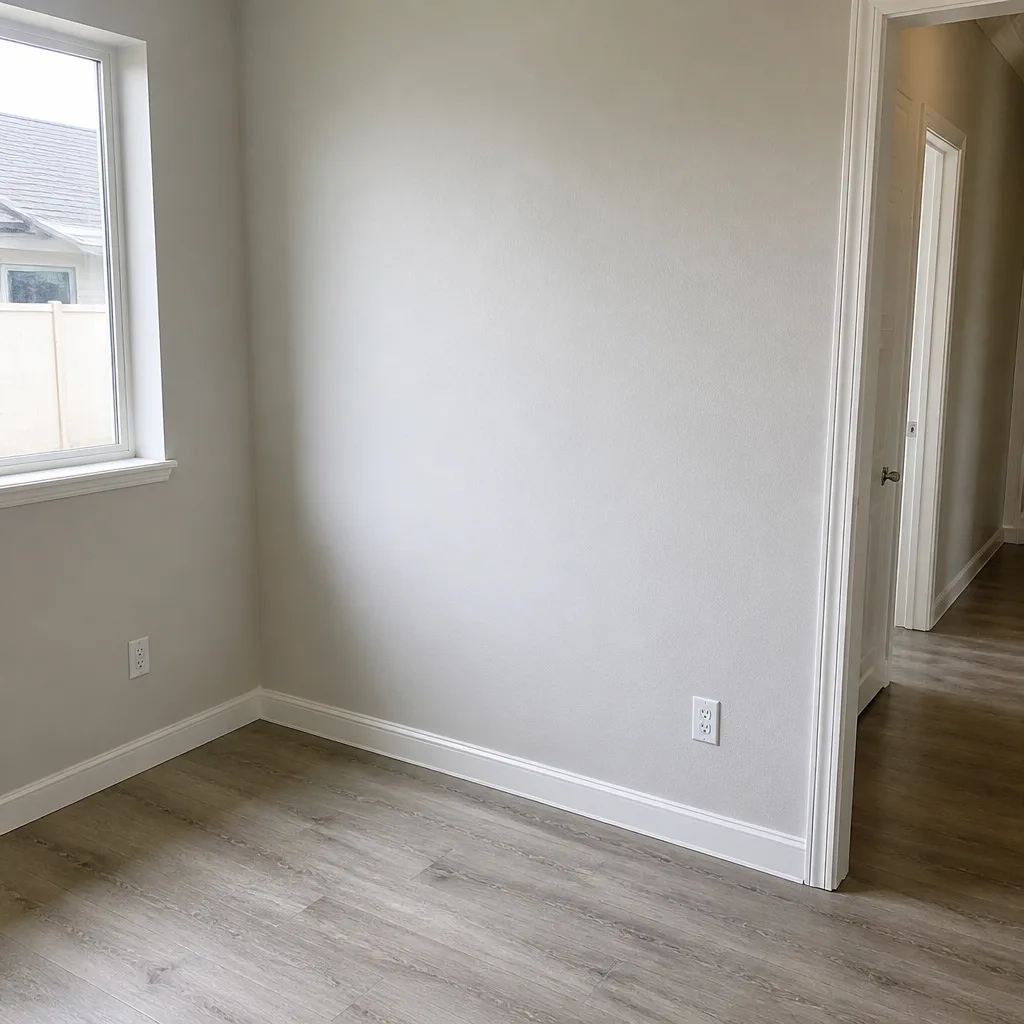
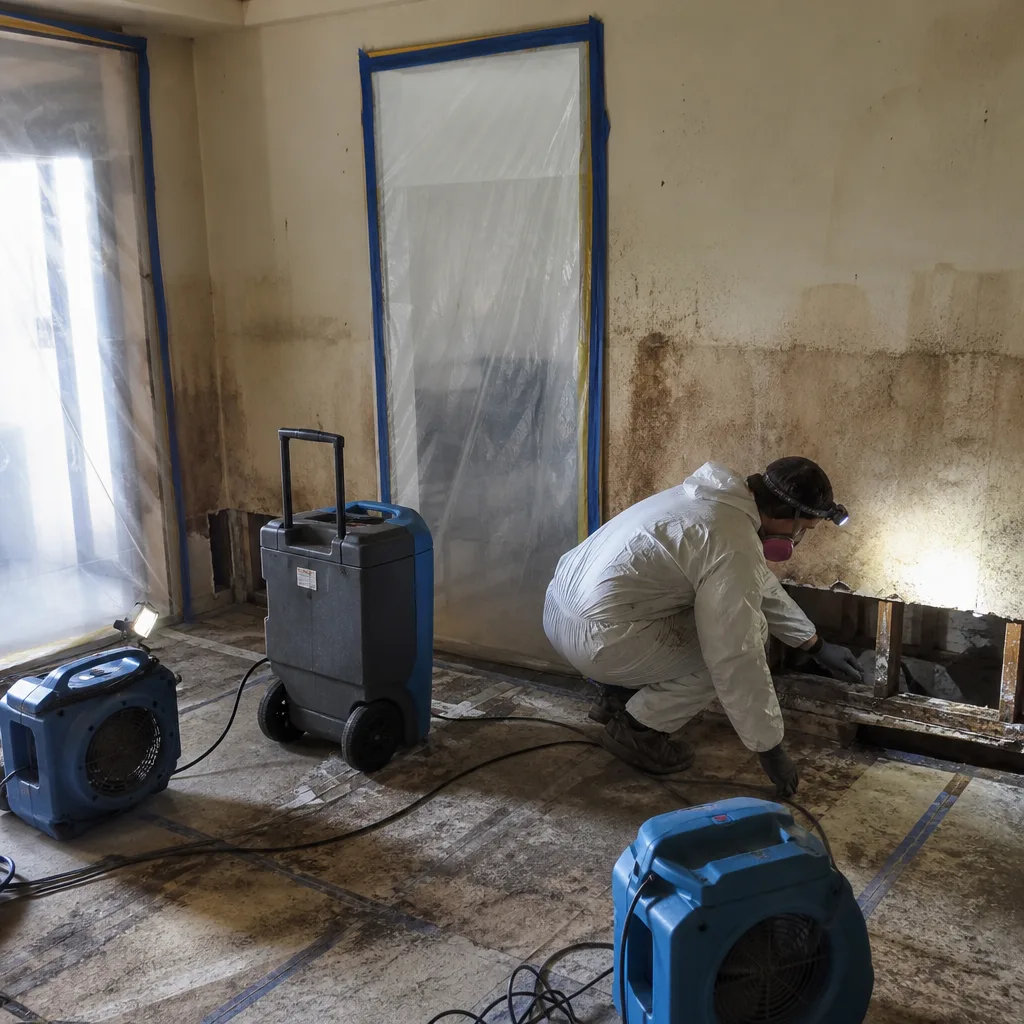
See the difference
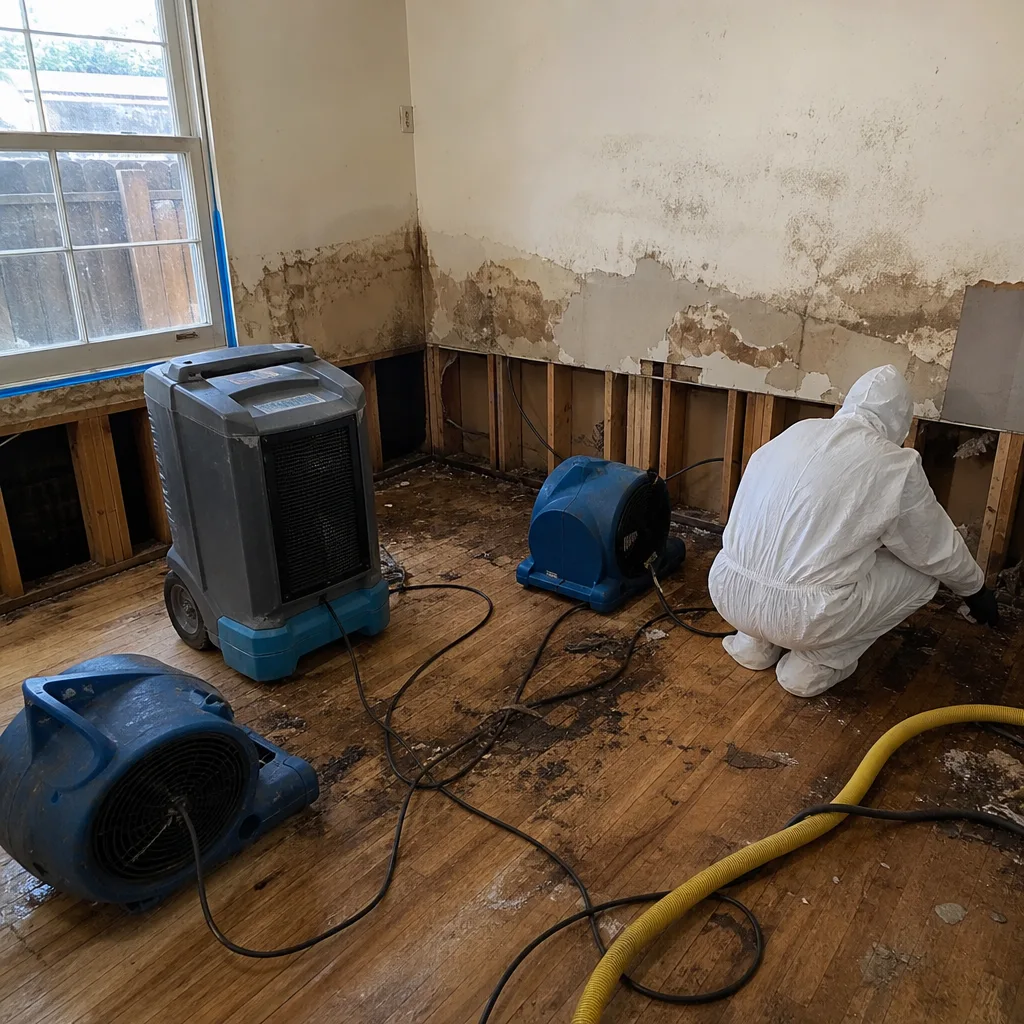 Before
 After
 Before
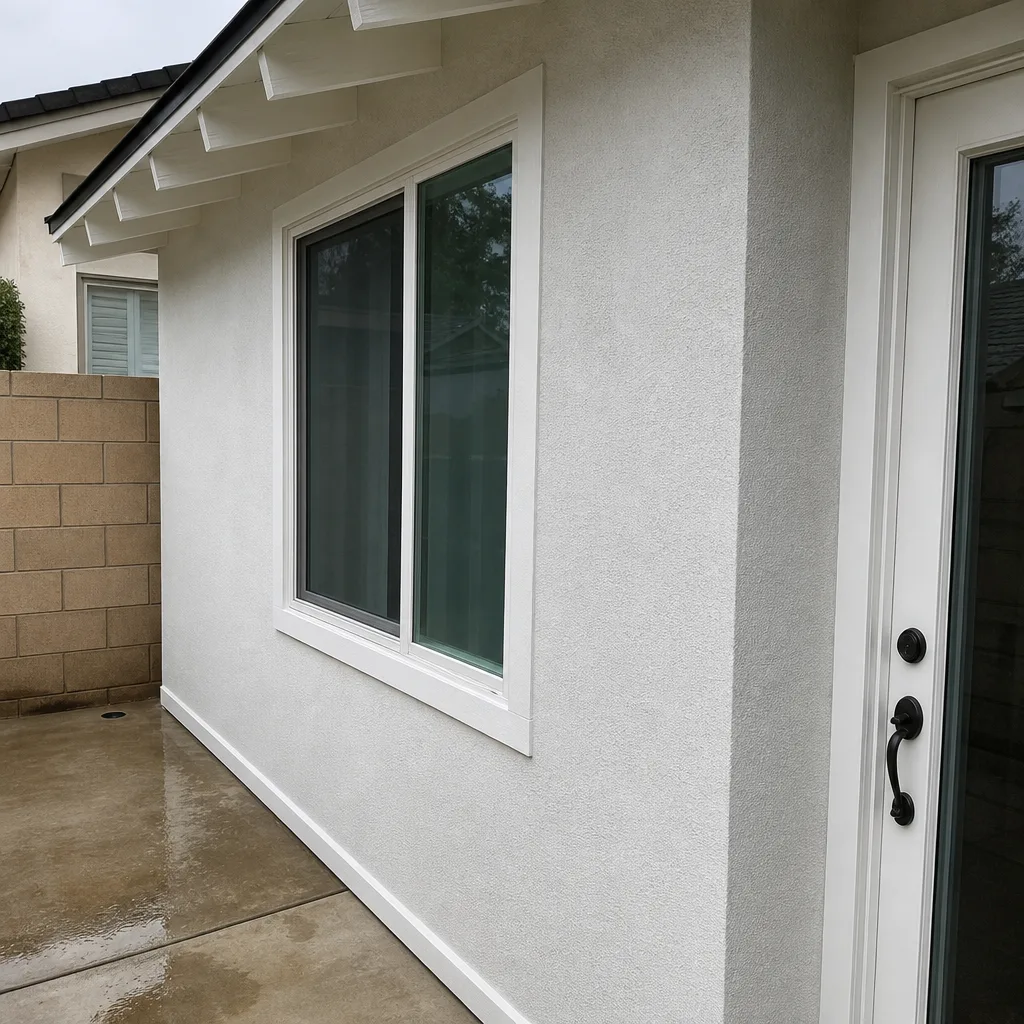 After
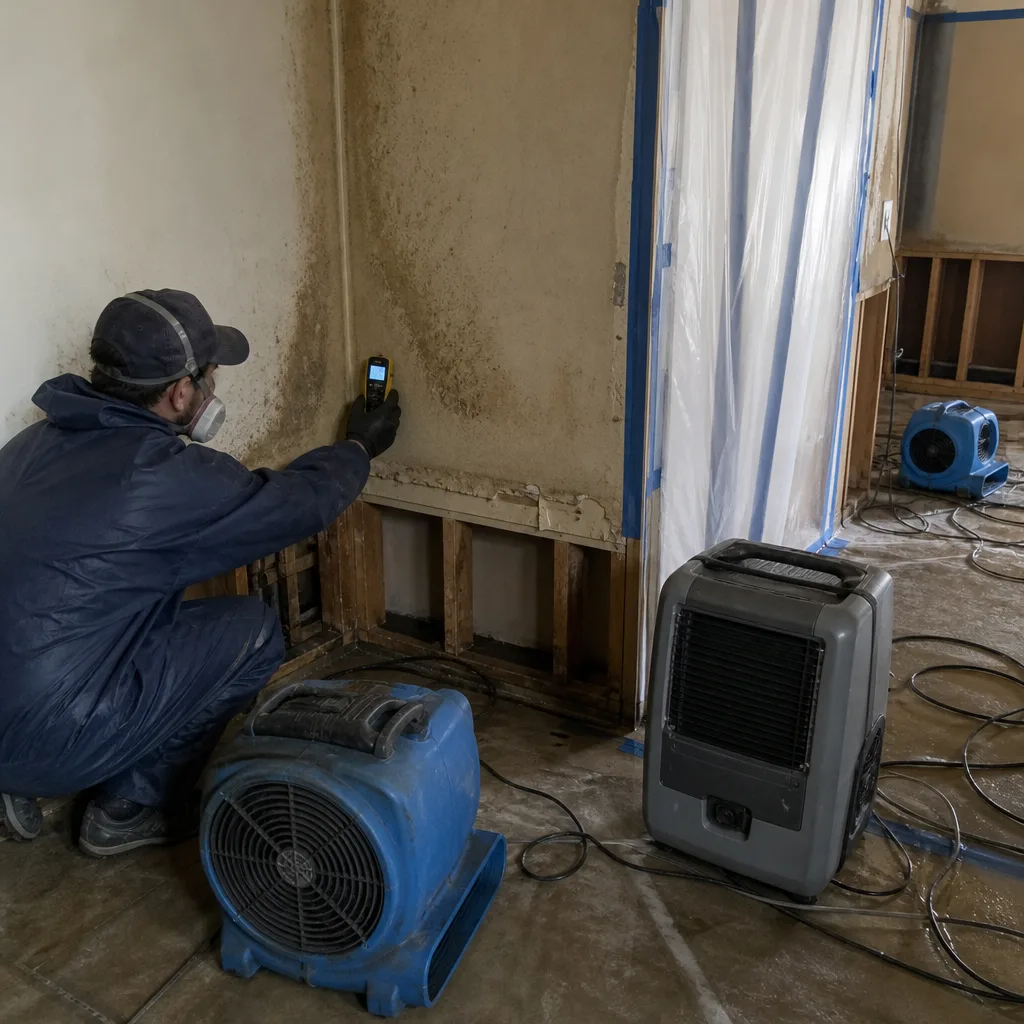 Before
 After
When to Call a Professional
Call a professional when any single indicator from this guide persists for more than a few days, when two or more indicators appear in the same room, or when you get moisture meter readings above 17 percent on drywall or 20 percent on wood and can’t identify an obvious, manageable source. Any visible mold growth larger than a dinner plate warrants professional assessment, as does any musty odor that returns after cleaning. If you’ve had a recent leak, a toilet overflow, or a water event of any kind, and you haven’t had the affected areas professionally assessed with a moisture meter and thermal imaging, the window for simple drying may already be closing. Oxford Restoration Co offers free estimates for Costa Mesa homeowners and property managers, and every assessment includes a written scope before any work begins. Call (877) 265-8058 to schedule an inspection, or to talk through what you’re seeing before you decide whether it needs a professional eye.
Frequently Asked Questions
Mold germination can begin within 24 to 48 hours under typical Costa Mesa conditions when relative humidity stays above 60 percent and organic material, like drywall paper or wood, is wet. Costa Mesa’s marine layer often keeps ambient humidity near 70 percent, which shortens the germination window compared to drier inland cities. For a full maintenance calendar, see our Seasonal Damage Restoration Care for Costa Mesa: Year-Round Homeowner’s Guide. This is why the IICRC standard for water damage response emphasizes drying within 48 to 72 hours, and why professional drying with industrial-grade air movers and dehumidifiers matters more in coastal climates.
A hidden water leak usually smells earthy or musty, like damp soil, wet cardboard, or a crawlspace, and it typically sharpens in specific rooms or corners rather than spreading evenly through the house. The smell is caused by microbial volatile organic compounds from active mold and bacteria, not by the water itself. If the odor strengthens near the floor, suspect a slab leak. If it’s stronger near the ceiling, look for a roof leak or an attic moisture source.
A dehumidifier manages ambient humidity in a room, but it cannot dry water trapped inside a wall cavity or under a slab. Those conditions require directed airflow and, in many cases, professional drying systems like the Injectidry systems we run, which dry cavities and structural spaces without unnecessary demolition. If your moisture meter shows elevated readings inside walls or floors, a consumer dehumidifier is not sufficient treatment.
Musty odor is often strongest in the morning because VOCs concentrate overnight in a closed-up house while temperatures drop and ventilation stops. The marine layer also traps humidity near the ground, which can amplify slab moisture emission in the early morning hours. If the smell fades as the day warms and air moves through the house, the source is likely low-level and contained, but it’s still a source worth locating.
An active ceiling stain has a darker ring or a visible gradient, meaning the stain is still spreading or moisture is still present. It may also feel slightly soft, cool, or damp to the touch. If the stain is uniform in color, hard, and hasn’t changed size or shape in weeks, it’s likely residual staining from a past event. When in doubt, use a moisture meter on the stained area and the surrounding drywall. Elevated readings indicate active moisture.
A rocking toilet is a mechanical failure that will eventually compromise the wax ring seal, even if no water is currently visible. The movement flexes the wax ring with every use until a slow bypass channel forms. The leak that follows is usually a slow seep, not a visible drip, and in slab foundation homes it may never produce standing water. You’ll see the moisture in adjacent flooring, baseboards, or a musty odor near the base. Have the toilet reset and the flange evaluated now, before the leak starts.
The Bottom Line
The damage warning signs that cost Costa Mesa homeowners the most are the ones that never look like water. Paint that bubbles. Baseboards that pull away from the wall. Doors that shift. A smell that comes and goes. These are leading indicators, measurable before the visible damage arrives, and they’re the signals that allow for lower-cost intervention. Learn your home’s baseline with a moisture meter. Track changes over time. Trust the patterns, not any single reading. And when two or more indicators appear in the same room, call a professional before the problem has another week to grow. The difference between a drying job and a mold remediation job is usually measured in days, not symptoms. Oxford Restoration Co offers free estimates in Costa Mesa and can assess your home with the same IICRC-certified process and professional-grade equipment we use on every job. Call (877) 265-8058 to schedule an inspection, or to talk through what you’re seeing.
Written by the team at Oxford Restoration Co, serving Costa Mesa since 2011.