
Last updated October 30, 2026
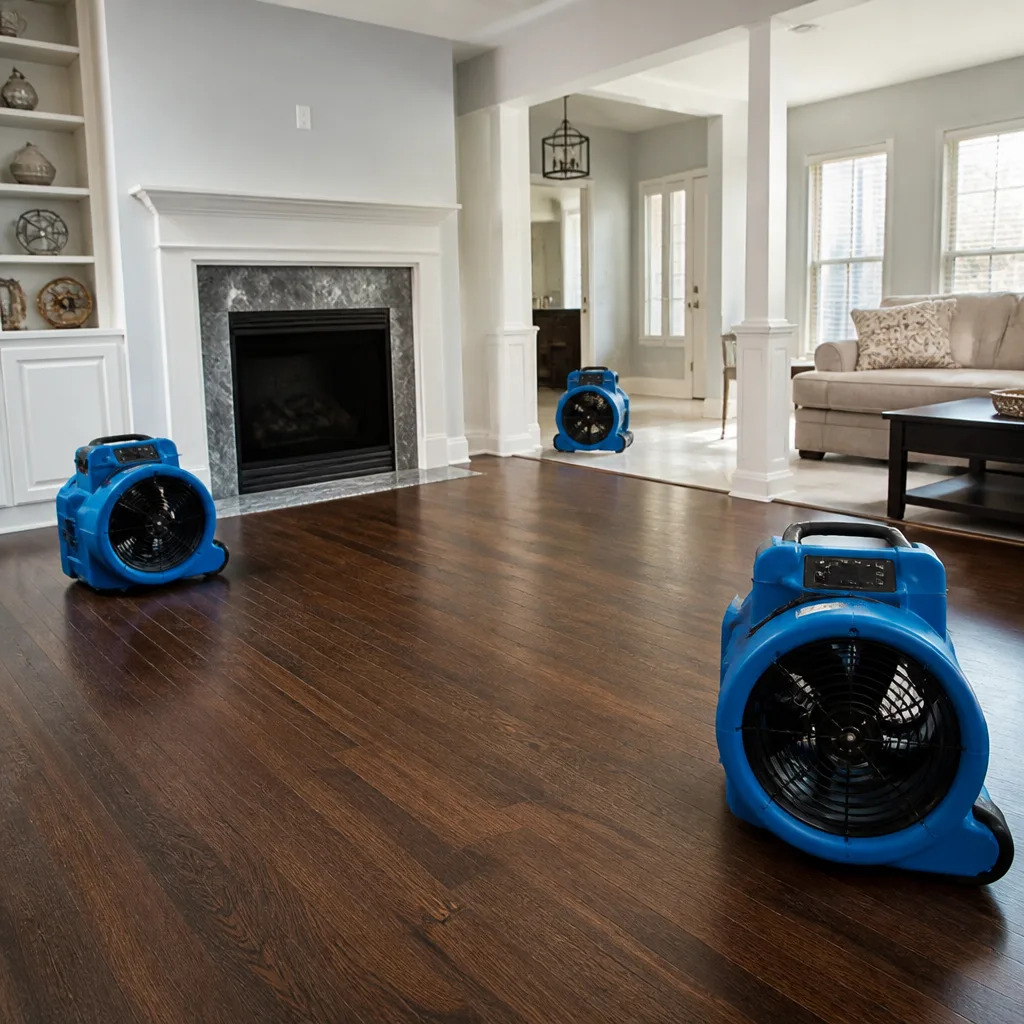 Water damage drying
 Fire & smoke cleanup
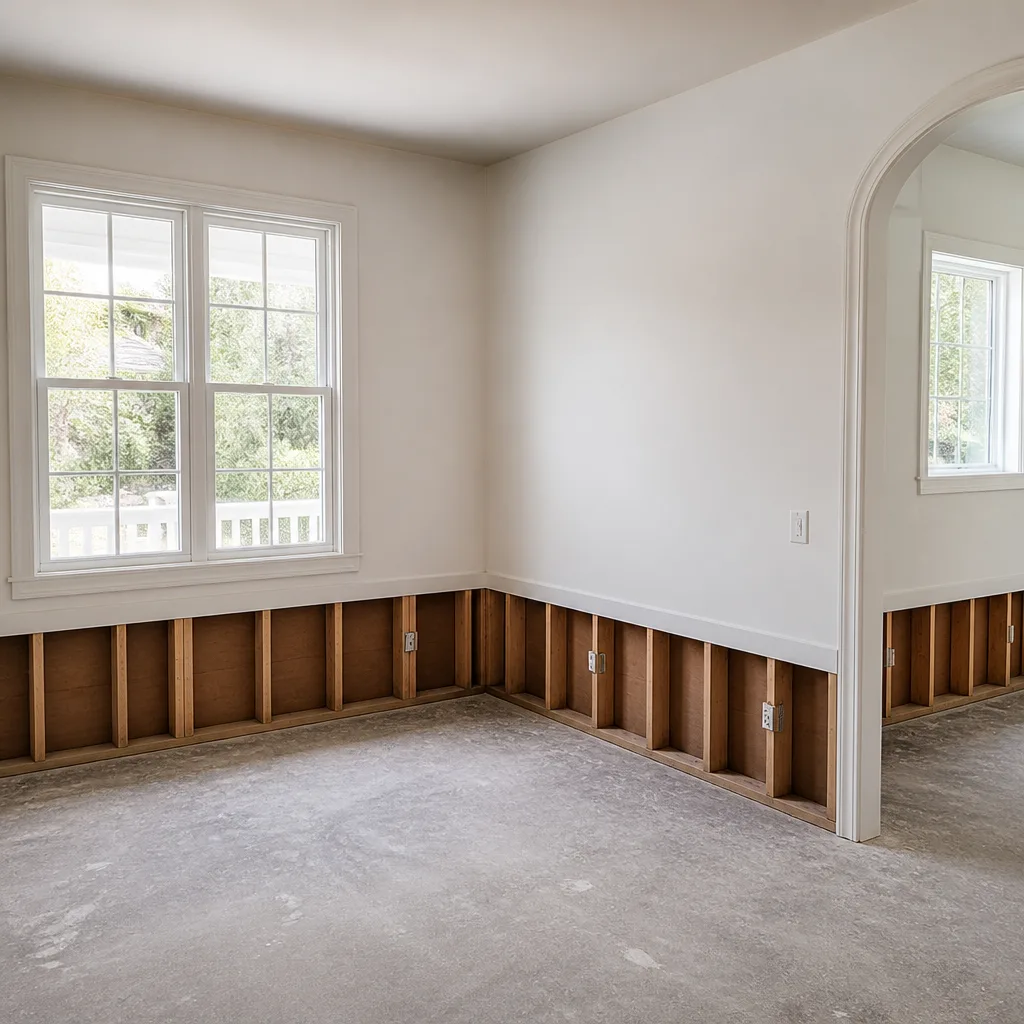 Mold remediation
 Storm response
 Sewage cleanup
 Reconstruction
Free visual inspection and a written scope of work before any mitigation begins - photos, moisture readings, and drying logs go in your claim file
The scope we write is the scope we bill. Anything new gets shown to you, in writing, before we touch it.
Get your free estimateHow to Hire a Damage Restoration Contractor in Costa Mesa: A Step-by-Step Guide
The average Costa Mesa homeowner spends more time researching a restaurant for dinner than vetting the contractor who will tear open their walls after a slab leak. That’s not a character flaw. It’s what happens when a water heater bursts at 11 p.m. on a Tuesday and standing water is creeping toward the hallway carpet. The problem? The restoration industry knows you’re under pressure, and a meaningful percentage of contractors bank on it. This guide walks through the vetting framework most homeowners never see: the technical credentials, documentation standards, and contract clauses that separate a specialist from a truck with a fan in the back. If you’re hiring a damage restoration contractor in Costa Mesa, this is what twenty years of industry knowledge says you actually need to check.
Restoration work we handle
Quick Answer
Hiring a damage restoration contractor in Costa Mesa comes down to verifying four things before you sign anything: current IICRC certifications matched to your specific damage type, a written scope of work that itemizes drying goals and equipment, proof of direct-hire technicians rather than subcontractors, and a clear protocol for documentation and insurance coordination. A legitimate specialist will provide all four without hesitation. Anyone who balks at certification verification or moisture mapping is doing you a favor by disqualifying themselves early.
Table of Contents
- Why Credentials Matter More in Restoration Than Any Other Trade
- The IICRC Certifications That Actually Matter, by Damage Type
- The 7 Questions to Ask Every Contractor Before They Step Foot in Your Home
- Moisture Mapping and Documentation: The Non-Negotiable Standard
- The Insurance Preferred Vendor Problem No One Talks About
- Contract Clauses That Protect You: Scope, Equipment Logs, and Drying Goals
- Why Response Time Matters Technically, Not Just Logistically
- Common Mistakes to Avoid
- When to Call a Professional
- Frequently Asked Questions
- The Bottom Line
Why Credentials Matter More in Restoration Than Any Other Trade
A general contractor builds things. A restoration contractor reverses a biological and chemical process that is actively degrading your property while you watch. The two trades share a toolbox but not a knowledge base. When a plumber fixes a pipe, the pipe stays fixed. When a restoration contractor “fixes” a water intrusion, the real test happens months later, when hidden moisture either causes mold or doesn’t. Costa Mesa’s coastal humidity makes this distinction sharper than in drier inland markets.
The restoration industry is governed by a specific body called the IICRC: the Institute of Inspection, Cleaning and Restoration Certification. It maintains the standards that courts, insurers, and forensic engineers reference when a restoration job goes wrong. An IICRC-certified process means the work follows documented, peer-reviewed protocols for drying, cleaning, and decontamination. It does not mean the contractor is good. It means the contractor has demonstrably learned the correct procedure.
In our experience, the fastest way to sort a legitimate specialist from a general contractor dabbling in water damage is to ask which technician on the job holds which IICRC certification, and then check it. Not the company. The person holding the moisture meter. We’ll cover exactly how to do that verification in the next section.
The Restoration Industry Association, or RIA, is a separate professional body. Membership signals engagement with ongoing industry education and ethics standards. It’s not a substitute for IICRC certification, but it’s a meaningful secondary signal: a company that bothers to maintain professional association affiliations is a company that cares about its standing in the restoration community, not just its Yelp rating.
The IICRC Certifications That Actually Matter, by Damage Type
Here’s what a marketing brochure won’t tell you: IICRC offers dozens of certifications, but only four matter for residential damage restoration. Each applies to a specific scenario, and holding one does not qualify a technician for the others.
For water damage, the relevant credentials are WRT (Water Damage Restoration Technician) and ASD (Applied Structural Drying). WRT covers extraction, containment, and initial response. ASD is the advanced credential for calculating drying chamber conditions, evaporation rates, and dehumidification requirements. A company can have a WRT on staff and still botch a complex structural dry without an ASD technician reviewing the project.
For fire damage, the credential to ask about is FSRT (Fire and Smoke Restoration Technician). Fire restoration involves chemical residue behavior, odor neutralization, and surface-specific cleaning protocols that water technicians are not trained for.
For mold, the relevant certification is AMRT (Applied Microbial Remediation Technician). Mold remediation is not mold cleaning. Proper remediation requires containment engineering, negative air pressure, HEPA filtration, and waste disposal protocols. A contractor with WRT and no AMRT should not be touching a mold problem in your Costa Mesa crawl space.
You can verify any technician’s certifications through the IICRC’s public registry. Ask for the technician’s full name and certificate number, then check it. A current certification has an expiration date. Expired certifications are common and meaningless. If a contractor says “we’re certified” without specifying who, what, and when, you’re hearing marketing, not credentialing.
The 7 Questions to Ask Every Contractor Before They Step Foot in Your Home
These questions are designed to be asked on the phone, before anyone enters your property. They’re not confrontational. They’re diagnostic. A specialist answers them quickly because they hear them from informed adjusters and property managers all the time.
- Which specific IICRC certifications do the technicians assigned to my job hold, and may I have their names to verify? The answer should include the acronyms covered above: WRT, ASD, FSRT, or AMRT. “We’re fully certified” is not an answer.
- Are your technicians employees or subcontractors? Subcontracting is rampant in restoration, especially during busy season or after a major storm event. A sub hired the night your claim came in has no loyalty to your outcome and may not hold the certifications the company claims.
- Will you provide a written moisture map before drying begins, and updated maps during the process? Refusal or vagueness here is a disqualifier. We’ll cover exactly what a moisture map should include in the next section.
- Who is my single point of contact during the project? If the answer is a different person every week, you’re a dispatch number, not a project. Restoration requires continuity because conditions change daily during drying.
- How do you determine when drying is complete? The correct answer references moisture content readings taken with calibrated meters, compared against a dry standard, documented in writing. “When the equipment stops showing water” is wrong.
- How do you handle insurance billing and adjuster communication? A specialist documents everything photographically and provides the adjuster with industry-standard paperwork for the scope, equipment, and monitoring. This makes your claim stronger, not weaker.
- What happens if drying goals aren’t met within your projected timeline? There should be a defined escalation path: additional equipment, extended drying, revised scope. No one can guarantee drying times, but a professional has a protocol for when the plan gets off track.
Moisture Mapping and Documentation: The Non-Negotiable Standard
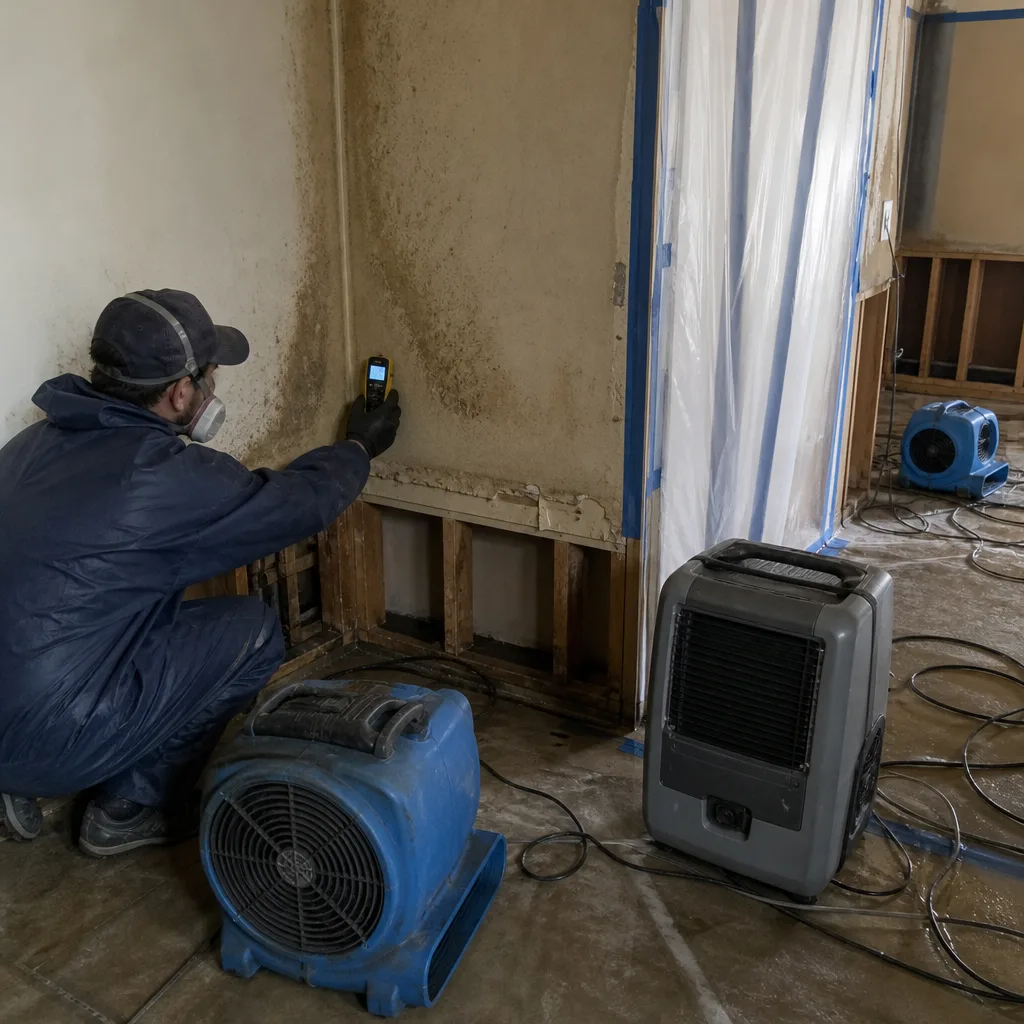
Moisture mapping is the difference between guessing and knowing. It’s also the documentation most commonly skipped by contractors cutting corners, because it’s where the technical rigor either shows up or disappears from the job.
Before drying begins, a qualified technician should assess and map moisture conditions in every affected room plus adjacent areas that might be affected but aren’t visibly wet. This includes readings from multiple materials: drywall, baseboard and flooring areas, stud cavities, and subfloor. The map should use a consistent grid system and record moisture content percentages, not just “wet” or “dry” stamps.
During the drying process, the map should be updated daily or every other day at minimum. These updates document that drying is actually progressing. They tell you, the homeowner, whether the dehumidifiers are accomplishing anything or just running up your electrical bill while the contractor waits for the insurance cycle to complete.
After drying, the final map should show every affected area within an acceptable moisture range relative to an unaffected dry standard in your own home. This is important: the “dry standard” is not a universal number. A wall in Laguna Beach at 14% moisture content might be normal for its local equilibrium, while the same reading in a conditioned Costa Mesa interior would be elevated. The comparison must be against your home’s own baseline, not a textbook value.
If a contractor refuses to provide a moisture map, or provides one that looks hand-drawn with no actual numbers, walk away. The map is the single most important piece of documentation in a water damage claim. It proves what got wet, how wet it got, and whether it dried. Your insurance claim, your lender if applicable, and any future buyer of your home can all be affected by whether that documentation exists.
The Insurance Preferred Vendor Problem No One Talks About
When you call your insurance company after a water loss, they will likely offer you a list of “preferred vendors.” The pitch is convenience: we know them, they bill us directly, we trust them. What they don’t tell you is that preferred vendor status is negotiated based on cost controls that aren’t always aligned with your outcome.
Here’s the incentive structure. An insurer wants to restore your property at the lowest defensible cost. A contractor wants a profitable job. In a preferred vendor relationship, the contractor agrees to the insurer’s pricing and scope parameters in exchange for a steady volume of referrals. That’s not inherently corrupt. Many preferred vendors do fine work. But the relationship creates pressure that you, as the homeowner, should be aware of: the contractor’s first client in that dynamic is the insurer who fed them the job, not the homeowner who owns the damaged house.
Ask these questions to test which master a contractor is serving:
- If the adjuster tells you to stop drying early, will you push back? A specialist documents conditions and advocates for the drying standard regardless of the adjuster’s timeline.
- Who approves scope changes: you or the insurance company? The contractor works for you. They should be able to explain what needs to change and why, then help you make the case to your insurer, not quietly submit to a reduced scope that leaves moisture behind.
- If I hire you outside the preferred vendor program, does anything change about your service? This is a revealing question. A company that only provides full documentation and thorough drying when the insurer pays top dollar is telling you something important.
You can hire whoever you want. That’s the law. Your insurance company cannot require you to use a specific contractor, though they can require that your chosen contractor’s rates be “reasonable and customary” for the area. A specialist who knows how to document to insurance industry standards will generally sail through that test.
This is where working with a genuinely independent specialist matters. Water Damage Restoration in Lakeview is one example of an area where we see consistent claims for supply-line failures, and the homeowners who ask these questions early end up with measurably shorter claims cycles and cleaner final walkthroughs.
Contract Clauses That Protect You: Scope, Equipment Logs, and Drying Goals
The contract is where enthusiasm meets commitment. A verbal promise of “we’ll dry all affected areas” is worth exactly nothing. A contract with the following five elements is worth a lot.
- Written scope of work, itemized by room and material. “Water damage mitigation in kitchen and adjacent dining area” is not a scope. “Extract standing water from kitchen floor area; remove and bag saturated carpet pad in dining room; demolish and remove wet drywall in wall E4 from floor to 48 inches” is a scope. Specificity protects you from both under-scoping (the contractor quietly ticks the most obvious boxes) and over-scoping (you get billed for demolition that wasn’t needed).
- Equipment log with placement and start/end dates. You should know how many dehumidifiers, air movers, and air scrubbers are on the job, where they’re placed, and when they started and stopped running. This is standard documentation for restoration professionals. If it’s absent, you have no way to verify you’re being billed for equipment that actually ran.
- Projected drying timeline with defined goals. The contract should state the target number of drying days, the expected moisture-content reduction pattern, and what happens if the timeline slips. Does the contractor bring in additional equipment at no extra cost? Does the daily monitoring continue? “We’ll try to have it done in four days” is not a target.
- Monitoring frequency. How often will a technician visit during the drying phase? Daily is standard for water damage. Every other day is defensible in simple cases. Once a week is not drying management; that’s equipment rental with a logo.
- Change-order process. When the scope changes, who approves it, in writing, and at what cost? Restoration almost always involves some scope evolution because hidden framing is only visible after demolition. You want a defined process, not a surprise invoice.
A quick word on the technology angle: some restoration companies use Injectidry systems for cavity and wall drying. This is relevant to your contract because Injectidry allows drying of enclosed spaces without tearing out the wall surface. That’s a demolition-saving technology. Less demolition means less reconstruction, which means less cost and less time in a hotel. When a contractor proposes demolition-heavy scope for wet walls, ask whether cavity drying was considered. A specialist with the right systems will have a technical answer. A contractor who’s never heard of it just gave you the answer.
Why Response Time Matters Technically, Not Just Logistically
Everyone wants a fast response when their ceiling is dripping brown water onto the couch. But the urgency isn’t just about limiting furniture damage. There’s a technical clock running that changes the entire scope of work.
Water contamination is classified by the IICRC into three categories. Category 1 is clean water: a supply line, a faucet left running, rainwater that hasn’t picked up contaminants. Category 2 is gray water: washing machine discharge, dishwasher overflow, water with some contamination. Category 3 is black water: sewage, rising flood water, water that has been sitting long enough to support bacterial growth and contamination spread.
The upgrade window from Category 2 to Category 3 is generally recognized within the first 48 to 72 hours. A Category 2 loss that sits unaddressed becomes a Category 3 job when standing water stagnates, microbial growth takes hold, and contamination spreads through the wetted material. The practical consequence: what starts as a carpet drying job becomes a demolition and antimicrobial treatment job with a contaminated material disposal protocol. That’s a several-fold cost increase and a significantly larger disruption.
In Costa Mesa, where summer temperatures routinely push into the high 80s and low 90s, this progression accelerates. Florida Gulf Coast humidity has nothing on a closed-up house in Mesa Verde with no AC and a soaked subfloor. Our advice: if you have a Category 2 loss, treat every hour before a mitigation response as if it’s costing you hundreds of dollars. Because it often is.
Common Mistakes to Avoid
- Hiring on “we’ll bill your insurance” without checking the contractor’s documentation standards. Any contractor can say they’ll bill your insurer. The question is whether their paperwork will stand up to adjuster scrutiny. Weak documentation equals delayed claims and out-of-pocket gaps.
- Accepting a verbal scope of work. A contractor who won’t write down the scope before starting is a contractor who wants the freedom to redefine the scope after your walls are open. No written scope, no work. Period.
- Ignoring certification expiration dates. IICRC certifications expire. An expired WRT from 2018 is not a current qualification. Check the registry.
- Assuming the insurance preferred vendor is required. They’re not. You choose the contractor. The insurer chooses whether to cover the cost. Negotiate from there.
- Skipping the moisture map review. The map is your proof of what happened. If you don’t review it, you’re betting your insurance claim and your home’s future on a contractor’s word.
- Choosing on price during an emergency. The lowest bid often reflects the least documentation, the least monitoring, and the cheapest drying approach. In restoration, cheap dries bad. “Cheap” here means you’ll pay for it in reconstruction or mold remediation later. Mold Remediation in Lakeview is a service that exists largely because of shortcut drying jobs done years earlier.
- Not asking about the technicians, not the company. The company may hold a wall full of certificates. The two people who show up at your door are the relevant question. Ask for names.
When to Call a Professional
Some damage is obvious. If water is running through your ceiling, you call without deliberation. But the situations where homeowners wait too long are the ones that do the most quiet damage. A small dark patch on the baseboard behind the bathroom vanity. A musty smell that comes and goes in the hallway. A water stain on the ceiling that has a thin yellow ring around it but isn’t actively dripping. These are the losses that progress from cosmetic to structural while the homeowner decides whether it’s worth the deductible.
The technical line is this: if you can see or smell water damage, there is moisture you cannot see. Surface-level drying with fans from Home Depot addresses what’s visible and leaves what’s behind the drywall. Hidden moisture behind walls, under flooring, and in crawl spaces is exactly the territory where microbial growth establishes itself. In Costa Mesa’s climate, a closed cavity at 70 percent relative humidity is an incubation chamber.
Oxford Restoration Co offers free estimates in Costa Mesa. Call (877) 265-8058. If a specialist tells you the situation is minor and can wait, you’ve lost nothing by asking. If it’s not minor, you’ve just saved yourself a remediation project or a partial reconstruction. Fire Damage Restoration in Lakeview is another area where we see homeowners hesitate after small kitchen fires, unaware that smoke and soot residue is corrosive and gets harder to restore with every day it sits on surfaces.
Frequently Asked Questions
For a typical Category 1 or 2 loss in a single room or hallway, Costa Mesa homeowners should expect a range of roughly $2,500 to $6,500 for mitigation alone, depending on material removal and drying-duration factors. Larger losses involving multiple rooms, Category 3 contamination, or extensive material demolition run higher. The single biggest cost variable is early response: prompt mitigation limits demolition and drying time. For an exact quote on your specific loss, call (877) 265-8058.
In most cases, yes, if the cause of the water damage is sudden and accidental, which includes supply-line failures, water heater ruptures, and appliance malfunctions. Gradual damage, neglect, or long-term seepage are generally excluded. Your restoration contractor should provide thorough documentation—see our Water Damage Restoration Troubleshooting: Common Problems and How to Fix Them for what to expect—that supports your claim, including moisture maps and equipment logs. Ask your contractor how they handle adjuster coordination before you sign.
Use the IICRC’s public registry, available on their website. Search by the technician’s full name and certification number. Confirm that the certification type matches your damage scenario: WRT or ASD for water, FSRT for fire, AMRT for mold. Also check the expiration date. A contractor who hesitates to provide technician names and certificate numbers should be eliminated from consideration.
That depends on the affected area and the source. Mold growth covering more than approximately 10 square feet, or mold in HVAC systems, walls, or other hidden cavities, generally warrants professional remediation with containment and HEPA filtration. Smaller surface mold on non-porous materials can sometimes be cleaned, but the underlying moisture problem must be addressed or the mold will return. A specialist can assess this distinction on site.
A contractor’s license grants legal permission to operate in California. It doesn’t test restoration knowledge. IICRC certification demonstrates training in the specific standards and procedures for drying, cleaning, and decontamination. You want both: a licensed contractor with current IICRC-certified technicians doing the actual work. One without the other is incomplete.
For water damage, most established Costa Mesa restoration companies offer same-day or next-day emergency response. The key is not just showing up: it’s showing up with the right equipment, a moisture mapping plan, and the intent to document everything. A truck with two box fans and a shop vac is not mitigation. Call early in the loss window, even if you’re still on the phone with your insurance. The response clock and the contamination clock are the same clock.
The Bottom Line
Hiring a damage restoration contractor in Costa Mesa is a high-consequence decision made under low-information conditions, which is exactly the combination that rewards the contractor who markets hardest rather than the one who dries best. The fix is a vetting framework built on technical standards. Verify the specific IICRC certifications that match your damage type. Demand moisture mapping before, during, and after drying. Ask who actually shows up and whether they’re employees or subs. Read the contract for defined scope, equipment logs, and drying goals. Watch the 72-hour contamination window. Get it in writing. Every one of these steps filters out the companies that hope you’re too stressed to check. When the water stops rising, the questions start mattering. Oxford Restoration Co home is the best place to start learning about what a specialist process looks like.
Written by the team at Oxford Restoration Co, serving Costa Mesa since 2011. Explore more guides & resources.
See the difference
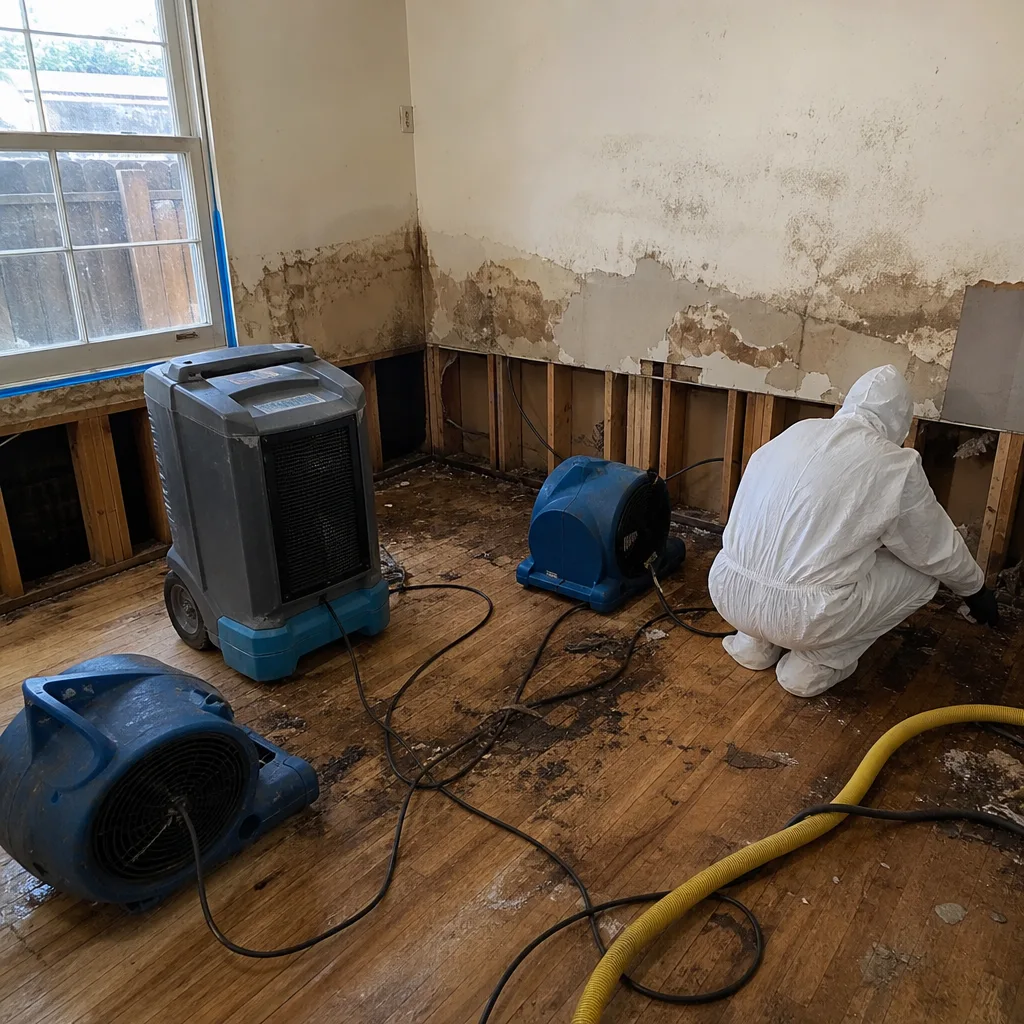 Before
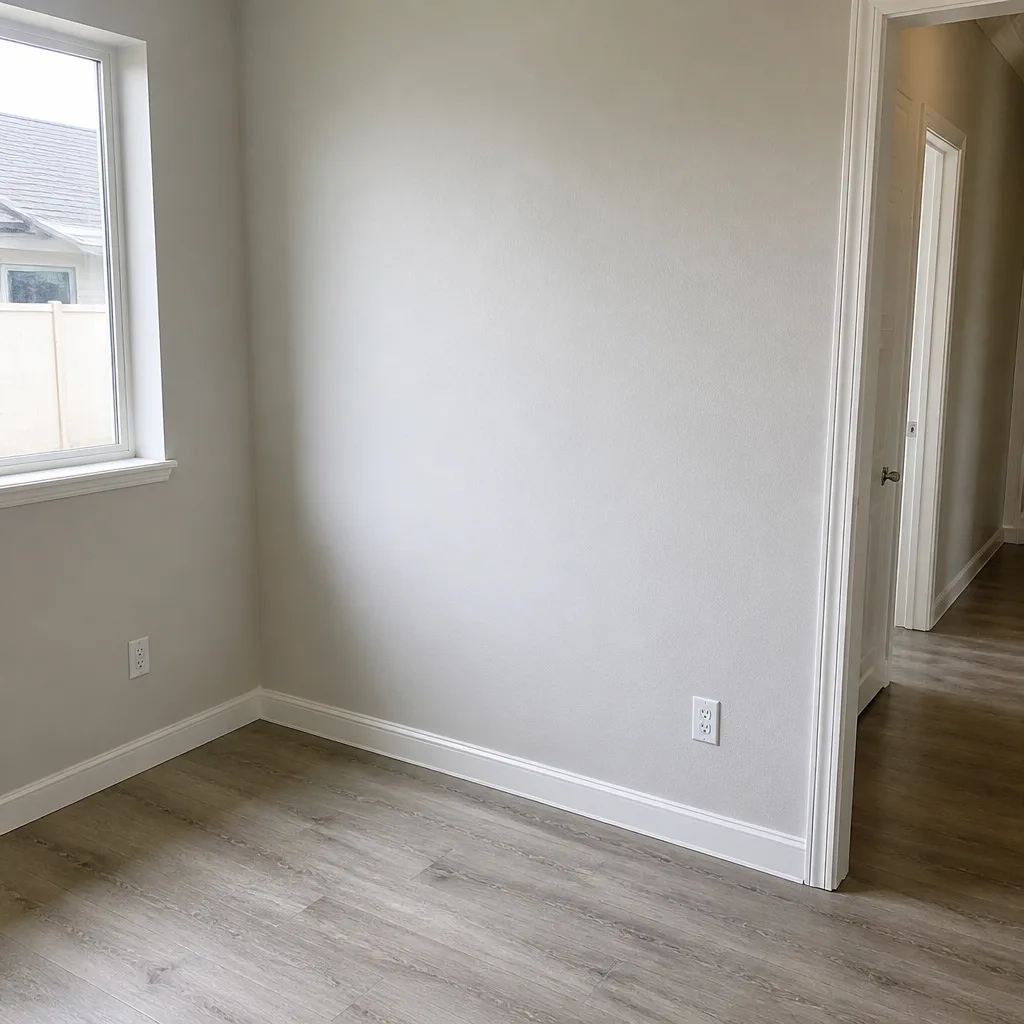 After
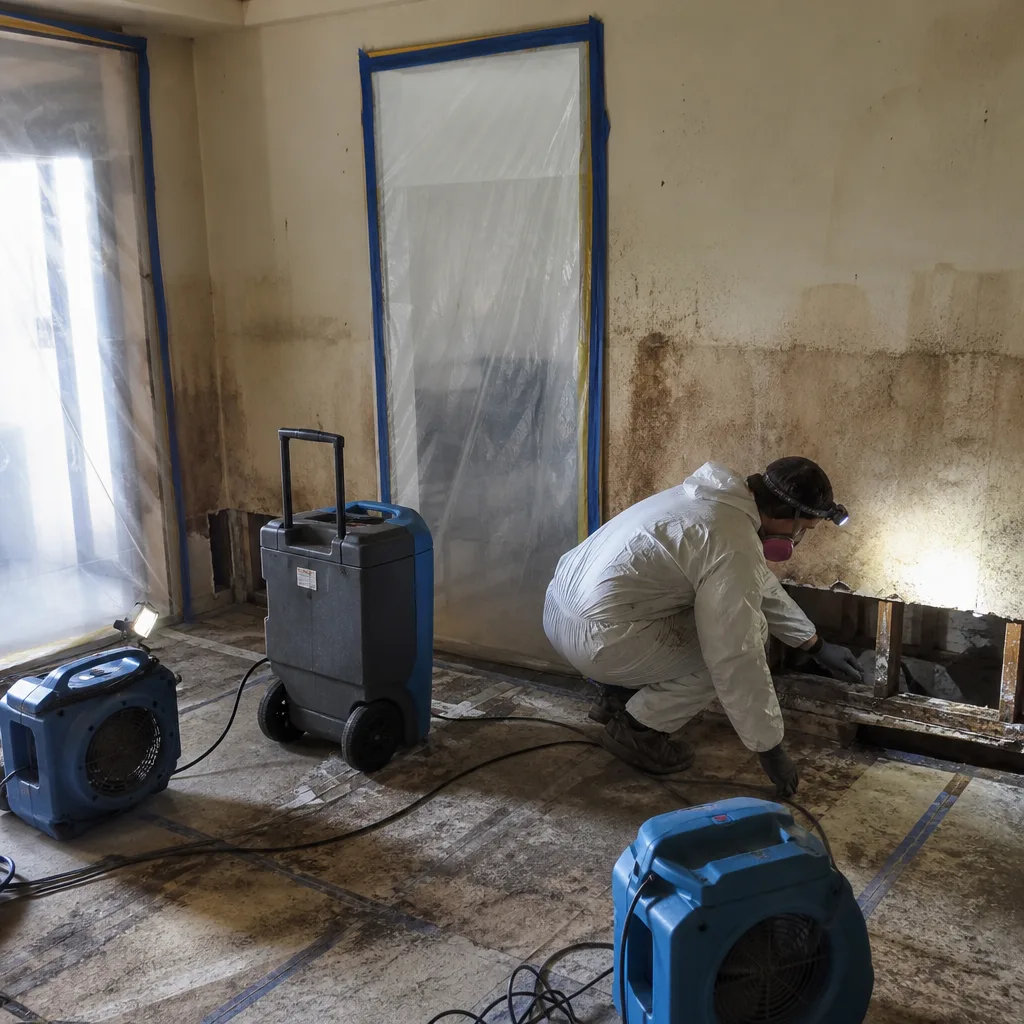 Before
 After
 Before
 After