
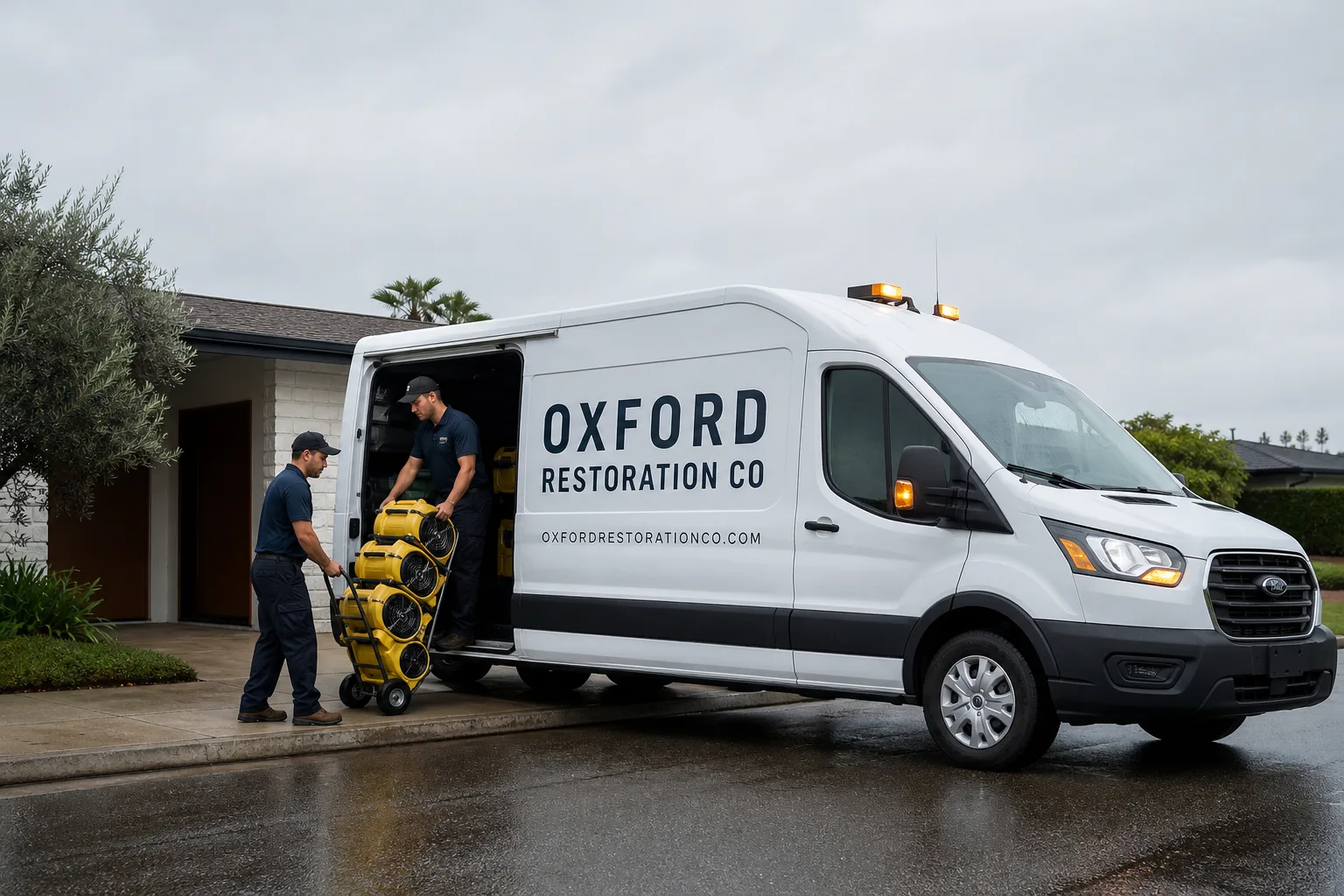
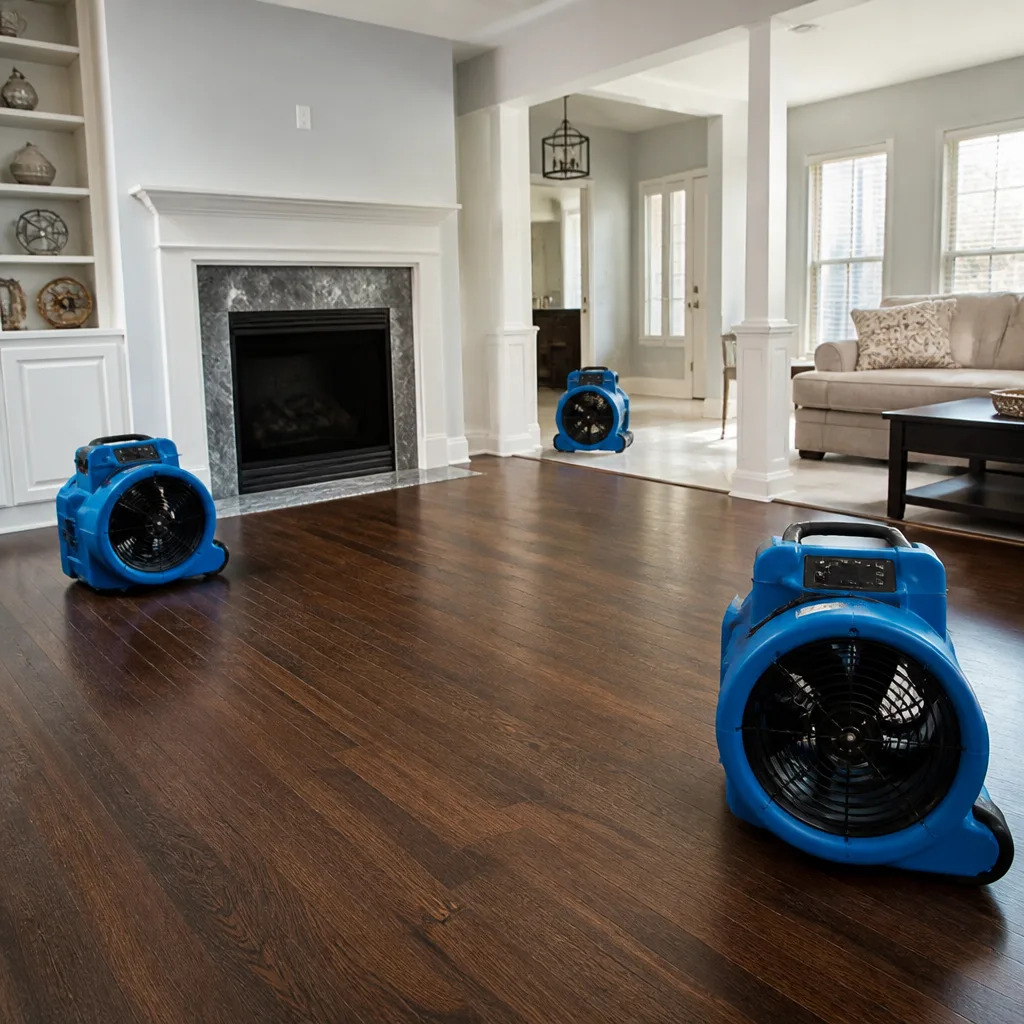
 Water damage drying
 Fire & smoke cleanup
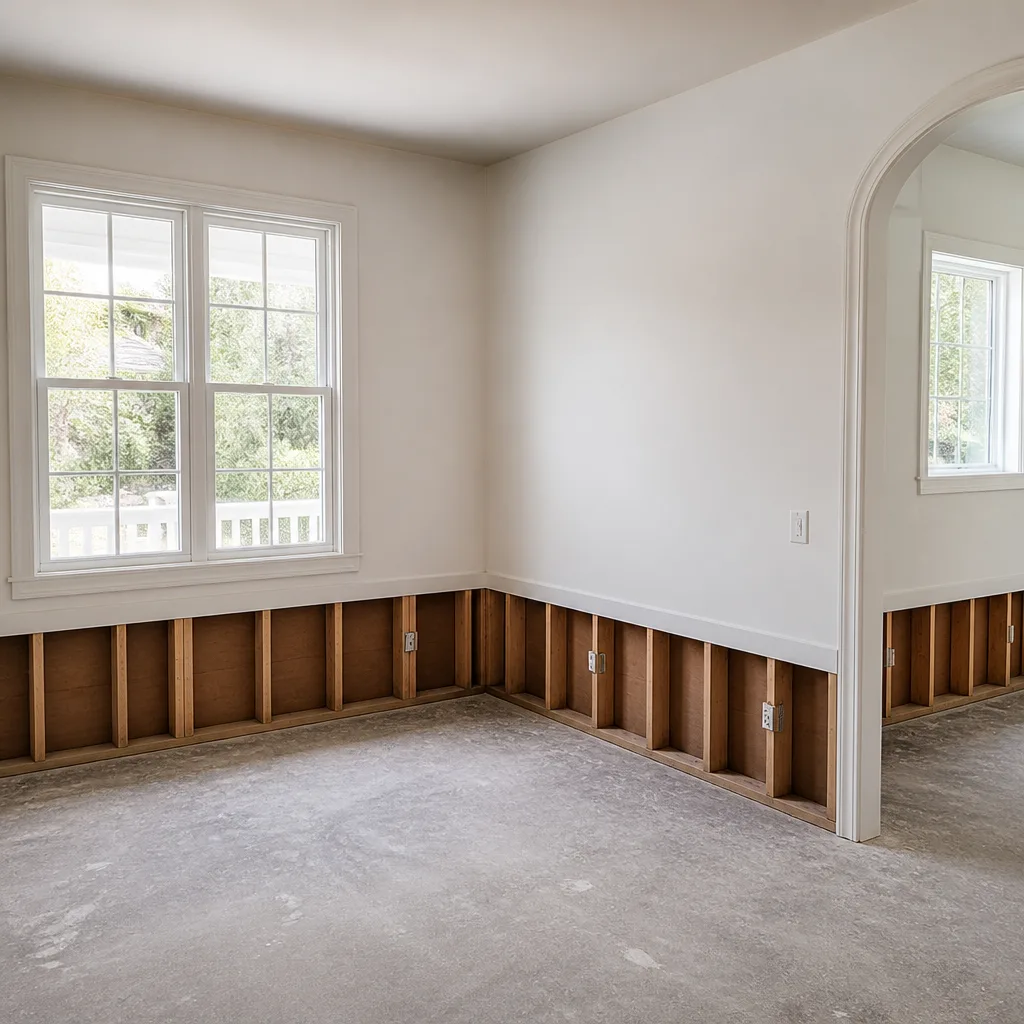 Mold remediation
 Storm response
 Sewage cleanup
 Reconstruction
Free visual inspection and a written scope of work before any mitigation begins - photos, moisture readings, and drying logs go in your claim file
The scope we write is the scope we bill. Anything new gets shown to you, in writing, before we touch it.
Get your free estimateFast, Reliable Water Damage Restoration Across La Verne
Water damage restoration in La Verne typically costs $1,800 – $5,600 for a standard room-level claim with extraction and structural drying, and $4,000 – $12,000 when wind-driven rain pushes through door thresholds into walls and attics. We respond to 91750 calls within 60 to 90 minutes because foothill storms don’t wait for business hours. The Santa Ana wind pattern above Live Oak Reservoir changes where water enters these homes, and that’s why our Water Damage Restoration crews start with the attic, not the floor. Call (877) 265-8058 now if you can see water, smell damp, or spotted ceiling stains after the last wind event.
Why Oxford Restoration Co Is La Verne’s Preferred Water Damage Restoration Company
La Verne isn’t a flatland Inland Empire city. Our crews have worked the bungalows off Bonita Avenue, the mid-century ranches around the University of La Verne, and the tract homes on the eastern edge where wind-loaded rain behaves differently than it does in Pomona or Montclair. Noel Carrasco leads our restoration team, and his standard for any La Verne job is the same: moisture map the full envelope, document what the water actually touched, and dry to IICRC standard, not to what looks dry on the surface.
We hold IICRC certification and maintain membership in the RIA and IFA, which means our process gets revised as restoration science changes. For 91750 homeowners, that matters because vintage plaster walls and original framing don’t respond to drying the way modern drywall does, and a general cleaner won’t know the difference until the plaster cracks. Our customer feedback from La Verne consistently notes the same three things: we show up fast after a storm, we explain the drying plan before we turn on equipment, and we don’t tear open walls that Injectidry can dry in place.
Restoration work we handle
Emergency Water Removal in La Verne
Emergency Water Removal in La Verne is a same-visit response that starts with stopping the source, extracting standing water with truck-mounted systems, and mapping where moisture has traveled through flooring, walls, and framing. After a wind-driven storm off the San Gabriels, that often means water pushed through a failed exterior door threshold on the north face and tracked across a slab or into a crawlspace before anyone notices. La Verne homeowners call us when they see water at the base of a door, hear it moving behind a wall, or find a damp patch spreading through original oak flooring.
Wind-loaded intrusion response
We treat a Santa Ana or atmospheric-river event as a wind-load intrusion, not a flatland rain event. That changes the first hour of the call entirely. We check the attic and roof deck for water and ember infiltration before we even set up extraction equipment on the floor, because in La Verne the upstairs is often the primary entry point.
Attic-first extraction protocol
When wind drives rain horizontally against a north-facing roofline or pushes water through a door frame, the wet path goes down from the roof deck or up from the threshold. Our crews log moisture readings at every affected cavity, run containment where framing is saturated, and start structural drying with Dri-Eaz dehumidification and air movers sized to the room volume, not a guess.
Flood Damage Restoration in La Verne
Flood Damage Restoration in La Verne covers standing water from failed drainage along the old San Antonio Creek watershed, storm channel overflow in the lower-lying streets, and stormwater that enters through door thresholds or foundation cracks during the winter atmospheric rivers. This is category 2 or category 3 water in most cases, which means it carries debris, soil, and bacterial load. The work includes extraction, disposal of unsalvageable materials, antimicrobial treatment, structural drying, and documentation your carrier can actually use.
The fire-flood cycle
La Verne sits in a fire-flood cycle that flatland cities south of us don’t experience. The same hillside that carries embers in October carries mud and water in February, so our flood jobs often arrive on the heels of a wildfire season in the Angeles National Forest. That’s why we check the full envelope on every flood call, not just the floor.
Foothill drainage failure
Homes pressed against the foothills near Live Oak Reservoir and the canyon mouths get stormwater moving at grade, not falling vertically, and that water finds the lowest opening. We’ve pulled water from more than a few 1920s-era crawlspaces where a clay lateral failed at the same time the hillside ran water down a side yard. If your crawlspace has standing water, we’ll extract it and dry the framing before the smell becomes the problem.
Trusted Brands We Service in La Verne
We stock parts and service the brands that show up most often in La Verne homes: Wayne, Zoeller, Liberty, and Goulds pumps are common in the older basements and crawlspaces around Old Town, while tract homes east of Wheeler Avenue tend toward newer submersibles. If your pump failed during the last storm, we can replace the switch, impeller, or the whole unit, and we check the discharge line for blockages while we’re there. We also see a lot of water heater failures in La Verne, and a burst 40-gallon tank on a Friday night is a 91750 emergency we handle start to finish.
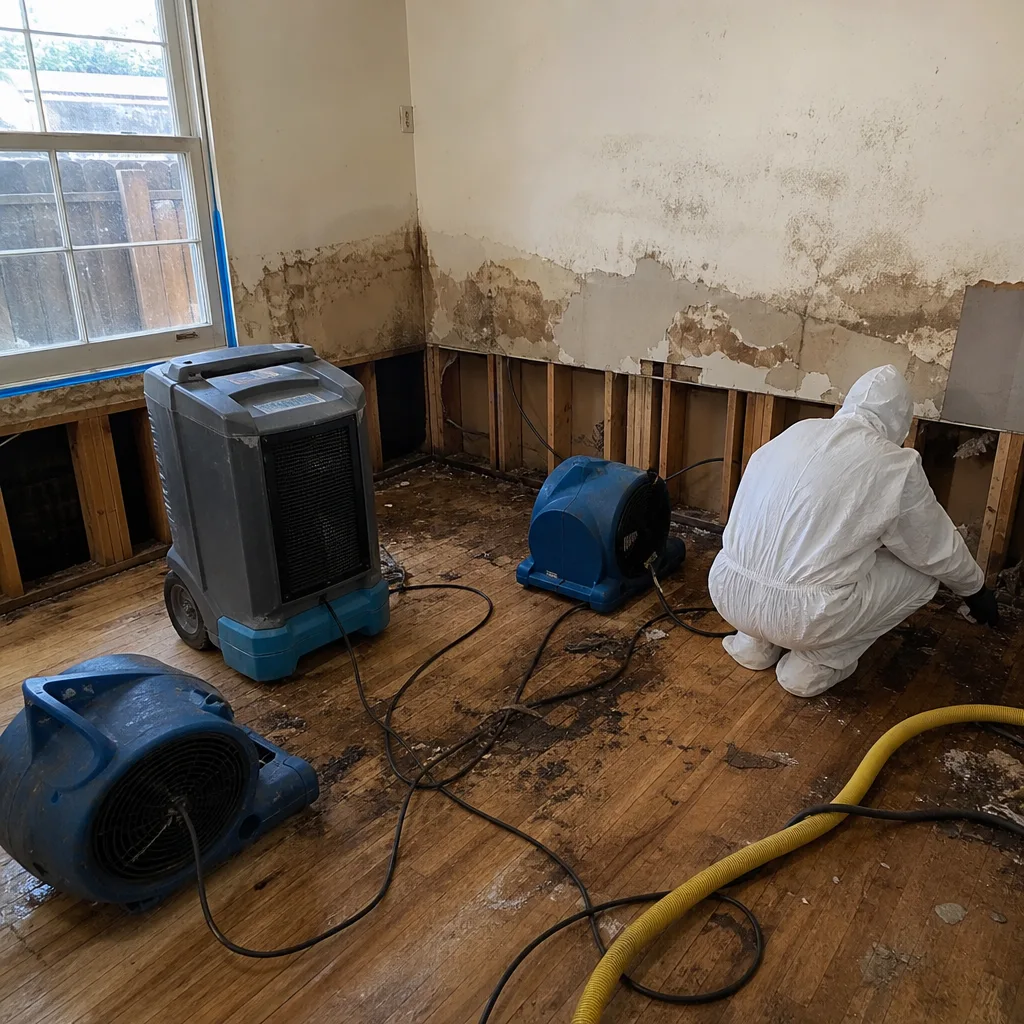
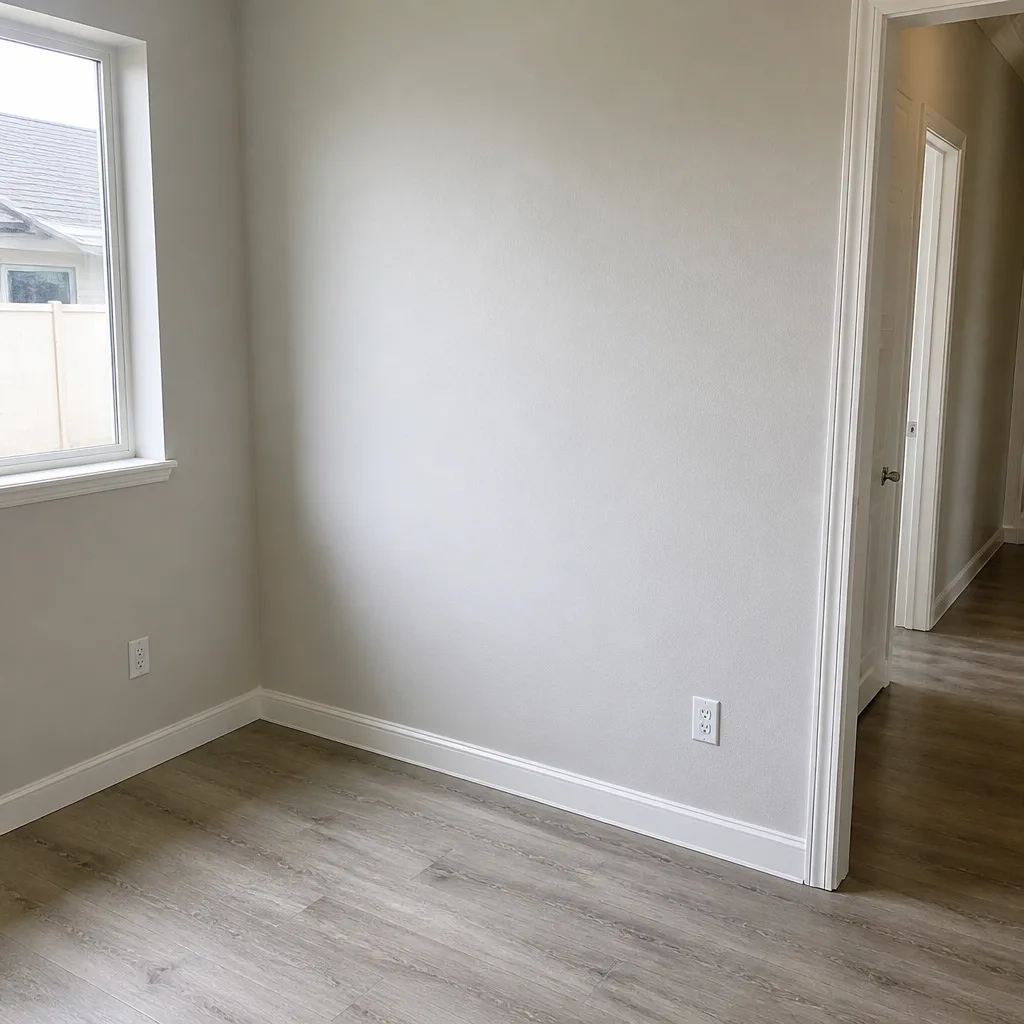
See the difference
 Before
 After
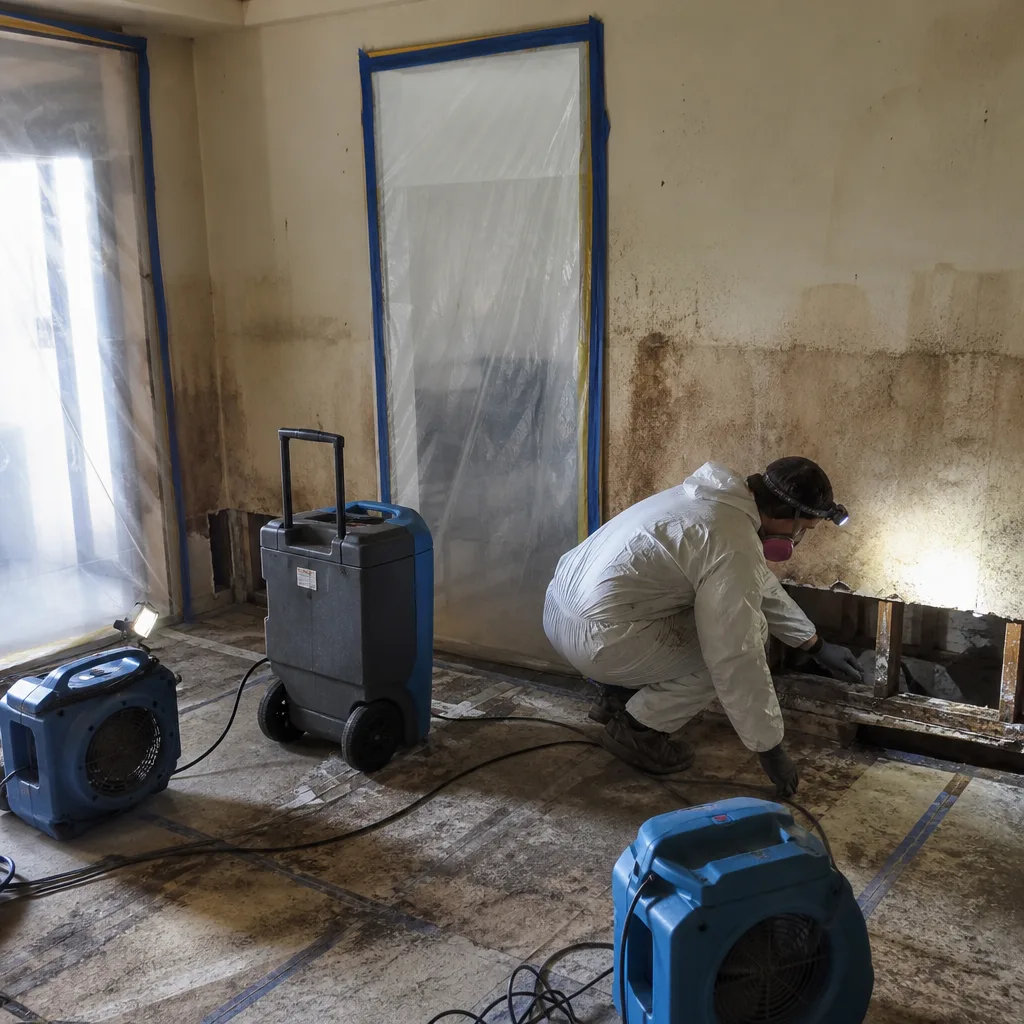 Before
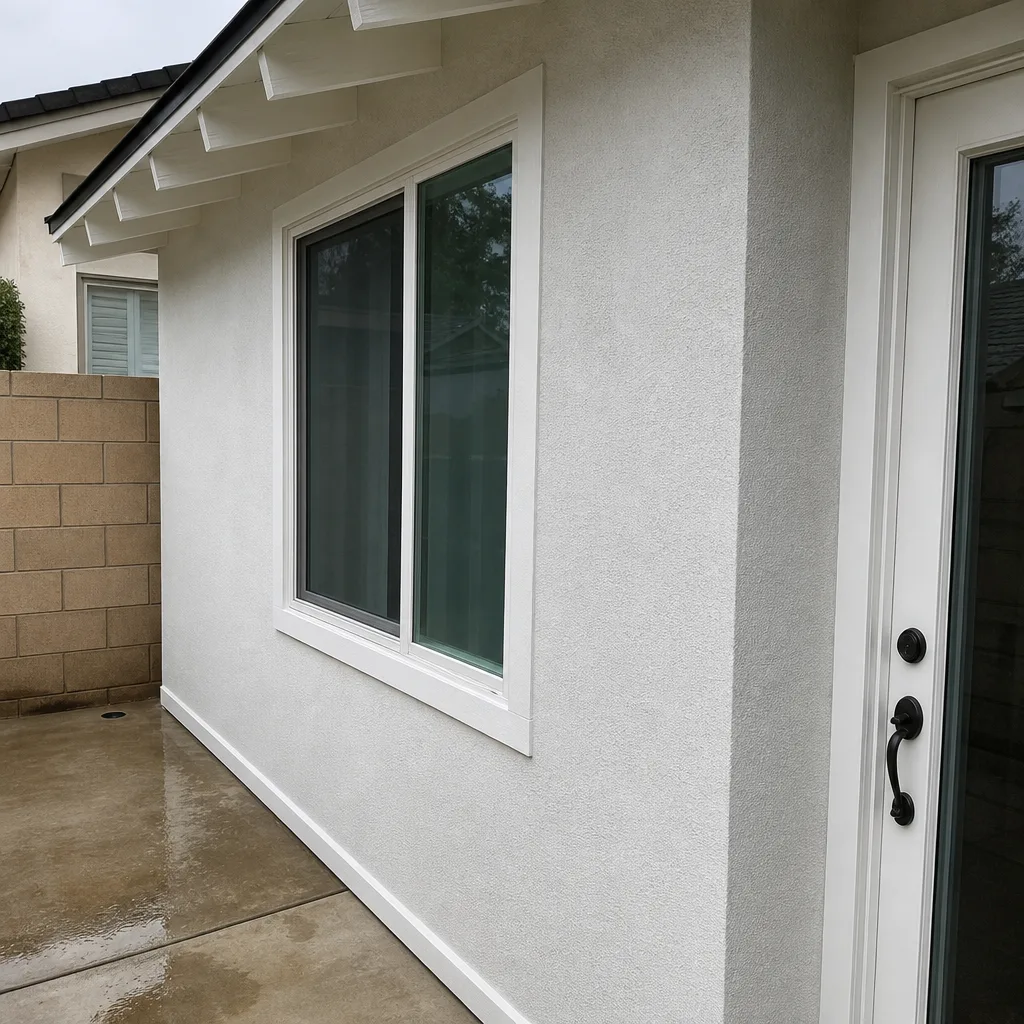 After
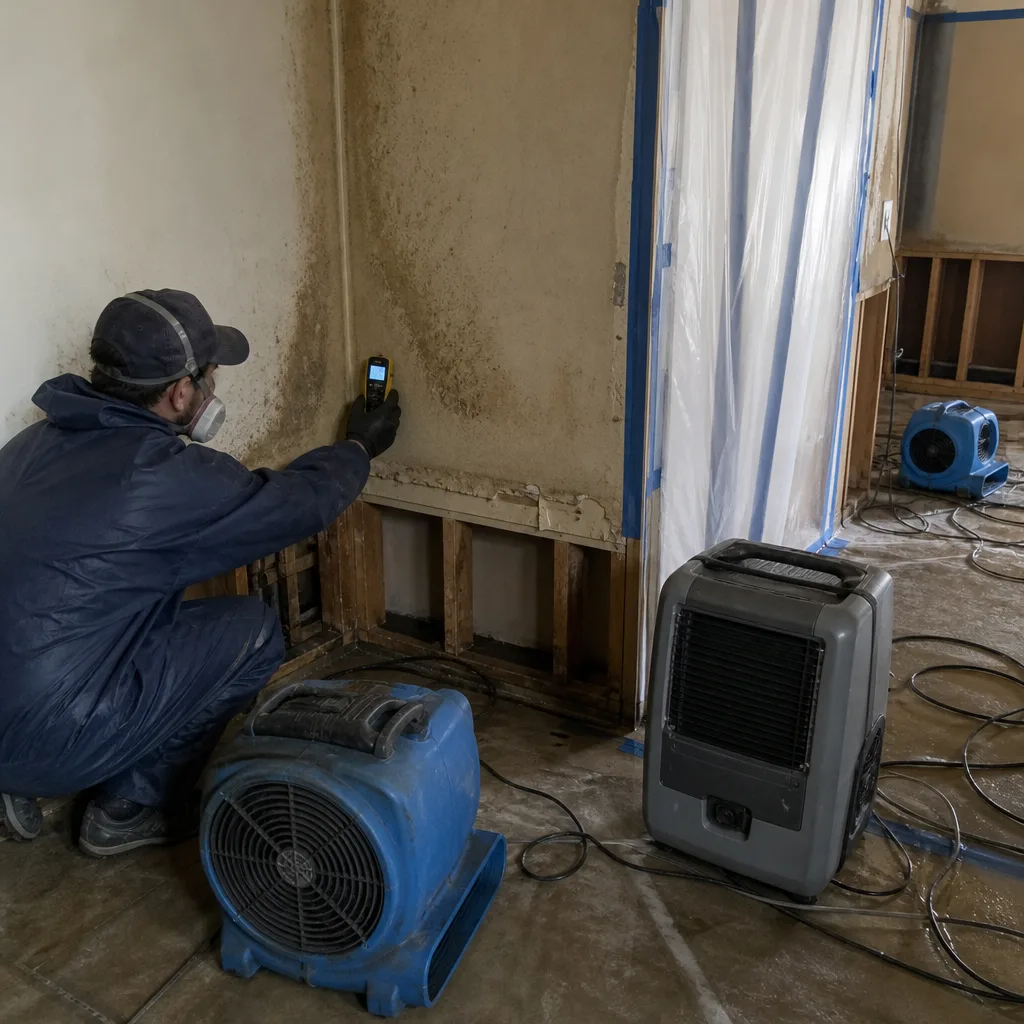 Before
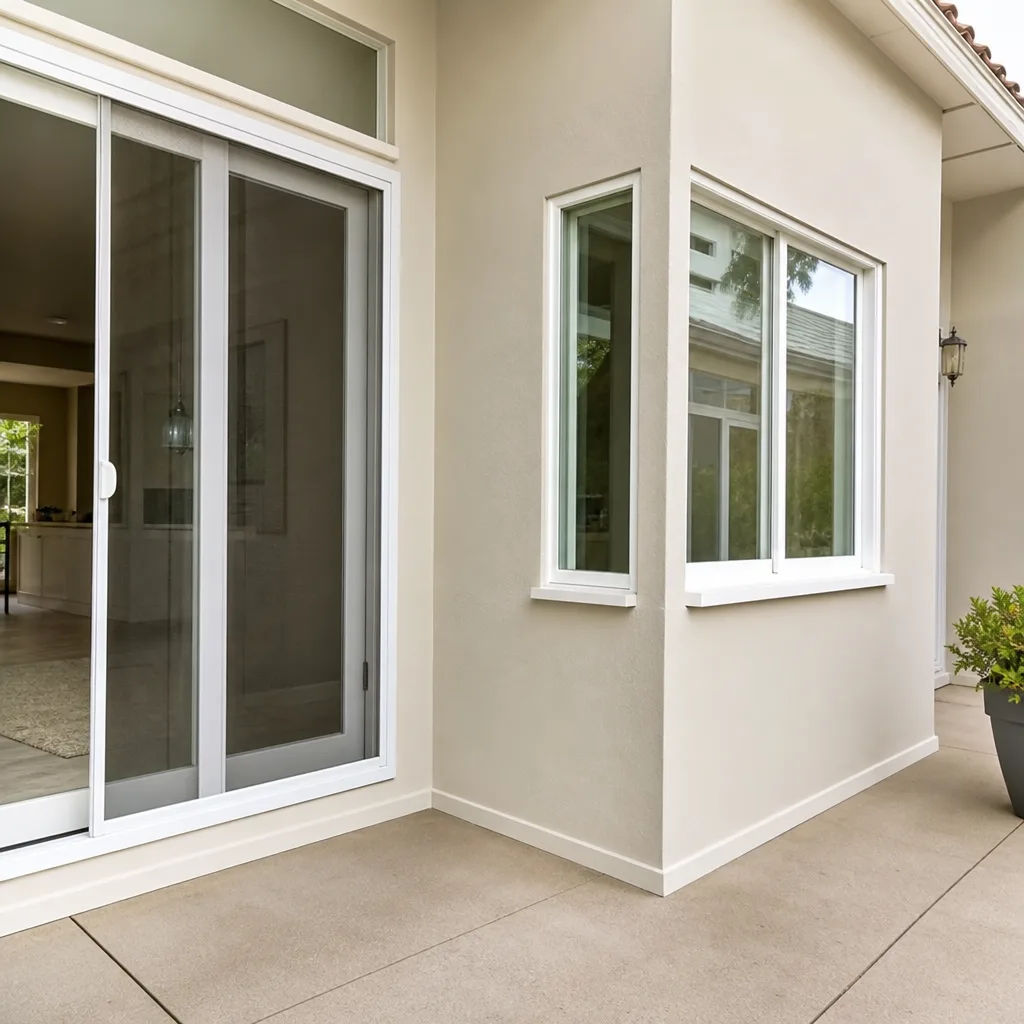 After
Common Water Damage Restoration Problems We See in La Verne Homes
- Attic ember and wind-driven rain intrusion. Homes on the north side against the foothills take horizontal rain through roof vents, ridge caps, and door thresholds during Santa Ana events even when no fire is nearby. The first visible sign is usually a ceiling stain or a door frame that feels soft to the touch.
- Clay lateral backups in the older neighborhoods. Original 1920s-1950s clay sewer laterals under Old Town and the college district fail under root intrusion and storm flow, backing category 2 water into basements and crawlspaces. This isn’t a flatland slab problem, so most of our competitors never look for it.
- Wind-loaded door threshold water tracking. Wind-driven rain doesn’t fall vertically in La Verne; it pushes sideways against north-facing doors and tracks under the threshold, into the first floor, and down into the crawlspace or wall cavity. Category 2 or 3 water behind a wall won’t dry on its own and turns to mold inside 24 to 48 hours.
- Vintage plaster over-drying from flatland protocols. If a general drying firm runs the same dehumidification settings used on modern drywall, original plaster walls in 1920s-1950s La Verne homes can crack and delaminate. Our IICRC-certified technicians run tailored drying plans based on substrate, not a one-size-fits-all air mover count.
Pricing for Water Damage Restoration in La Verne, CA
Water damage restoration in La Verne runs $1,800 – $5,600 for a contained room-level job with extraction, drying, and antimicrobial treatment. Wind-driven attic and door-threshold intrusions that involve wall cavities, insulation removal, and full structural drying typically run $4,000 – $12,000 in 91750. Flood cleanup from stormwater entering through crawlspaces or failed drainage lines starts at $2,500 and climbs with contamination level and structural scope. What drives cost up in La Verne specifically is the age of the house: vintage plaster drying, clay lateral access, and original flooring all require the slower, more precise equipment settings that preserve the build. We give a written scope before work starts, and estimates are free. Call (877) 265-8058 for an exact quote.
We Also Serve Cities Near La Verne
Our Water Damage Restoration in La Verne coverage extends to the surrounding foothill and valley communities, including Claremont, Pomona, Montclair, and Upland. If you manage properties across the 91750 corridor or live in a neighboring city and need the same foothill-wind-load restoration protocol, call us and we’ll route a crew to you.
Serving La Verne, CA — Our Local Coverage Area
We’re based in the La Verne area and know this community well. Use the map below to see our service coverage — if you’re nearby, we can almost certainly help.
FAQs About Water Damage Restoration in La Verne
Because La Verne sits against the San Gabriel foothills, Santa Ana and atmospheric-river winds push rain horizontally against the north-facing roofline, roof deck, and upper wall assembly, not vertically like rain falling in the flat basin cities to the south. Water and embers enter through ridge vents, gable ends, and wind-loaded door thresholds up top, then track down through wall cavities and ceiling drywall before they ever reach the floor. We check the attic and roof deck on every wind-event call in 91750, because a flatland restoration playbook misses exactly the damage pattern these foothill storms create.
Original plaster walls and ceilings hold water differently than modern drywall, and they release it more slowly, but they also don’t tolerate aggressive dehumidification settings the way drywall does. If you over-dry a vintage La Verne plaster wall, it cracks and delaminates. Our crews log moisture readings per wall cavity, run Dri-Eaz dehumidification at adjusted humidity targets, and use Injectidry systems to dry inside wall cavities without opening the plaster. That protects the build and gets the house back to pre-loss condition, which is the whole IICRC standard.
Yes, and in La Verne it’s frequent. Wind-driven rain that tracks across a roof deck, through a door threshold, or along the ground picks up soil, roof debris, ash, and animal waste. The IICRC classifies that as category 2 water, not the category 1 you have when a clean supply line leaks directly inside. Category 2 water requires antimicrobial treatment and controlled disposal of saturated materials like carpet pad and drywall, so a flatland “just dry it out” approach won’t leave the home safe.
For wind-driven attic and door-threshold intrusions, the first 24 to 48 hours decide whether wet wall cavities and framing become mold. We dispatch to La Verne within 60 to 90 minutes after a storm call, and we run moisture mapping at every affected stud cavity during the first visit. After extraction and antimicrobial application, structural drying runs until we hit dry standard confirmed across all readings, typically three to five days for a standard La Verne wall cavity job.
The city of La Verne’s building division treats exterior door replacement and threshold reinforcement as part of the normal building envelope, so a true wind-rated door or threshold upgrade typically doesn’t require a permit unless the opening size changes or framing is altered. What does require care is the existing condition: replacing a damaged threshold on a 1920s Old Town bungalow needs a contractor who understands original framing, not someone who orders a wet-set door off a truck and caulks it. We work with local inspectors when a job does require sign-off, and we document everything for your insurance carrier.
Written by Noel Carrasco, Owner at Oxford Restoration Co, serving La Verne and the surrounding foothill communities.