
 Water damage drying
 Fire & smoke cleanup
 Mold remediation
 Storm response
 Sewage cleanup
 Reconstruction
Free visual inspection and a written scope of work before any mitigation begins - photos, moisture readings, and drying logs go in your claim file
The scope we write is the scope we bill. Anything new gets shown to you, in writing, before we touch it.
Get your free estimateFast, Reliable Water Damage Restoration Across Upland
Water damage restoration in Upland typically costs between $1,800 and $6,500 for a standard single-room job, with emergency extraction and structural drying usually completed within 3 to 5 days. Our crews reach most Upland neighborhoods within 60 to 90 minutes of your call, and we carry the equipment needed to start extraction immediately. If you’re standing in water right now, call (877) 265-8058 and we’ll walk you through the first steps while a team heads your way.
We know Upland’s streets, its foothill lots, and the specific ways water behaves in its mid-century slab homes. That local knowledge changes how fast we can respond and how thoroughly we can dry your property. Our Water Damage Restoration team works across Upland’s 91784, 91785, and 91786 ZIP codes, from the historic downtown core up into the San Gabriel foothills above San Antonio Heights.
Why Oxford Restoration Co Is Upland’s Preferred Water Damage Restoration Company
Oxford Restoration Co has built its reputation in Upland the direct way: by showing up prepared, documenting everything, and drying structures to IICRC standards the first time. Homeowners along Euclid Avenue, in the neighborhoods off 16th Street, and in the acreage lots near the forest boundary have called us back for mold and fire work after we handled their initial water loss. That repeat traffic tells us more than any review count could.
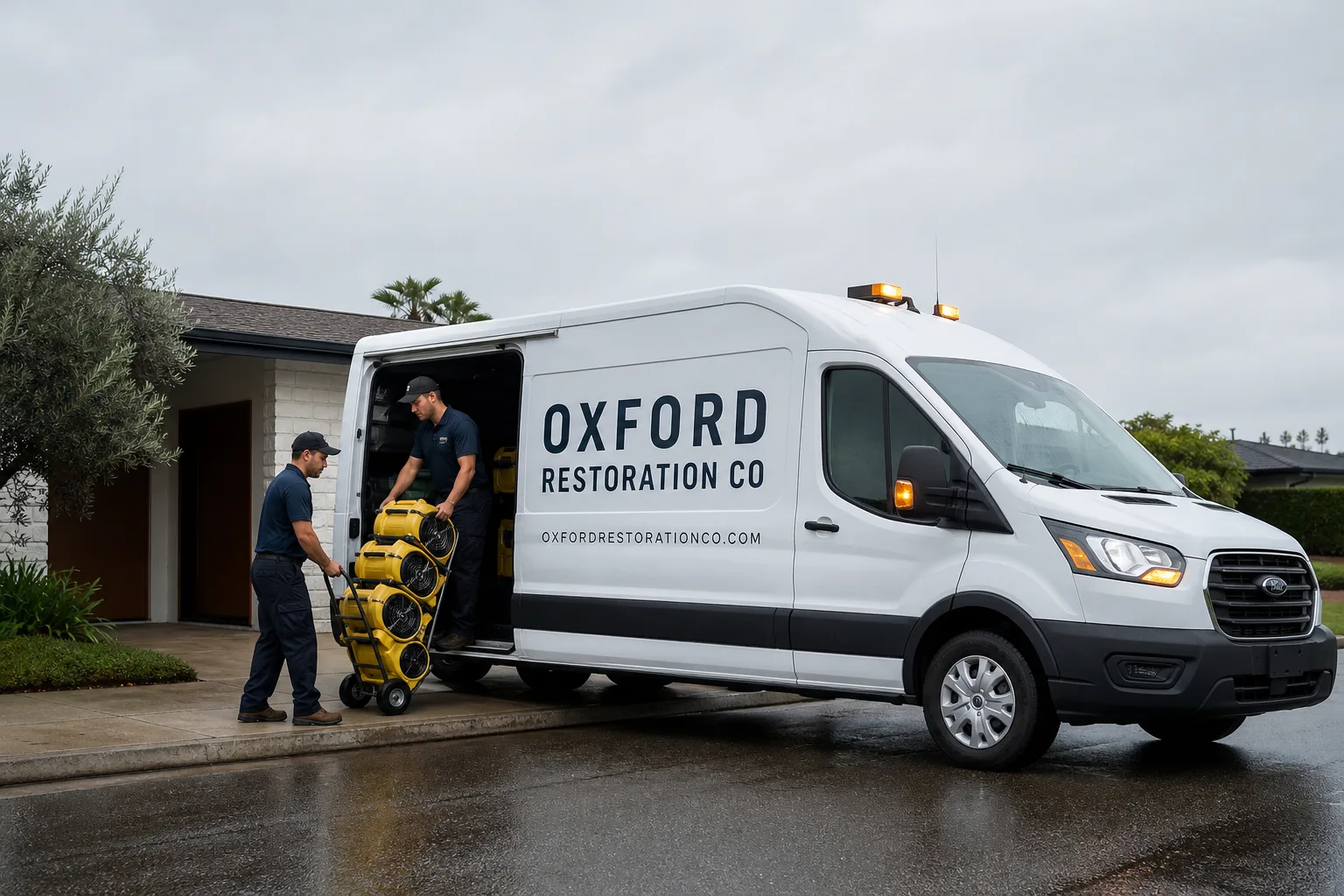
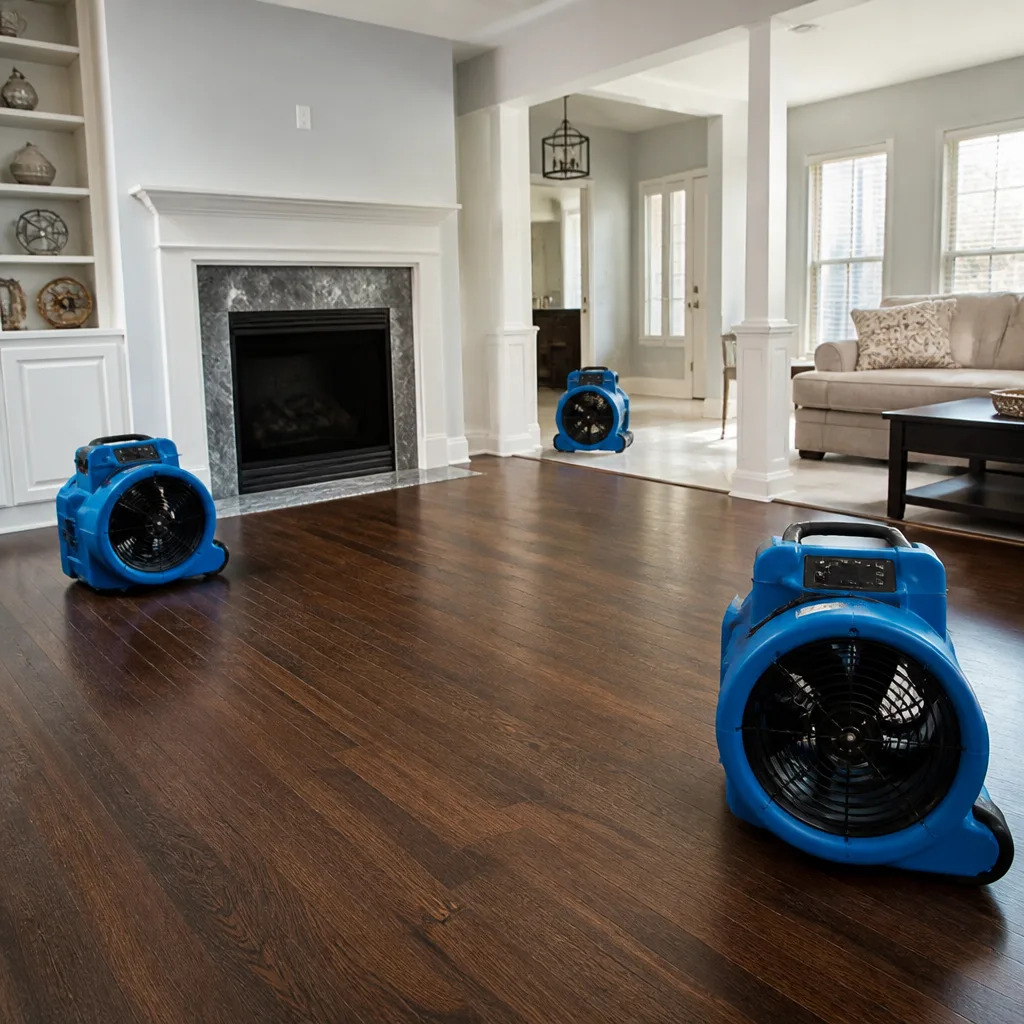
Our response time to Upland averages about 75 minutes from call to arrival, and we arrive with Dri-Eaz and Phoenix extraction and drying equipment already loaded. For a foothill home with water moving through a slab, that speed matters. Every hour of standing water pushes moisture deeper into concrete, drywall, and framing, and Upland’s dry heat does not excuse slow drying; it just complicates the moisture map. We also carry Injectidry systems for wall cavity drying, which in many Upland homes means we can save interior plaster and wood paneling that a less-equipped crew would have to tear out.
Noel Carrasco leads our Upland restoration work with a simple standard: restore, do not just repair. That means verifying moisture levels with meters, not guesswork, and writing a scope before any demolition starts. For more on how we serve the broader area, see Water Damage Restoration in Upland.
Restoration work we handle
Water Extraction in Upland
Water extraction in Upland is the first and most time-sensitive step in any restoration. Our crews use truck-mounted and portable XPOWER extraction units to pull standing water from floors, crawlspaces, and the tight areas around Upland’s slab-on-grade foundations, where moisture hides and does not leave on its own. In Upland, a typical extraction-only job runs $500 to $1,400 depending on square footage, water depth, and whether carpet, pad, or hardwood is involved. If you call within the first hour, we can often save flooring that would otherwise need replacement.
Slab and Foundation Extraction
Upland’s mid-century homes sit on concrete slabs, not raised foundations. Water that gets under flooring has nowhere to drain, so extraction has to be aggressive and immediate. We use weighted extraction wands and sub-surface drying mats to pull moisture from carpet, pad, and the concrete itself.
Workshop and Detached Structure Extraction
Many Upland properties, especially in the 91784 foothill ZIP, have detached workshops and garages with their own water damage patterns. Those structures often lack proper drainage and sit at grade, which means a hard rain or debris flow sends water straight under the door. We extract those spaces with the same equipment and the same moisture-mapping standards as the main house.
Emergency Water Removal in Upland
Emergency water removal in Upland usually costs between $900 and $2,800 for the initial response, depending on the size of the affected area and whether the water is clean or contaminated. We respond to Upland emergencies around the clock and can typically have a crew on-site within about 75 minutes. The goal in the first visit is straightforward: stop the source, remove standing water, and set up drying equipment before mold has a chance to start. In Upland’s climate, mold growth can begin within 24 to 48 hours, but during summer heat, the window can be shorter.
Post-Fire Rain and Debris Flow Response
Upland sees a spike in emergency calls after the first hard rain that follows a San Gabriel Mountains burn. Debris flows loaded with ash, mud, and organic matter move fast down foothill streets and into properties in the 91784 and 91786 ZIP codes. That water is category 3, contaminated, and requires containment, antimicrobial treatment, and specialized extraction protocols from the first hour.
Burst Pipe and Supply Line Failure
Mid-century Upland homes frequently have original galvanized steel supply lines. When those fail, they fail under pressure, releasing hundreds of gallons of clean, category 1 water into the house within minutes. The damage can look clean and manageable, but category 1 water becomes category 2 or 3 if it sits and contacts building materials for more than 48 hours. We treat every burst pipe as a drying emergency, not just a cleanup.
Trusted Brands We Service in Upland
Oxford Restoration Co works on all major equipment brands common in Upland homes and commercial buildings. When a water heater from Rheem or Bradford White fails, or when a dishwater supply line from a brand like Bosch or KitchenAid lets go, the restoration process that follows is what we do. We also understand the particular failure patterns of older fixtures and supply lines found in Upland’s 1940s to 1970s housing stock, which means we can often identify the source faster and minimize the water we are dealing with. We stock common replacement parts for Upland jobs and can arrange same-day pickup from local suppliers when a component needs to be matched, reducing downtime on emergency work.
See the difference
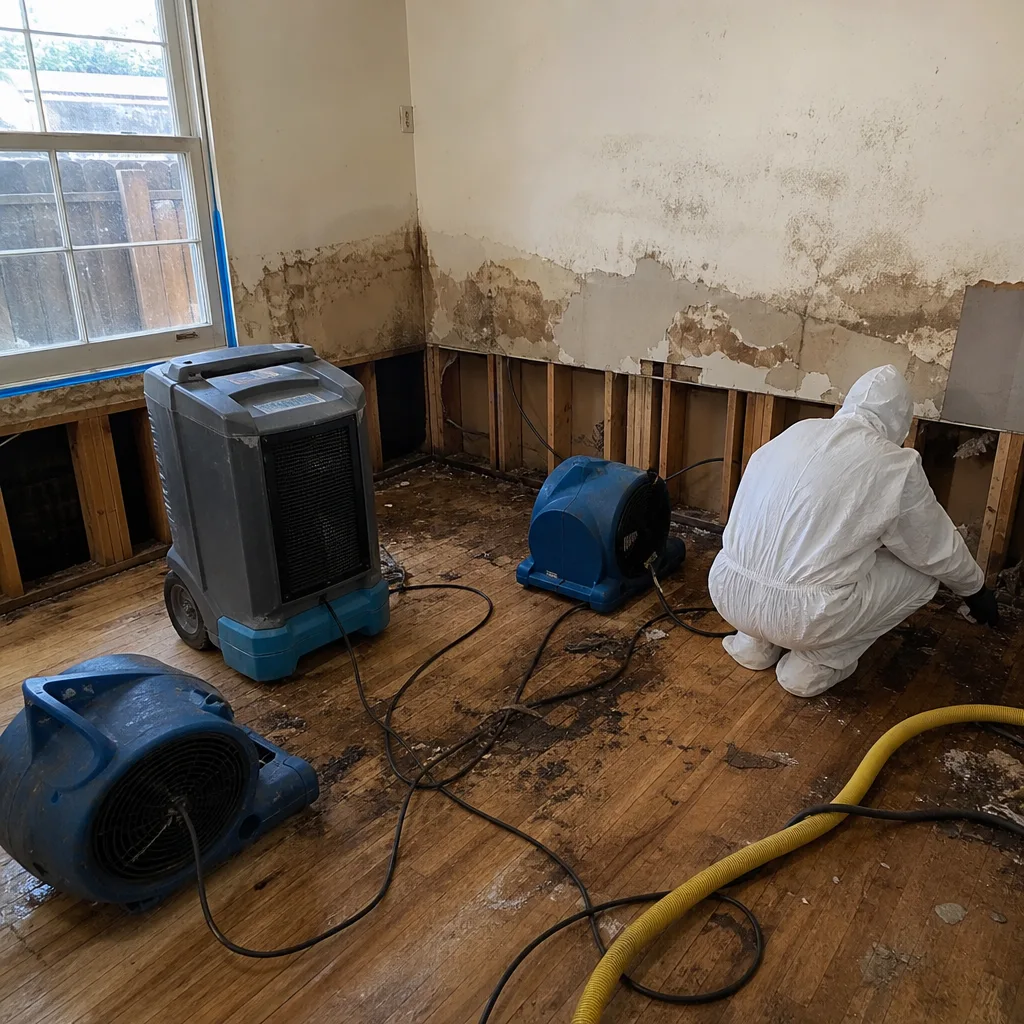 Before
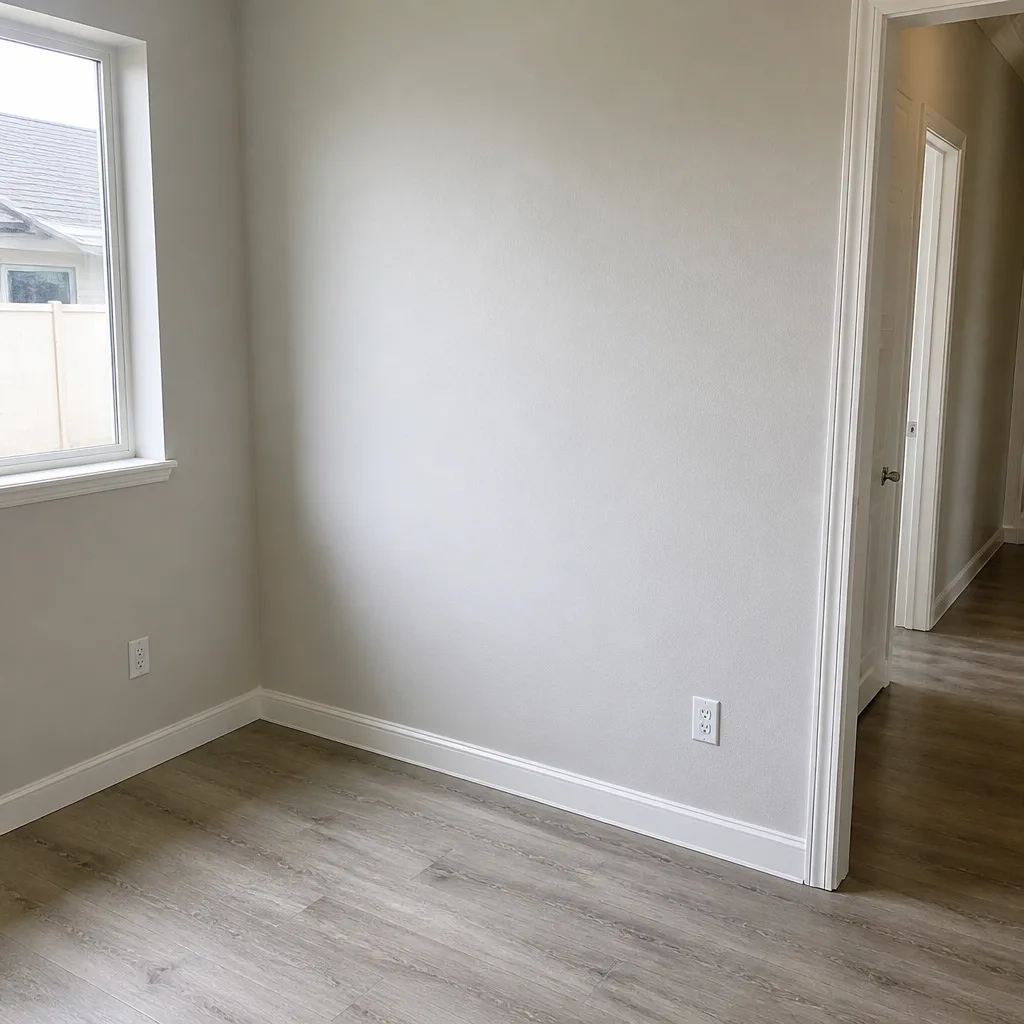 After
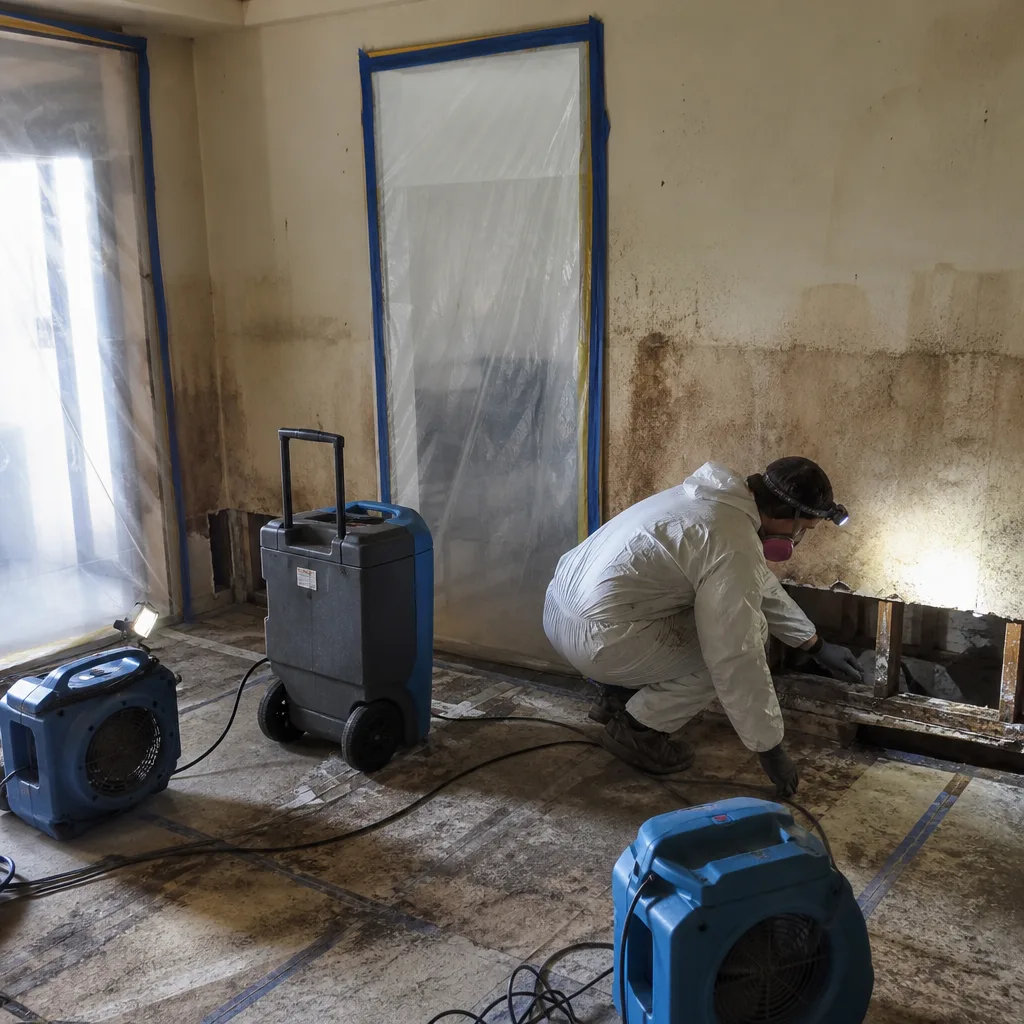 Before
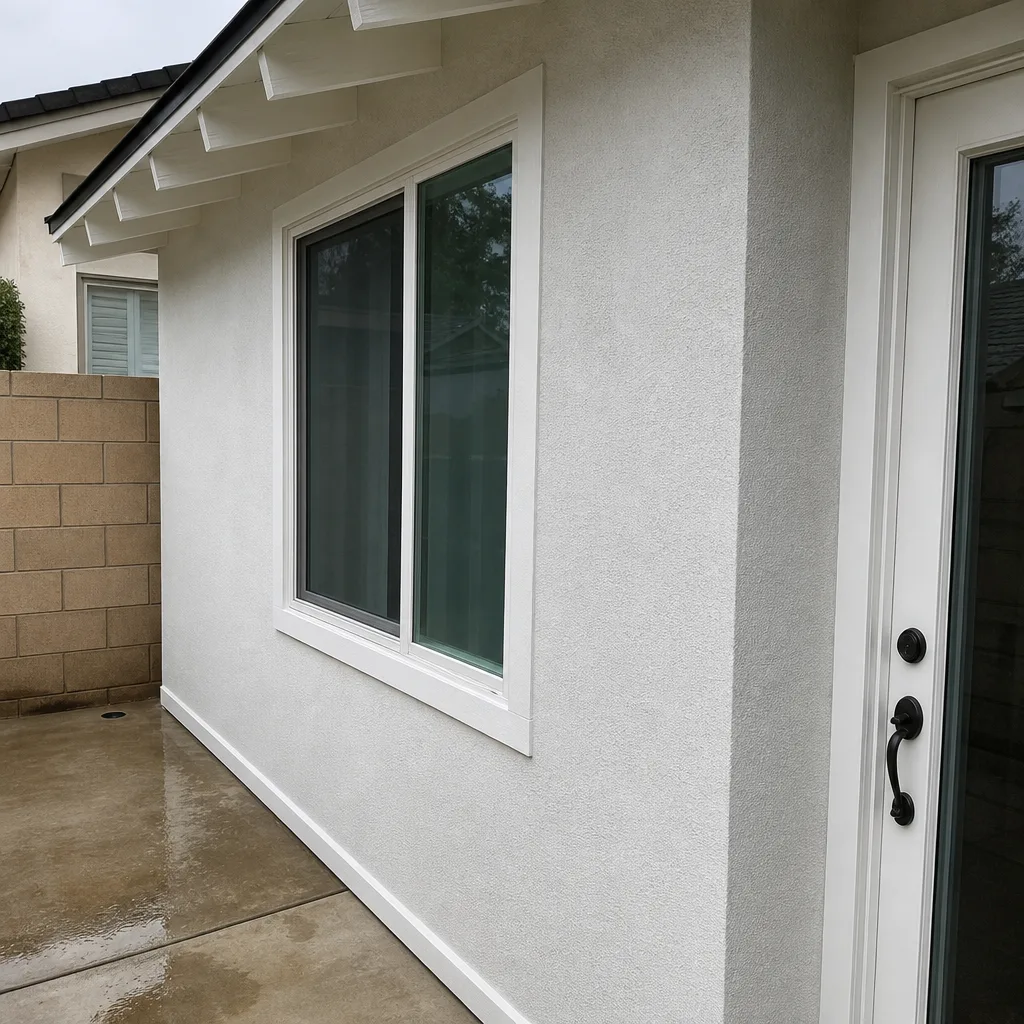 After
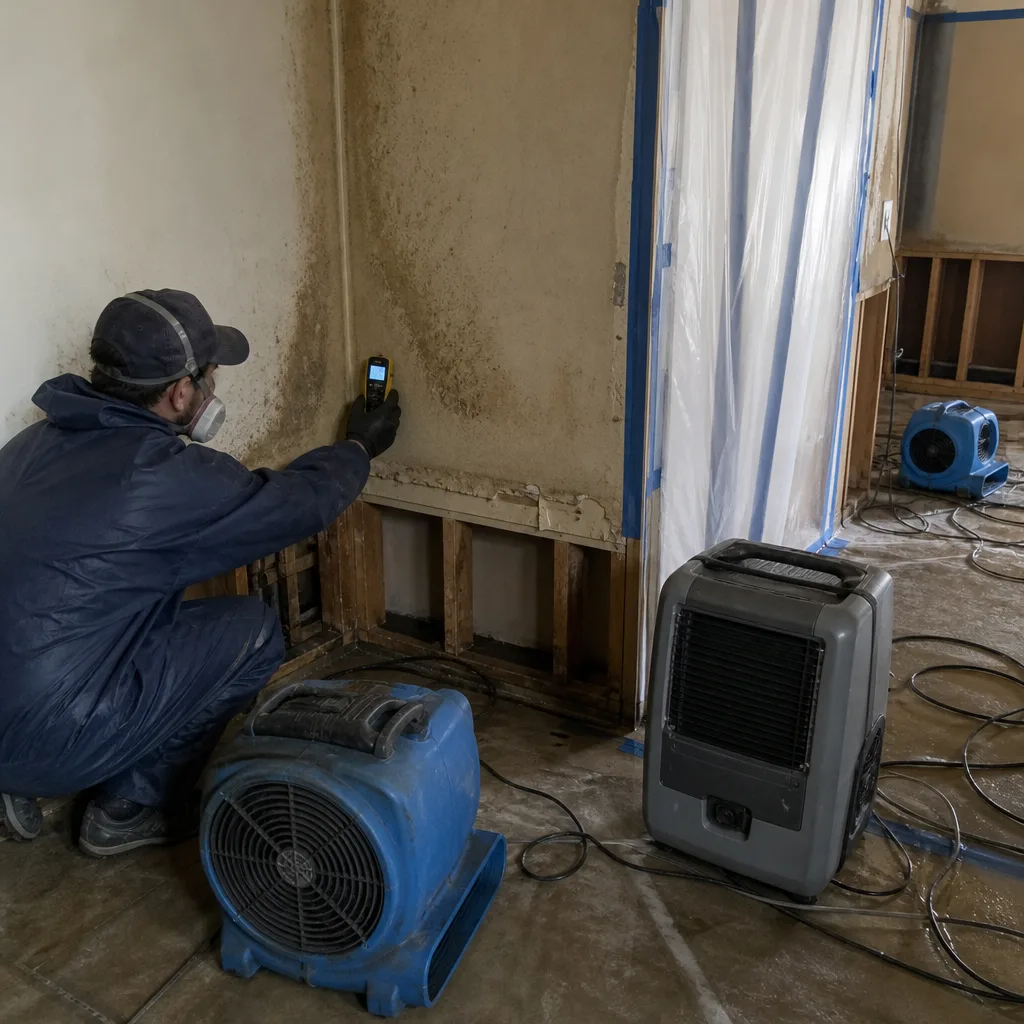 Before
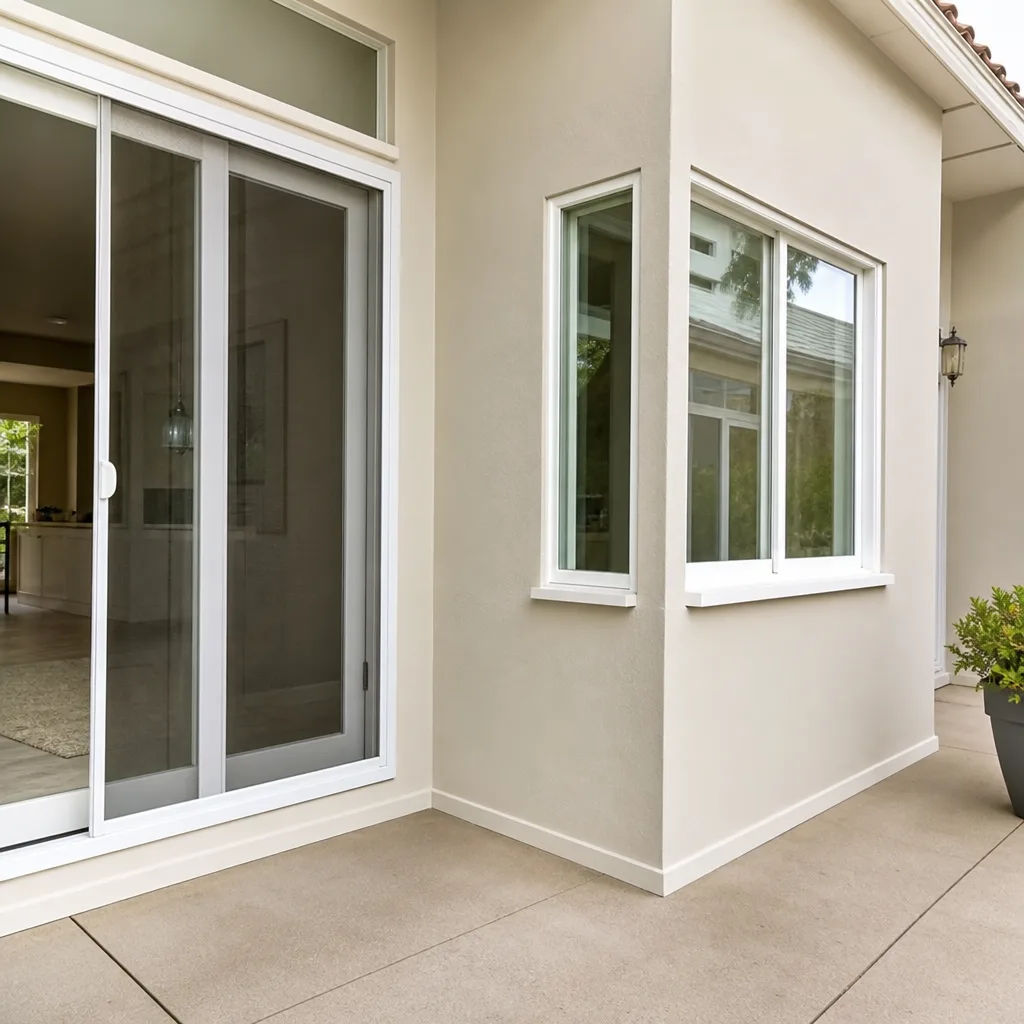 After
Common Water Damage Restoration Problems We See in Upland Homes
- Hidden moisture in slab-on-grade foundations. Upland’s mid-century tract homes sit directly on concrete slabs, and when water gets in, it wicks downward and sideways under flooring. Homeowners often do not realize moisture is trapped until they smell it or see cupping hardwood weeks later. We use penetrating moisture meters and thermal imaging to find water that is not visible on the surface.
- Aging galvanized and copper supply lines failing under pressure. Homes built between the 1940s and 1970s in Upland often still have original galvanized steel or aging copper lines. When those corrode and burst, they can release water for hours before anyone notices, especially in vacation homes or during workdays. The water saturates drywall, insulation, and subfloor long before the first call.
- Wind-driven rain and ember intrusion through roof vents. Upland’s foothill neighborhoods face strong Santa Ana winds and seasonal mountain-driven storms. Wind can push rain and debris through aging roof vents, gable ends, and flashing, creating water damage in attics and walls that goes unnoticed until stains appear on ceilings. Ember intrusion during fire season causes a related set of restoration problems, including smoke and soot contamination that requires pack-out and antimicrobial treatment.
- Detached workshop and accessory structure flooding with no drainage plan. Upland’s larger lots and rural acreage properties often include detached structures built at grade, with no drainage or grading to keep water out. A heavy winter storm sends water under doors and through wall penetrations, and because those structures are not climate-controlled, the drying process takes longer and requires concentrated equipment placement.
Pricing for Water Damage Restoration in Upland, CA
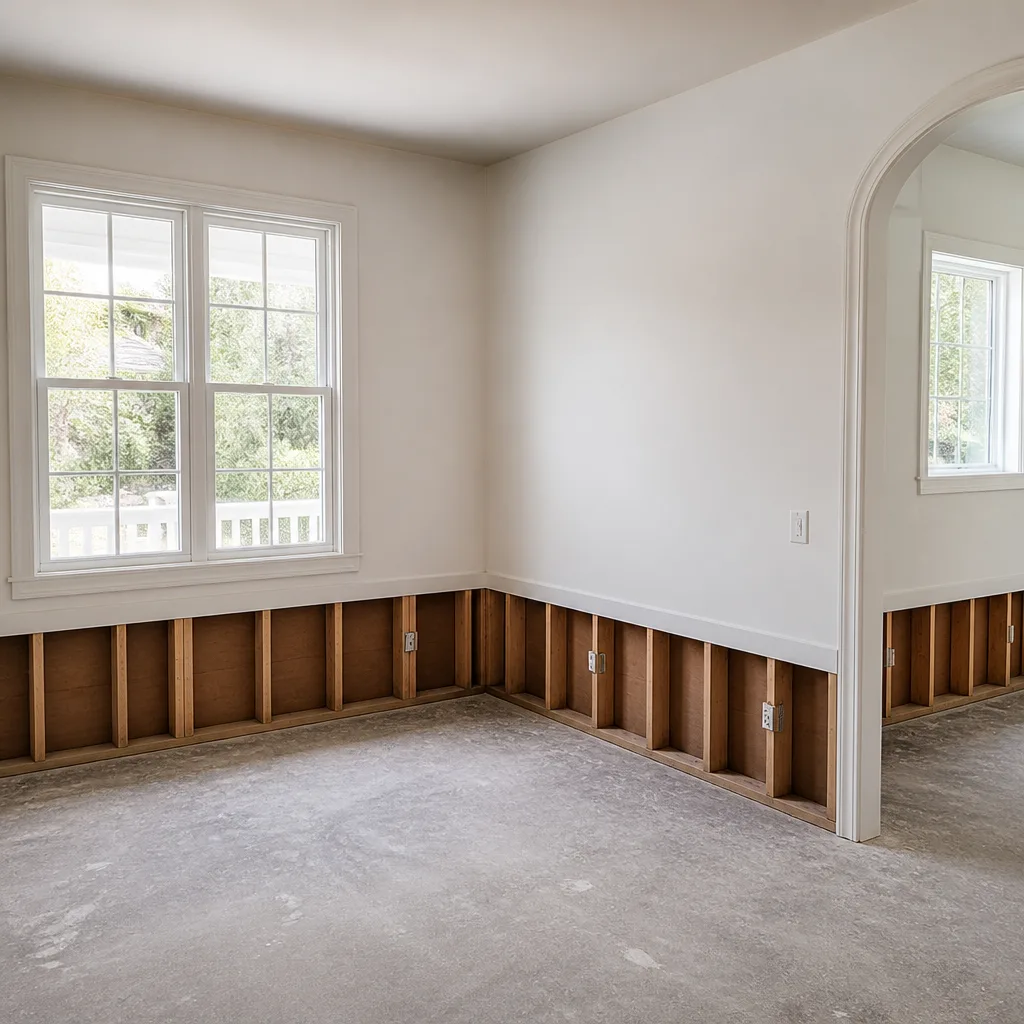
In Upland, a straightforward water extraction from a single room of carpet and pad runs roughly $500 to $1,400. Structural drying for a moderate leak, including equipment rental for 3 to 5 days, typically falls between $1,500 and $3,800. A full restoration involving multiple rooms, drywall removal, and rebuild can range from $4,000 to $12,000 or more, depending on the square footage and whether the water was clean or contaminated. Upland’s slab-on-grade homes can run slightly higher than raised-foundation houses because sub-surface drying mats and more aggressive moisture mapping are required. The biggest cost variables are how long the water sat before you called, the category of water, and whether demolition is needed. We provide a written scope with line-item pricing before any work begins, and estimates are free. Call (877) 265-8058 for an exact quote. We also work directly with your insurance adjuster and provide photo documentation of every stage.
We Also Serve Cities Near Upland
Oxford Restoration Co handles water damage restoration across the Inland Empire and foothill communities, including San Antonio Heights, Claremont, Montclair, and Rancho Cucamonga. If your property sits near the Upland border or you manage buildings across several of these cities, we can coordinate a single response plan rather than juggling multiple contractors.
Serving Upland, CA — Our Local Coverage Area
We’re based in the Upland area and know this community well. Use the map below to see our service coverage — if you’re nearby, we can almost certainly help.
FAQs About Water Damage Restoration in Upland
Upland’s foothill lots in 91784 and 91786 are directly exposed to debris flows after a fire burns the San Gabriels upstream. The first hard rain turns those streets into mud channels that carry category 3 water, ash, and organic material into homes, garages, and workshops. Restoration in that window is more aggressive: we use containment, antimicrobial treatment, and full extraction immediately, because the contaminated water cannot simply be dried out like a clean pipe leak. Call (877) 265-8058 if your property has been hit by a debris flow; the protocols are different, and speed matters.
Slab-on-grade homes in Upland have no crawlspace under the floor, so water that gets in cannot drain downward or evaporate into a vented space; it sits under flooring and wicks laterally through the concrete. That hidden moisture causes cupping hardwood, lifted tile, and mold growth behind baseboards, often weeks after the initial leak. We use sub-surface drying mats and moisture meters to dry the slab itself, which is the step many restoration companies skip but which prevents recurring mold and odor. If you are unsure whether your slab is still wet, call us for a moisture assessment.
Category 1 water is clean water from a supply line or faucet. Category 2 is gray water that has been used or has touched building materials, like washing machine overflow. Category 3 is black water, contaminated with sewage, mud, or debris-flow material. Upland’s post-fire debris flows and septic system failures produce category 3 water, which requires containment, full PPE, antimicrobial treatment, and disposal of porous materials. Category 1 water can be dried and saved if addressed within 48 hours. We assess the category on arrival and write the scope accordingly.
Mold can begin to grow within 24 to 48 hours after water damage in Upland, and during the summer heat, that window can compress to 24 hours or less when humidity is elevated inside a closed house. Drywall, carpet pad, and wood framing are the most vulnerable. The moment you notice a musty smell or visible discoloration, treat it as an active mold risk and call (877) 265-8058 for an assessment. Our drying equipment is set up the same day, and we monitor moisture levels until readings confirm the structure is dry.
Yes, we regularly extract water and run structural drying in Upland’s detached workshops, barns, and accessory structures, especially in the 91784 ZIP. After the San Antonio Heights burn scar sent a debris flow down a 91784 lot, our crew used water extraction and category 3 water protocols to clear a foot of muddy water from a detached workshop, then set up containment and structural drying with Dri-Eaz dehumidification and air movers to save the slab and framing. Moisture mapping confirmed the oversized door seals had failed, so we replaced them and logged drying readings over three days to return the workshop to pre-loss condition. Those structures often need dedicated equipment setups because they are uninsulated and sit at grade, and we plan for that. Call (877) 265-8058 to schedule an assessment of any outbuilding.
Written by Noel Carrasco, Owner at Oxford Restoration Co, serving Upland and the Inland Empire since 2018.