
 Mold remediation
 Water damage drying
 Fire & smoke cleanup
 Storm response
 Sewage cleanup
 Reconstruction
Free visual inspection and a written scope of work before any mitigation begins - photos, moisture readings, and drying logs go in your claim file
The scope we write is the scope we bill. Anything new gets shown to you, in writing, before we touch it.
Get your free estimateFast, Reliable Mold Remediation Across Grand Terrace
Mold remediation in Grand Terrace typically costs $1,800 to $6,500 depending on how far moisture has traveled through your slab or framing, and our IICRC-certified team can usually be on site within 24 to 48 hours of your call. We know this city’s hillside lots, its mid-century ranches, and the specific way water moves through alluvial-fan soil before it ever shows up as a musty smell in your lower bedroom. If you’re seeing dark patches on baseboards, catching that damp-earth odor in a hallway, or noticing peeling paint on an interior wall that faces uphill, call (877) 265-8058. The sooner moisture is mapped and contained, the less drywall, flooring, and framing has to come out.
Why Oxford Restoration Co Is Grand Terrace’s Preferred Mold Remediation Company
Grand Terrace homeowners call us because we treat mold as a moisture problem first and a cleaning job second. That distinction matters here. The hillside lots below Blue Mountain don’t flood the way flatland Colton or Rubidoux properties do. Instead, saturated soils push moisture horizontally through foundation walls, and by the time mold becomes visible in a lower-level room, the water has often been traveling through the slab for weeks. Our techs run moisture mapping on the uphill foundation wall before anyone opens a containment barrier. That’s not a step most general contractors take, and it’s the step that keeps mold from returning three months later.
We are IICRC-certified, which means the remediation work in your Grand Terrace home follows the restoration industry’s recognized standard for containment, drying, and clearance. We’re also members of the RIA and IFA, so our processes are reviewed against the broader restoration field, not just our own internal checklist. Noel Carrasco, who leads our team, has built Oxford Restoration Co around a simple principle: restore to pre-loss condition, not cosmetic improvement. That standard applies whether we’re treating a 1958 ranch off Barton Road or a 1990s infill home on a graded terrace above Main Street.
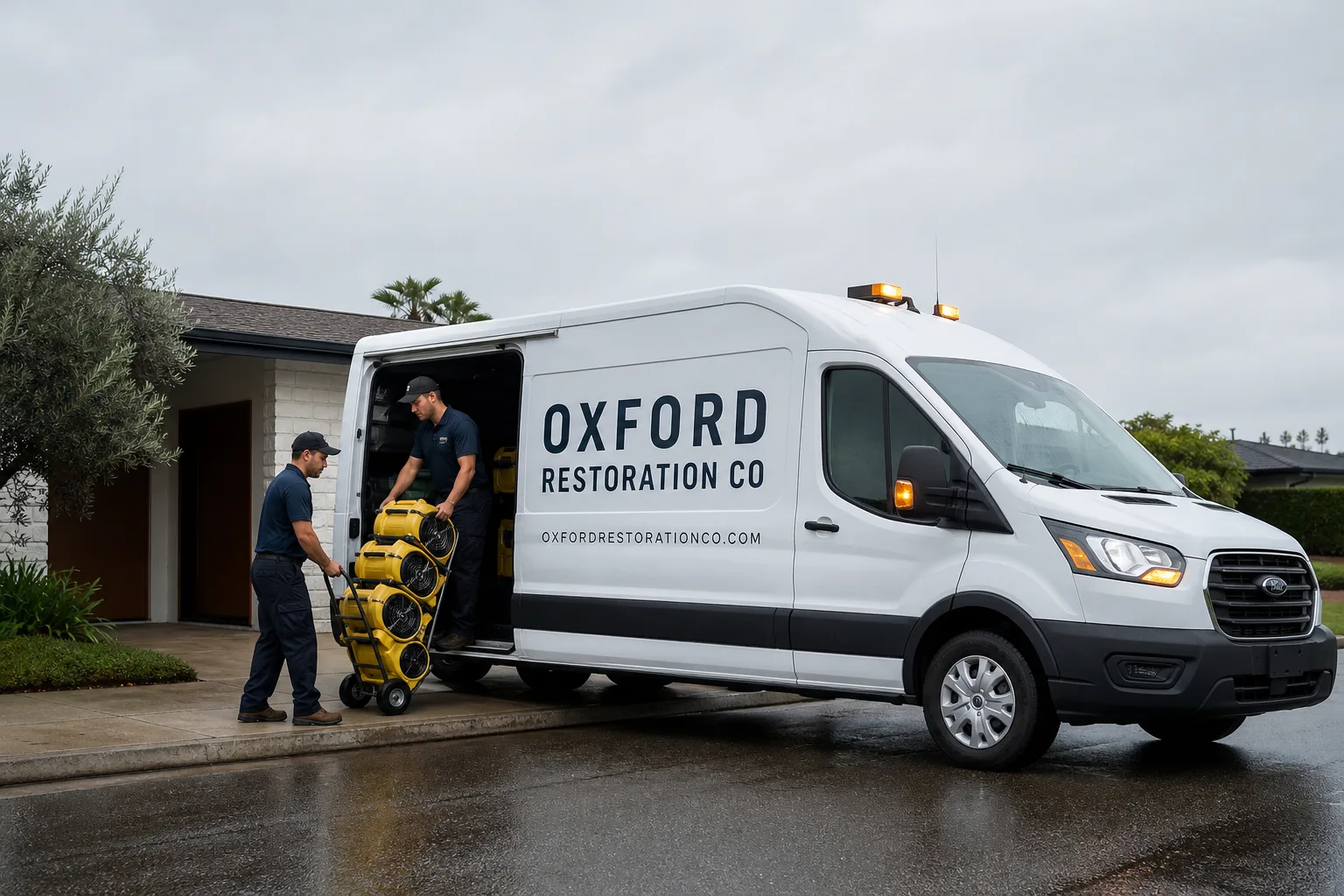
Our response time to Grand Terrace is typically within 24 to 48 hours, and for active moisture intrusion we can often schedule an inspection sooner. We carry the industrial equipment this work requires: Dri-Eaz dehumidifiers, Phoenix air movers, and Injectidry systems for drying wall cavities and under slab edges without tearing out every surface first. When you call, you reach a specialist who knows Grand Terrace’s housing stock, not a dispatcher reading from a script.
Restoration work we handle
Professional Mold Removal in Grand Terrace
Professional Mold Removal in Grand Terrace usually starts with identifying why moisture is present in the first place, because removal without a moisture fix is just a pause between recurrences. Given the alluvial-fan slope under most of this city, we routinely find the moisture source on the uphill side of the home even when the mold shows up in a lower room. A typical mold removal job here runs $1,800 to $6,500, with smaller closets or single-wall colonies at the low end and multi-room slab-fed infestations at the high end. The work involves containment with 6-mil poly sheeting, negative air pressure to keep spores from spreading, HEPA vacuuming of affected framing, antimicrobial treatment, and then drying verification with moisture meters before any drywall is replaced.
Containment and Air Filtration
Mold spores move through a house faster than most people realize. HEPA-filtered air scrubbers run continuously during removal to capture airborne spores, and containment barriers seal the work area from the rest of your home. In Grand Terrace’s mid-century ranches, we often add extra floor protection at the containment threshold because original hardwood and decades-old slab surfaces don’t respond well to foot traffic from equipment.
Structural Drying Without Unnecessary Demolition
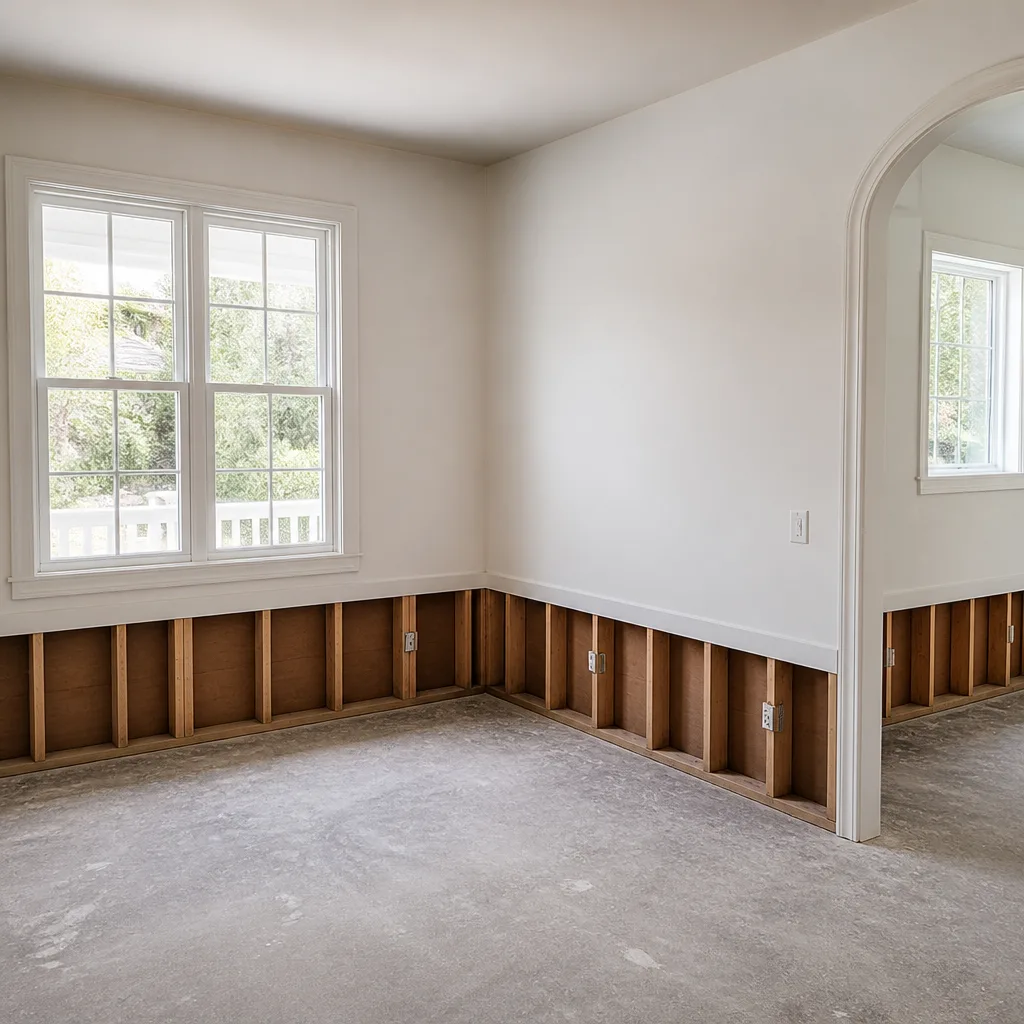
Not every mold-damaged wall needs to come out. Our Injectidry systems pull moisture from wall cavities and under slab edges through small access points, which means we can often dry the framing and save the exterior stucco or interior drywall that would otherwise be torn out. On hillside homes where saturated stucco feeds mold on the backside of drywall, that approach reduces both the repair scope and your final cost.
Mold Inspection in Grand Terrace
Mold Inspection in Grand Terrace typically costs $350 to $800 for a visual assessment, moisture mapping, and air or surface sampling when indicated, and it’s the right first step when you can smell mold but can’t see it. We use moisture meters, thermal imaging, and, where warranted, air sampling cassettes to locate hidden reservoirs under slab edges, behind baseboards, and inside wall cavities. Given how many Grand Terrace homes sit on slab-on-grade construction with original cast-iron drain lines, an inspection here looks specifically for slow, invisible below-slab leaks that never show up as standing water.
Moisture Mapping and Thermal Scanning
Thermal imaging shows temperature differentials that often indicate moisture in drywall or insulation before visible staining appears. On a split-level or hillside ranch, we map the uphill foundation wall as part of every inspection, because that’s where slope-driven runoff enters the structure. If we find elevated moisture where you’ve only seen a faint musty smell, we’ve probably found the source before the colony expands.
Air and Surface Sampling
When you need to know what kind of mold you’re dealing with, we take surface swabs or air samples and send them to an independent lab. That gives you a written record for your insurance file and clarifies whether the colony is one of the species that warrants full containment or a less invasive cleaning. If you’re buying or selling a home in Grand Terrace, a written mold inspection and lab report also gives the transaction a factual foundation.
Trusted Brands We Service in Grand Terrace
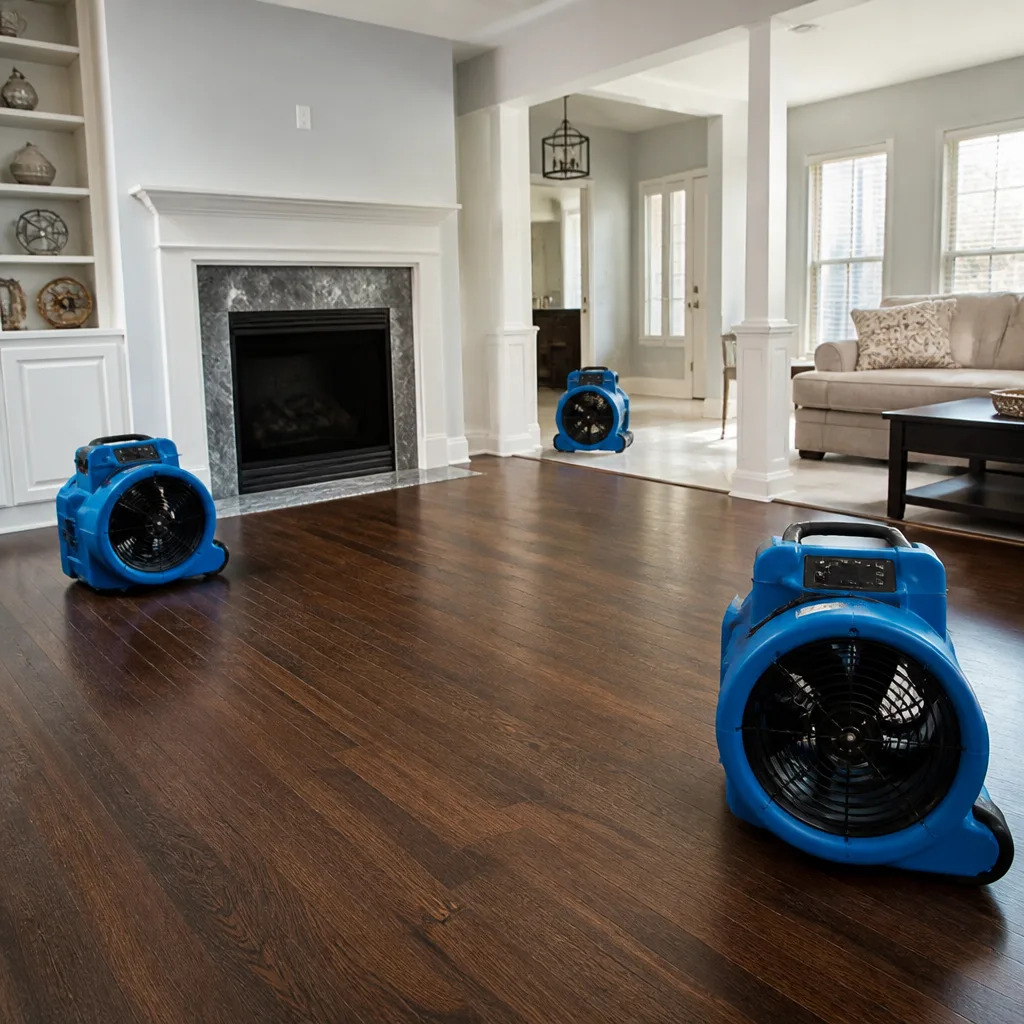
We run Dri-Eaz, Phoenix, and XPOWER equipment on Grand Terrace jobs because these are the same industrial-grade systems used by large commercial restoration firms, not consumer-grade gear you’d rent from a home center. Dri-Eaz dehumidifiers pull far more water from the air per day than rental units, and their capacity matters when you’re drying a saturated slab edge that’s feeding mold behind baseboards. Injectidry panels handle wall cavities without demolition. Because we stock these systems in our own fleet, we don’t wait for a rental counter to open or for a subcontracted drying crew to free up. That’s part of why we can handle water damage, Mold Remediation, and fire damage restoration under one specialized roof.
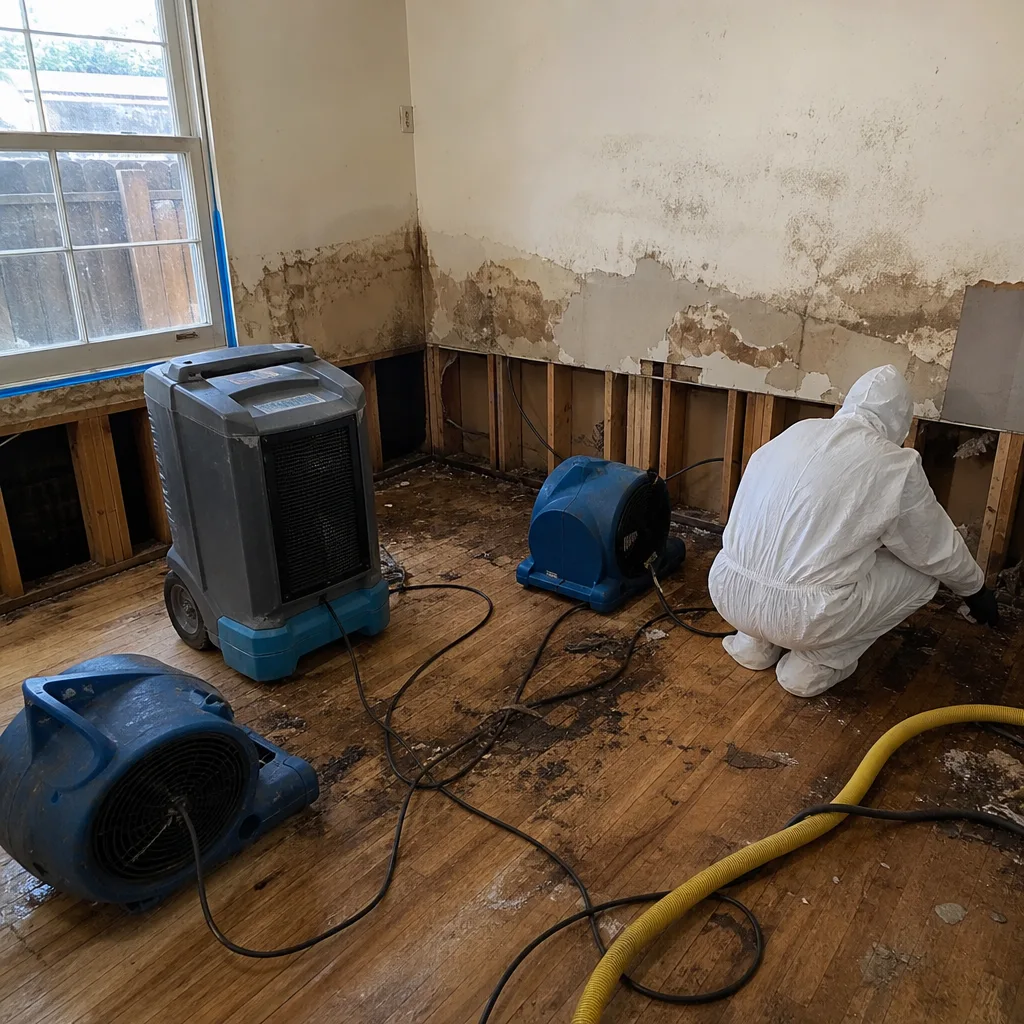
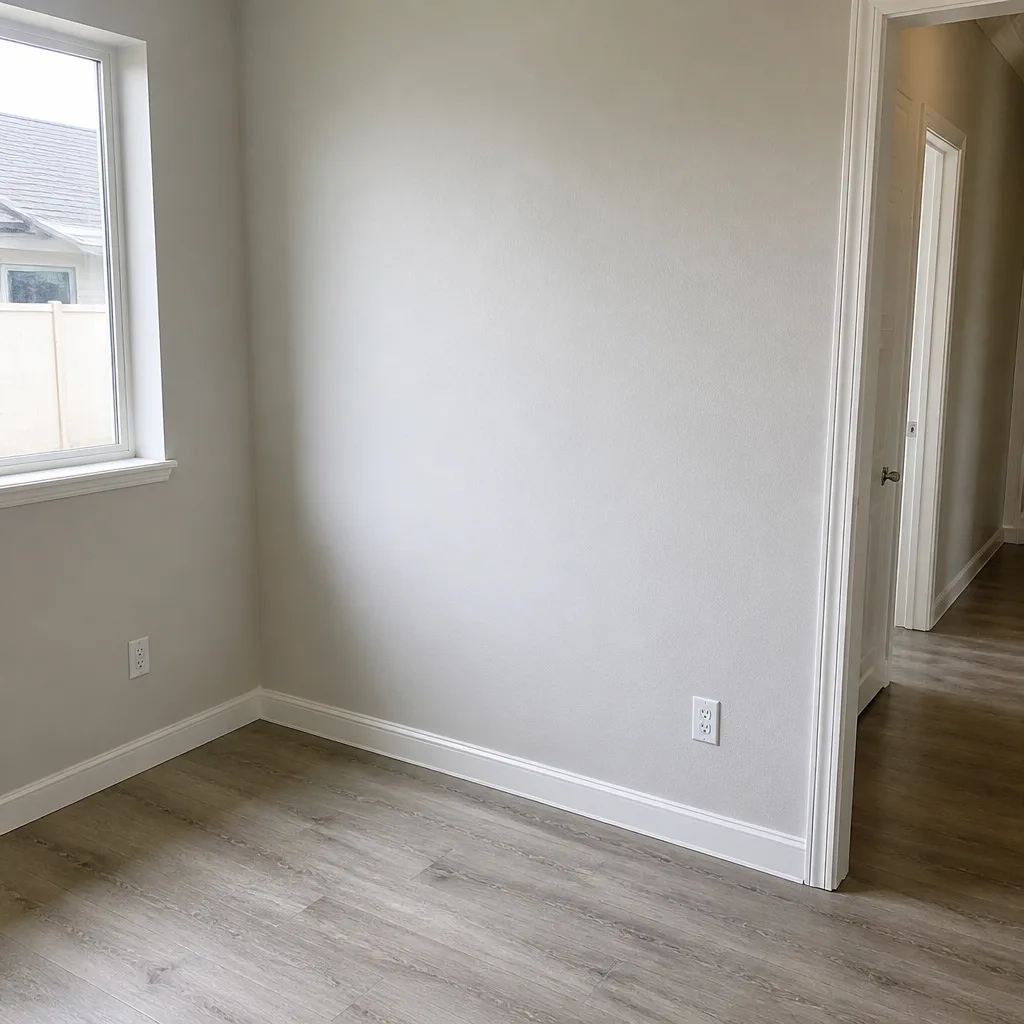
See the difference
 Before
 After
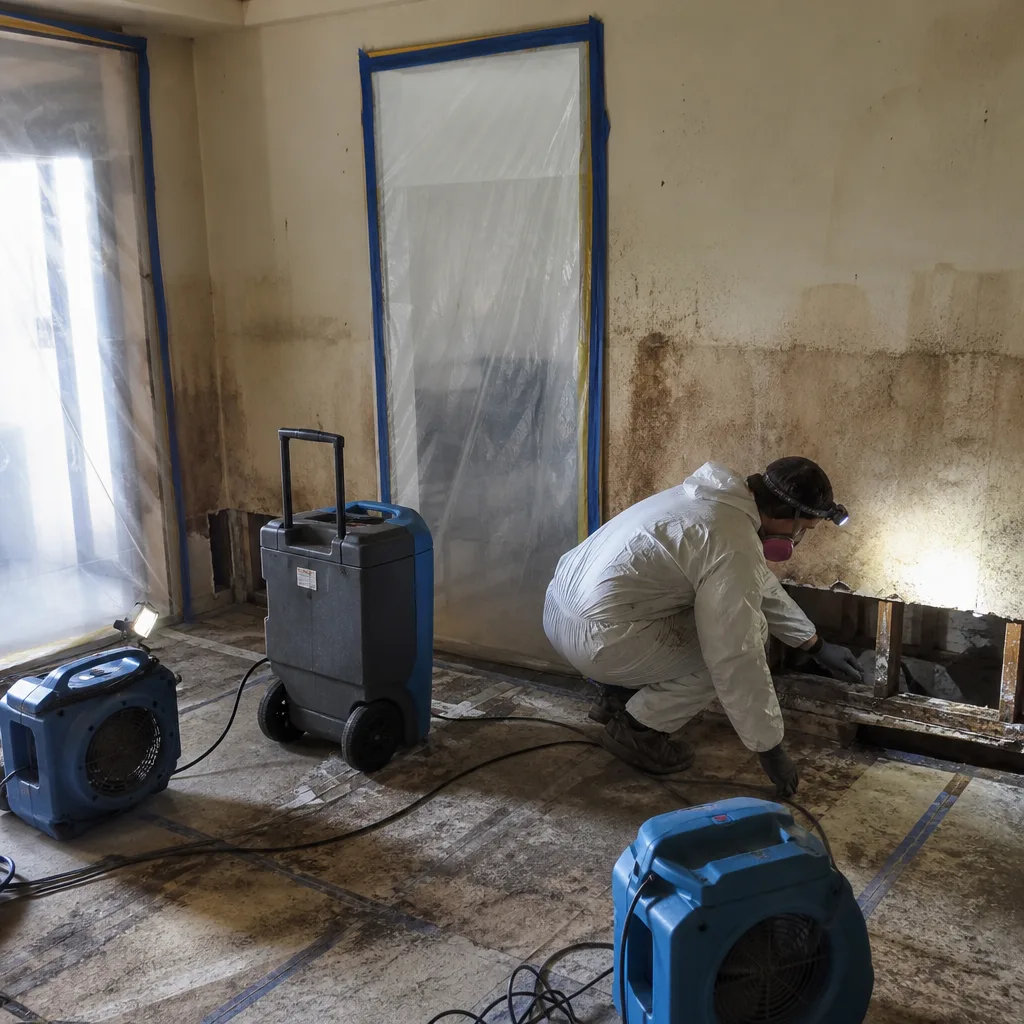 Before
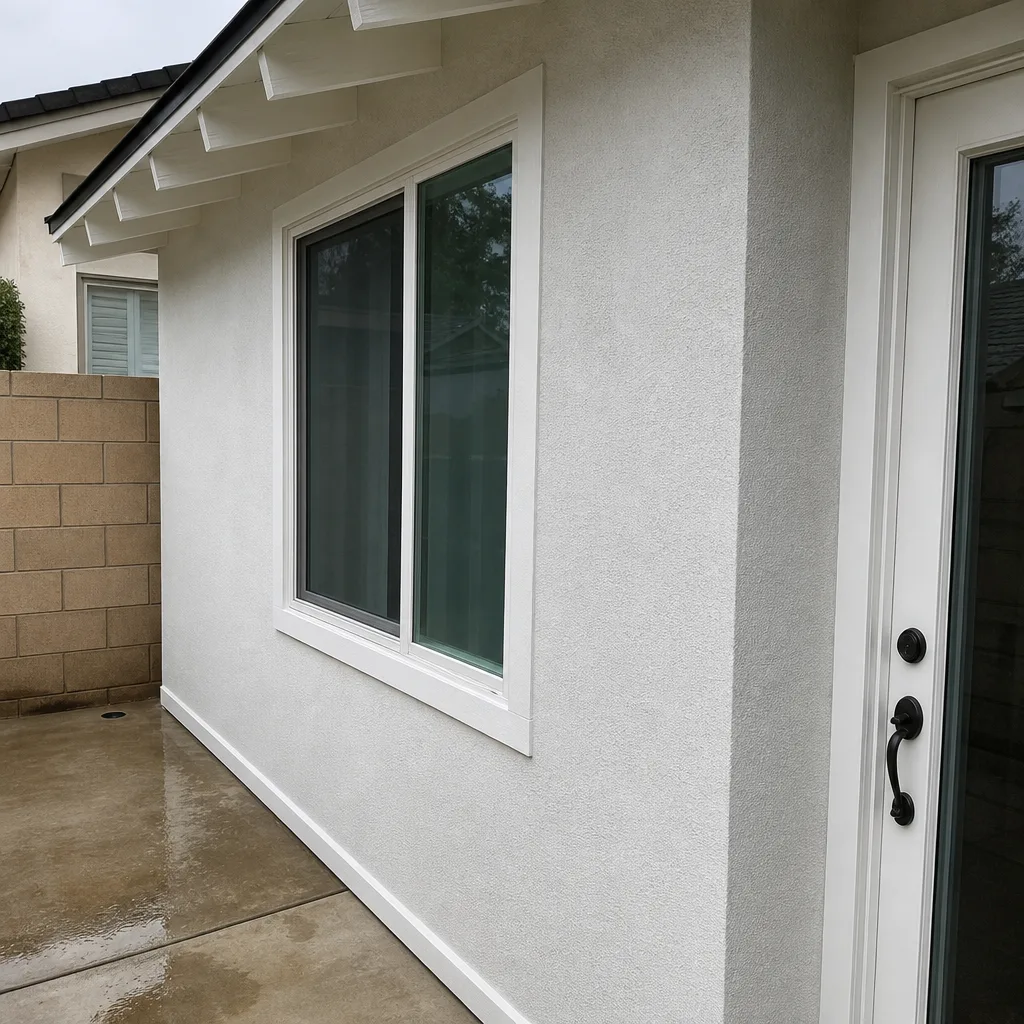 After
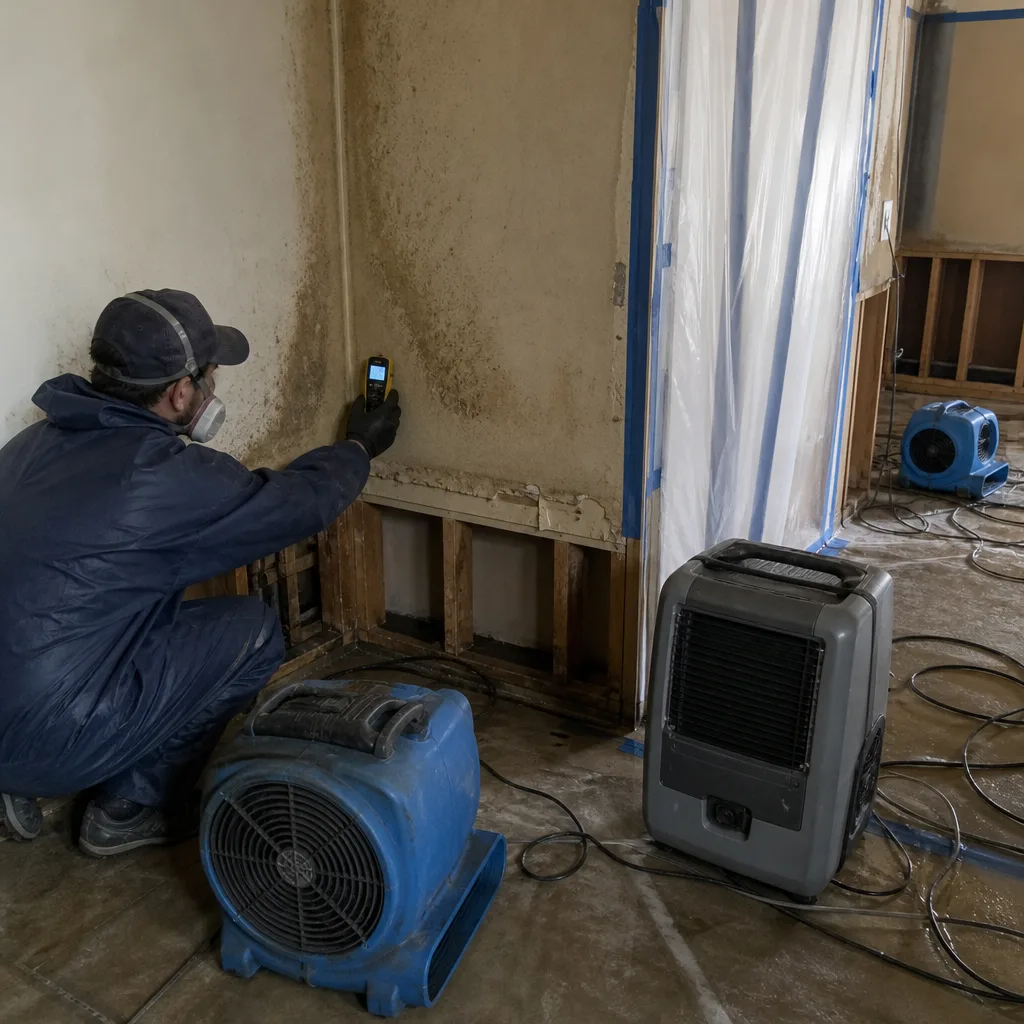 Before
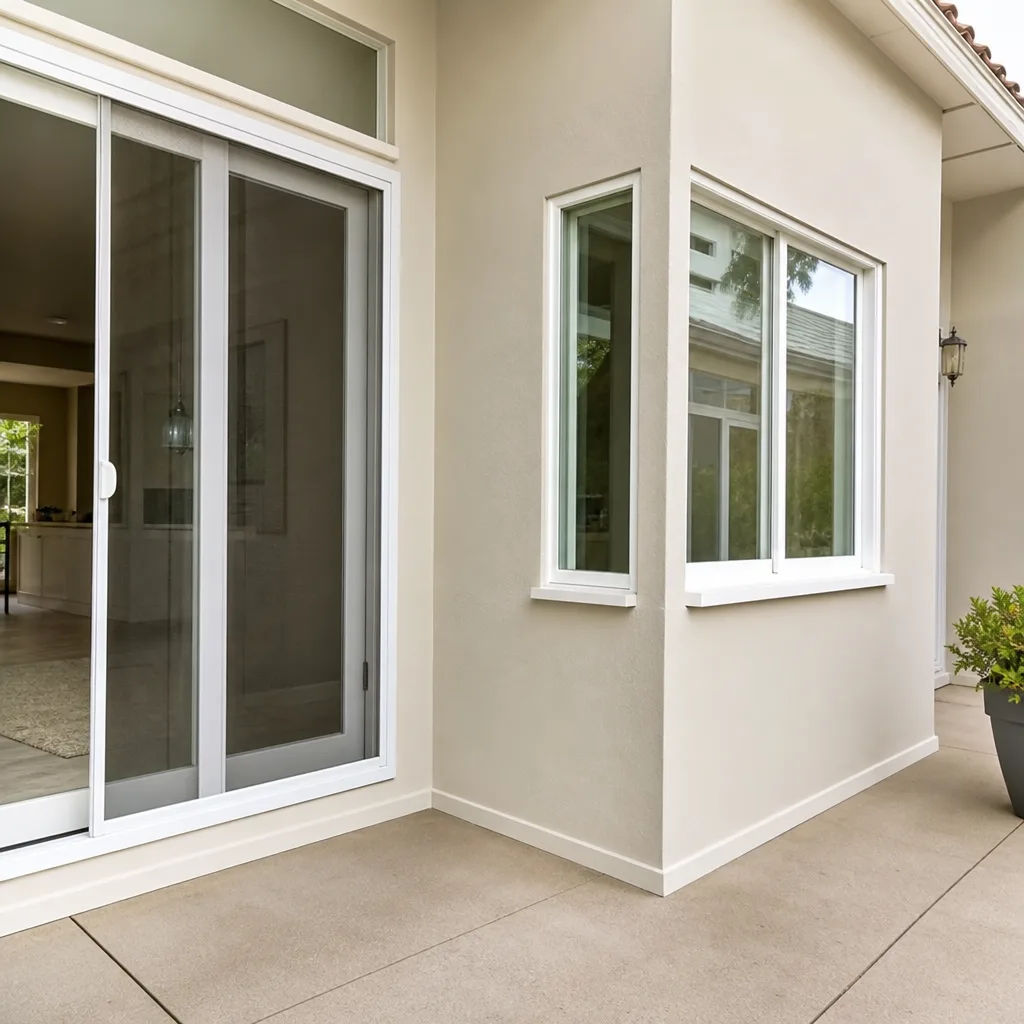 After
Common Mold Remediation Problems We See in Grand Terrace Homes
- Uphill-side moisture intrusion without exterior signs. Water from slope runoff enters the foundation wall on the uphill side and wicks through the slab, showing up as mold on lower-room baseboards with no visible exterior leak. By the time it’s visible inside, the reservoir behind the wall is often substantial.
- Original cast-iron drain failures in 1950s-70s ranches. Cast-iron waste lines corrode from the inside over decades, and in slab-on-grade construction that means slow sewage or gray water leaks into the surrounding soil and upward through the slab. Mold appears around floor registers or along wall bases with no plumbing fixture nearby.
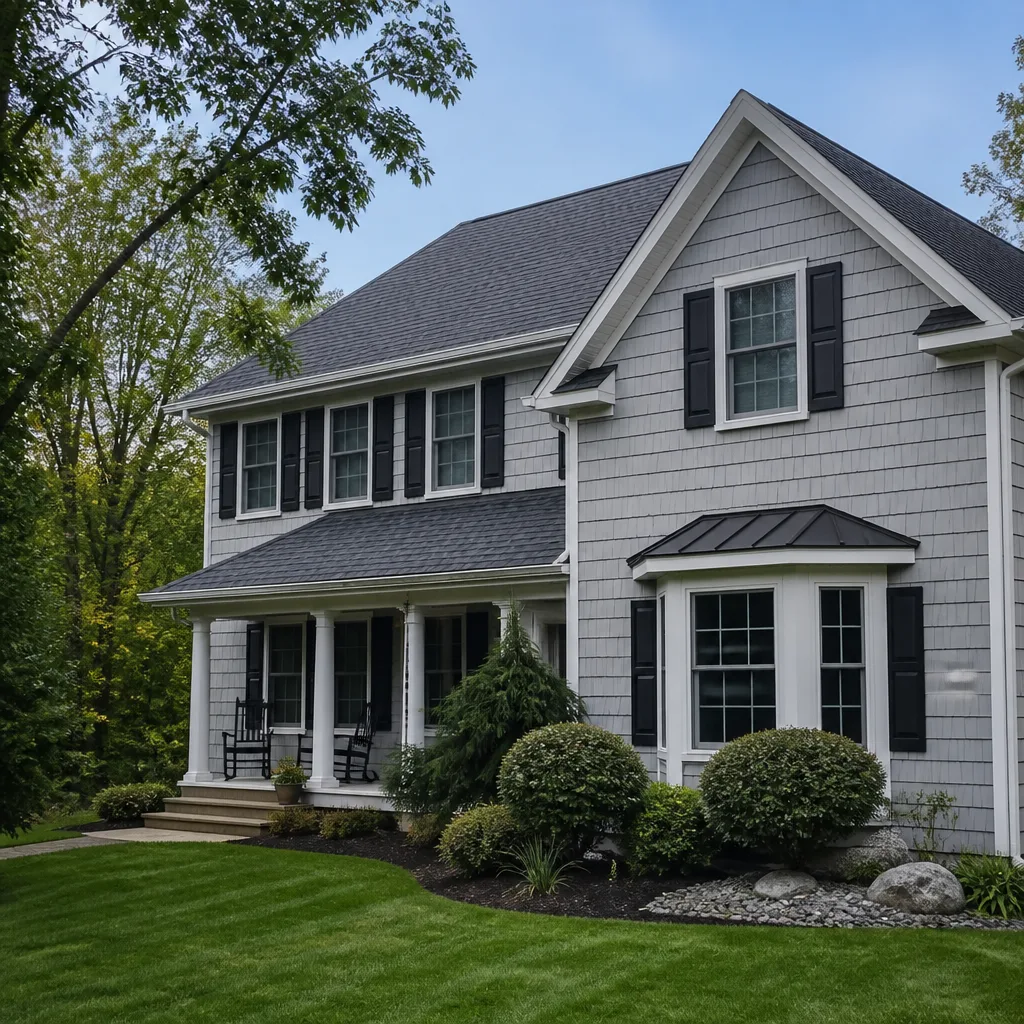
- Stucco saturation along Blue Mountain-adjacent ridges. Atmospheric-river storms drive water against west-facing stucco walls, and the stucco wicks it inward. Mold then grows on the backside of drywall, invisible until the drywall is opened or thermal imaging tells us it’s there.
- Santa Ana wind-driven smoke and dust intrusion. Prolonged dry wind events push fine particulate matter and, during wildfire season, smoke into attic vents and gaps around windows. That organic material settles on surfaces and, when a humid spell follows, gives mold spores a nutrient layer to colonize.
Pricing for Mold Remediation in Grand Terrace, CA
We Also Serve Cities Near Grand Terrace
Oxford Restoration Co covers the Inland Empire communities around Grand Terrace, including Highgrove, Colton, Loma Linda, and Rubidoux. If you manage properties across several of these cities or need a single specialist who can handle a mold issue in a Grand Terrace rental plus water damage in a Colton commercial unit, we’re equipped to coordinate both.
Serving Grand Terrace, CA — Our Local Coverage Area
We’re based in the Grand Terrace area and know this community well. Use the map below to see our service coverage — if you’re nearby, we can almost certainly help.
FAQs About Mold Remediation in Grand Terrace
Why does mold show up in my Grand Terrace lower-level room weeks after a storm with no visible leak?
Mold in a lower room weeks after a storm almost always means moisture traveled through your slab or foundation wall, not across the floor. Grand Terrace sits on a steep alluvial fan below Blue Mountain, so stormwater saturates the soil uphill of your home and creates hydrostatic pressure that pushes moisture through the foundation. The water moves slowly through the slab and wicks up into the bottom plate of your walls, where you eventually smell it or see baseboard staining. The fix is drying the uphill-side source and regrading where needed, not just cleaning the visible mold. Call (877) 265-8058 and ask for a moisture mapping inspection before the colony spreads.
My Grand Terrace ranch has original cast-iron drains. How does that affect mold remediation?
Original cast-iron drain lines from the 1950s-70s corrode from the inside and eventually crack or collapse, and in slab-on-grade construction that means water leaks into the soil under your home without ever surfacing. The moisture rises through the slab and feeds mold in walls and flooring with no visible plumbing problem. We check for elevated moisture along the slab as part of every mold remediation in homes this age, and we’ll coordinate with a plumbing specialist if we find the drain line itself is the source.
Do you have to tear out drywall that has mold from storm saturation?
Not always. If the drywall is structurally sound and the mold is non-porous surface growth, we can sometimes clean and dry it. But when storm saturation has wicked through the drywall or the paper backing has degraded, removal is the honest fix. The IICRC standard is that porous materials with visible mold are generally removed rather than treated, and we won’t seal mold behind new drywall to save a few dollars on the current bill.
Can Santa Ana winds and wildfire smoke cause mold problems in Blue Mountain-adjacent homes?
Santa Ana winds push smoke, dust, and fine organic particles into attics, window gaps, and exterior wall voids, and that debris settles on surfaces where mold can later grow when humidity rises. It’s not that the smoke itself creates mold, but it deposits a nutrient layer that encourages it. If you’re on a ridge home near Blue Mountain and have noticed a stale odor after wildfire season, an inspection can tell you whether you’re dealing with accumulated organic debris or an active moisture-driven colony. Call (877) 265-8058 for an assessment.
What does a one-trip approach mean for a Grand Terrace mold job with a long service drive?
It means we bring the full equipment set the first time: containment materials, HEPA air scrubbers, Dri-Eaz dehumidifiers, Phoenix air movers, moisture meters, and sampling cassettes. Grand Terrace isn’t a dense urban grid, and some homes sit on longer drives or hillside parcels where a return trip eats half a morning. We’d rather over-equip the first visit than discover on day two that we left the Injectidry panel at the shop. The written scope you approve before any work starts reflects that one-trip planning.
If you’re in Grand Terrace and you’ve found mold, caught a musty smell you can’t place, or watched a lower-level room start to stain after a storm, we can be there within 24 to 48 hours. Call (877) 265-8058 now for a free estimate and a straight answer about what you’re dealing with.
Written by Noel Carrasco, Owner at Oxford Restoration Co, serving Grand Terrace and the Inland Empire with IICRC-certified mold remediation, water damage restoration, and fire damage restoration.