
 Mold remediation
 Water damage drying
 Fire & smoke cleanup
 Storm response
 Sewage cleanup
 Reconstruction
Free visual inspection and a written scope of work before any mitigation begins - photos, moisture readings, and drying logs go in your claim file
The scope we write is the scope we bill. Anything new gets shown to you, in writing, before we touch it.
Get your free estimateFast, Reliable Mold Remediation Across Corona
Mold remediation in Corona typically costs $1,800 – $4,500 for a contained removal of 50 – 150 square feet of affected wall or ceiling, and most jobs in 92877, 92878, 92879, and 92880 are scheduled within 3 – 5 business days after inspection. If you’re smelling something musty in a foothill home near Green River or a tract house off the 91 corridor, that odor is usually the first sign of a moisture problem hiding inside a wall cavity, not just stale air. Our IICRC-certified team handles Mold Remediation for Corona homeowners with containment, air scrubbing, and structural drying that meets the restoration industry’s highest recognized standard. Call (877) 265-8058 for a free estimate, and we’ll get a technician out to assess the scope before mold spreads further into framing or insulation.
Key takeaways:
- Corona’s Santa Ana winds and monsoon storms create a wind-then-rain failure pattern that hides moisture where surface readings miss it.
- Typical mold remediation in Corona runs $1,800 – $4,500 depending on square footage and whether containment or pack-out is required.
- We serve all four Corona ZIP codes, including foothill neighborhoods like Sierra Del Oro and the historic core in 92879/92882.
- Every job includes moisture mapping with thermal imaging, not just a visual walkthrough.
Why Oxford Restoration Co Is Corona’s Preferred Mold Remediation Company
We’ve worked in enough Corona homes to know that mold here rarely announces itself the way it does in coastal cities. In a city where the air is dry 300 days a year, homeowners often miss the early warning signs because wall surfaces feel bone-dry to the touch. That’s where our process differs: we don’t trust surface readings, we probe. The Mold Remediation in Corona work we do is built around the specific failure modes this city produces, from wind-sheared roof tiles in Sierra Del Oro to galvanized supply-line failures in mid-century homes near the historic core.
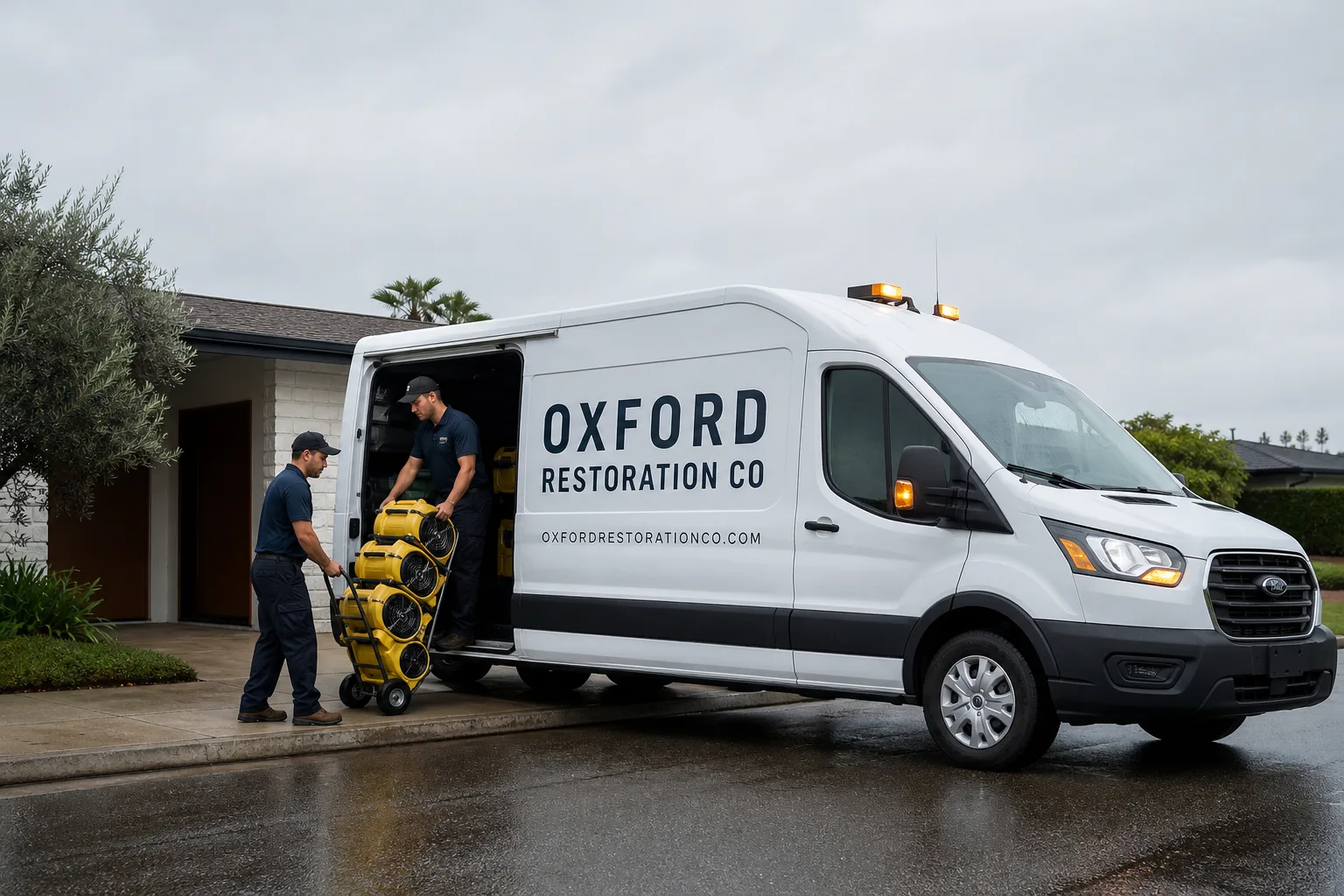
Customers in Corona keep calling us back because we document everything. Moisture logs, thermal imaging captures, containment setups, daily drying readings. You see the evidence of drying progress, not just a final invoice. That level of transparency matters when you’re dealing with an insurance adjuster. Noel Carrasco leads our team with a simple standard: restore to pre-loss condition, not just clean up what’s visible. We bring Dri-Eaz and Phoenix dehumidifiers, XPOWER air movers, and Injectidry cavity-drying systems into Corona homes because professional-grade equipment changes outcomes. Consumer fans and box-store dehumidifiers don’t dry wall cavities. Ours do.
Response time matters when mold is actively growing. We prioritize Corona calls and can typically have a technician on-site for an assessment within 24 – 48 hours, with full remediation scheduled shortly after the estimate is approved. The estimate itself is free.
Restoration work we handle
Professional Mold Removal in Corona
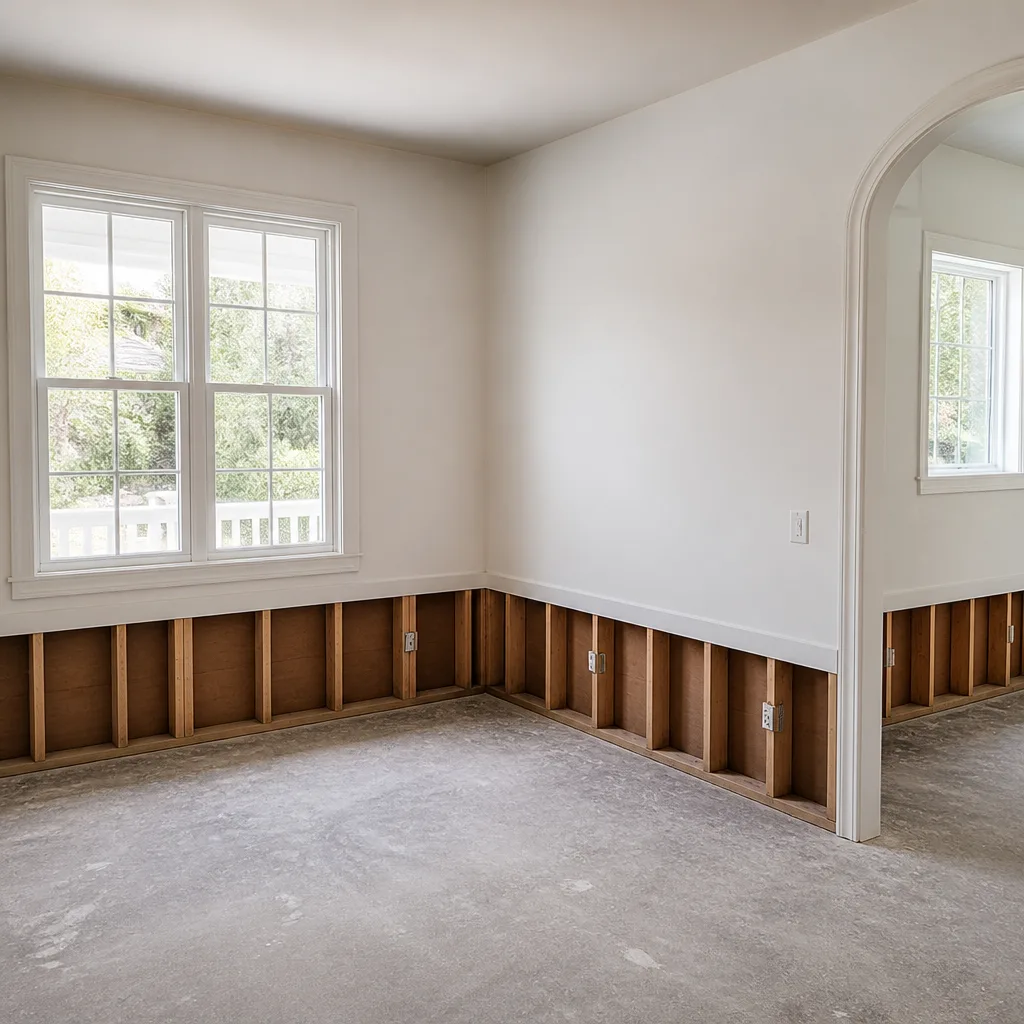
Professional Mold Removal in Corona means more than cutting out stained drywall. It means identifying where the moisture came from, mapping how far it traveled, containing the affected area so spores don’t spread during demolition, removing contaminated material, treating the cavity, and drying it back to pre-loss condition. Homeowners in 92881 and 92883 tract homes often discover mold behind bathroom vanities or under windows where sprinkler overspray or a failed supply line has been feeding moisture into the wall for weeks or months. The dry air outside masks it. The musty smell inside gives it away eventually.
Containment and Source Removal
We set up negative-air containment with HEPA-filtered air scrubbers before any demolition starts. Spores released during drywall removal can spread through a home’s HVAC system in minutes. Containment keeps the problem in one room instead of every room.
Structural Drying and Verification
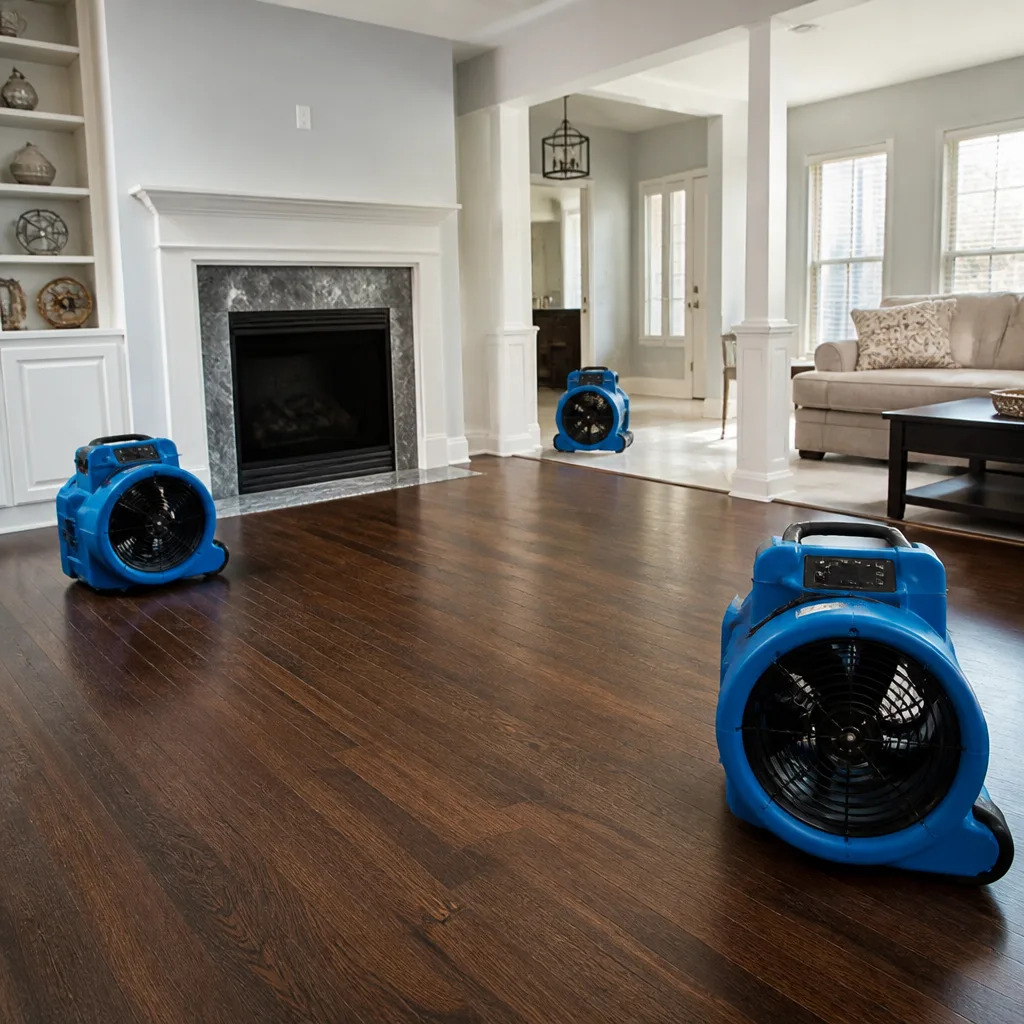
After contaminated material is removed, we dry the framing and cavity space using industrial dehumidifiers and targeted air movement. Injectidry systems can dry wall cavities from the inside without tearing out more material than necessary. That reduces repair scope and keeps your drywall bill lower than a full studs-out tearout.
Mold Inspection in Corona
A Mold Inspection in Corona starts with understanding that this city’s climate creates a specific blind spot: Santa Ana winds pull moisture off surface materials so fast that a standard pin-meter reading can look normal while mold is already colonizing behind stucco or tile. Our inspectors pair moisture mapping with thermal imaging and cavity probes in foothill neighborhoods like Sierra Del Oro and Green River because surface readings alone will miss exactly the kind of mold problems Corona produces. Inspection runs $350 – $650 for a thorough assessment with moisture mapping and a written scope.
Moisture Mapping and Thermal Imaging
We scan walls, ceilings, and floors with thermal imaging to identify temperature differentials that indicate trapped moisture. Then we probe suspect areas with invasive moisture meters. The combination catches what either tool alone misses.
Written Findings and Remediation Scope
You get a documented report showing where moisture is, how far it extends, and what remediation will require. That written scope is what we work from, and it’s what your insurance adjuster sees. No surprises, no scope creep.
Trusted Brands We Service in Corona
We run Dri-Eaz and Phoenix dehumidifiers, XPOWER air movers, and Injectidry cavity-drying systems on Corona jobs because these are the brands commercial restoration firms use on large losses. That matters when you’re working with a 1990s tract home in 92881 where the wall assembly is stucco over wood framing and a leak has been feeding mold for months. We keep the parts, filters, and accessories stocked for fast turnaround on Corona projects, so we’re not waiting on a supply house to get your drying equipment on-site. IICRC certification means our process is audited against the restoration industry’s recognized standard, not our own internal checklist. RIA and IFA affiliation keeps us accountable to evolving restoration science.
See the difference
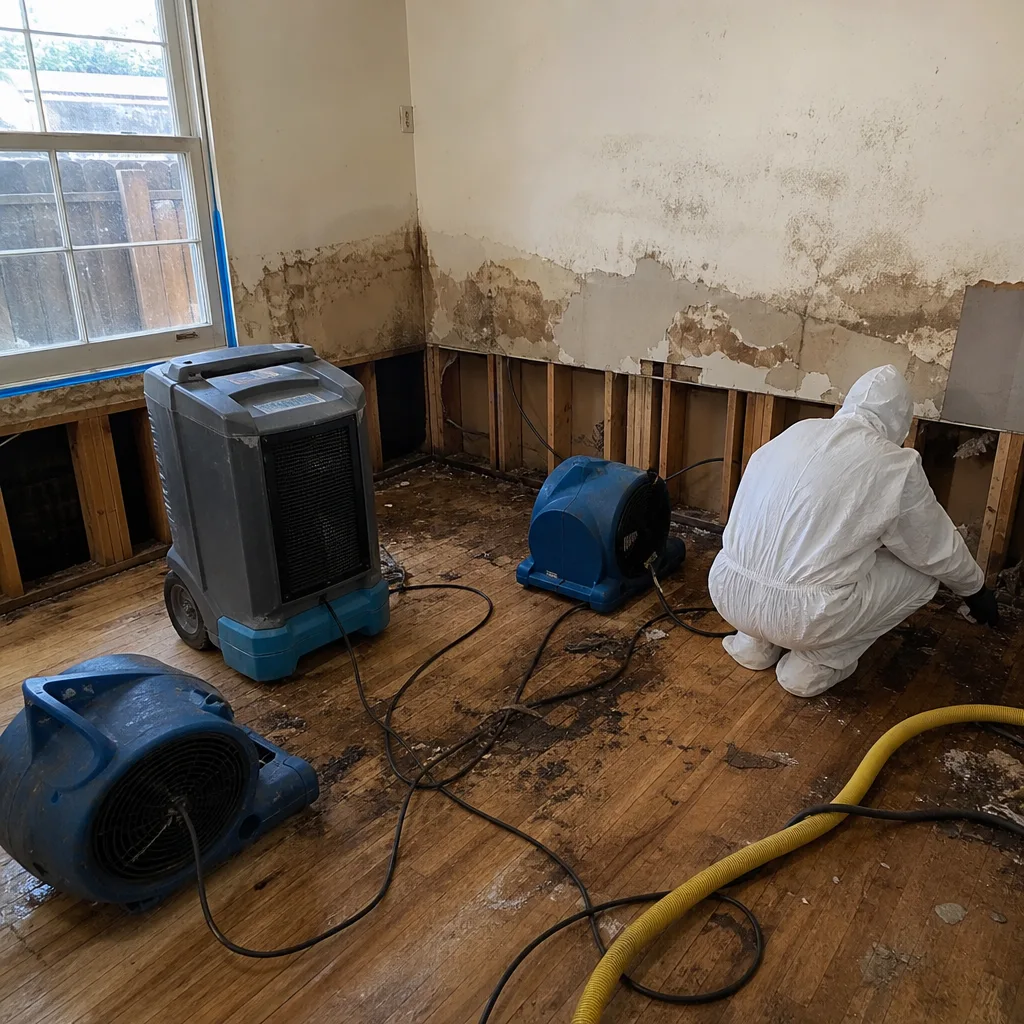 Before
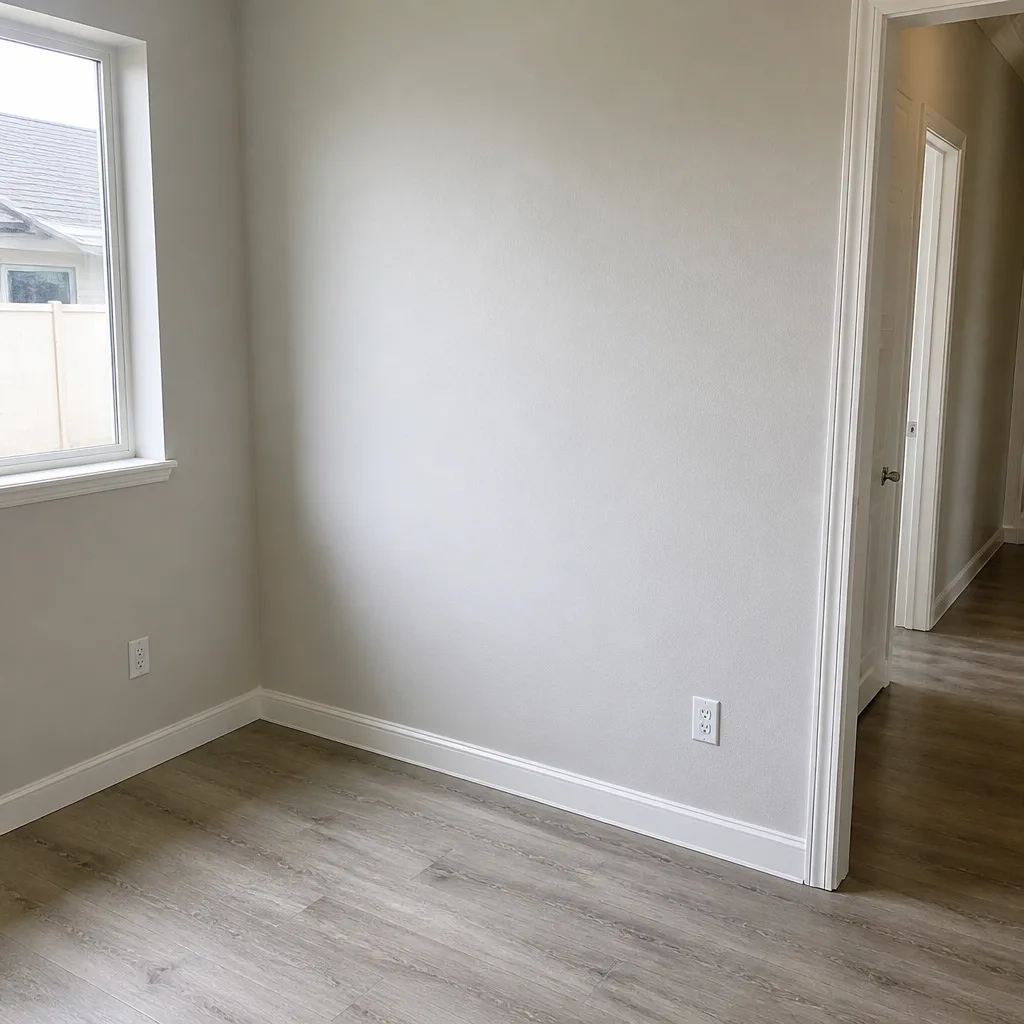 After
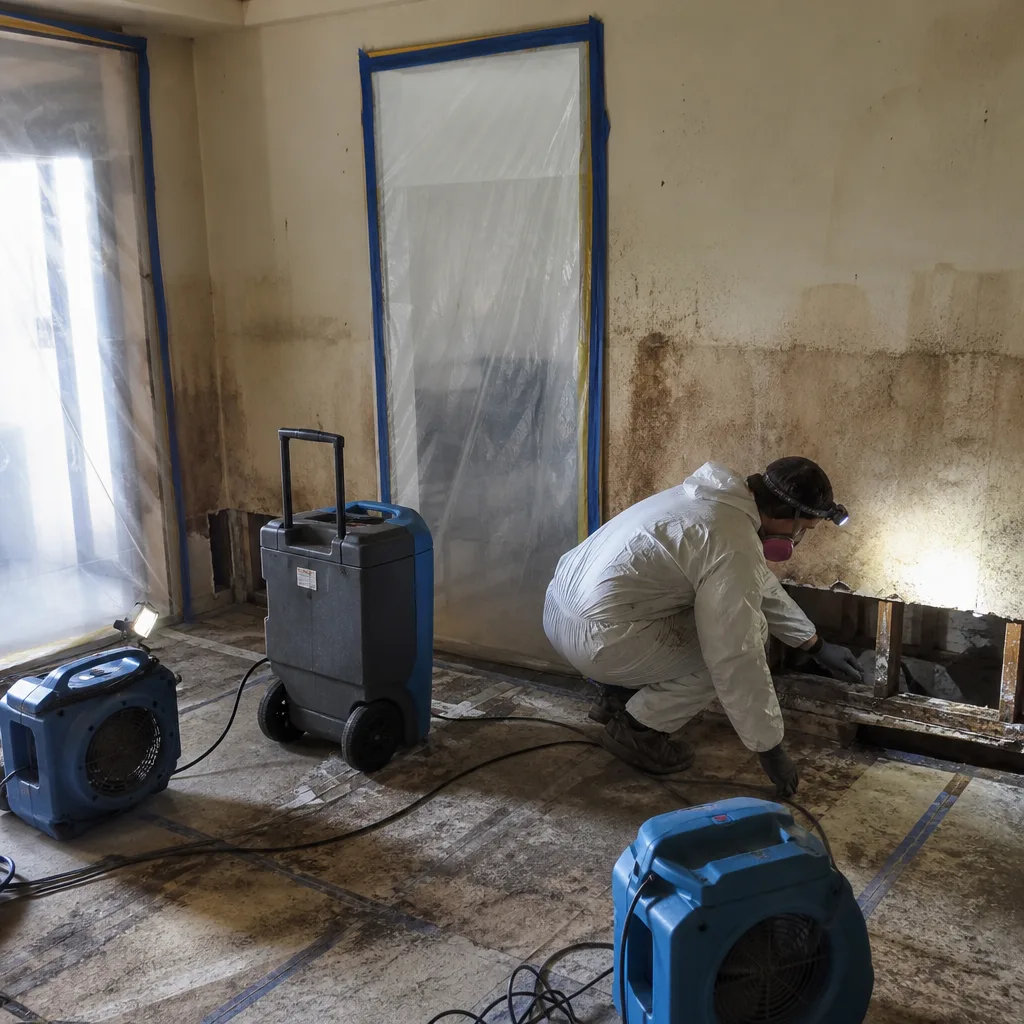 Before
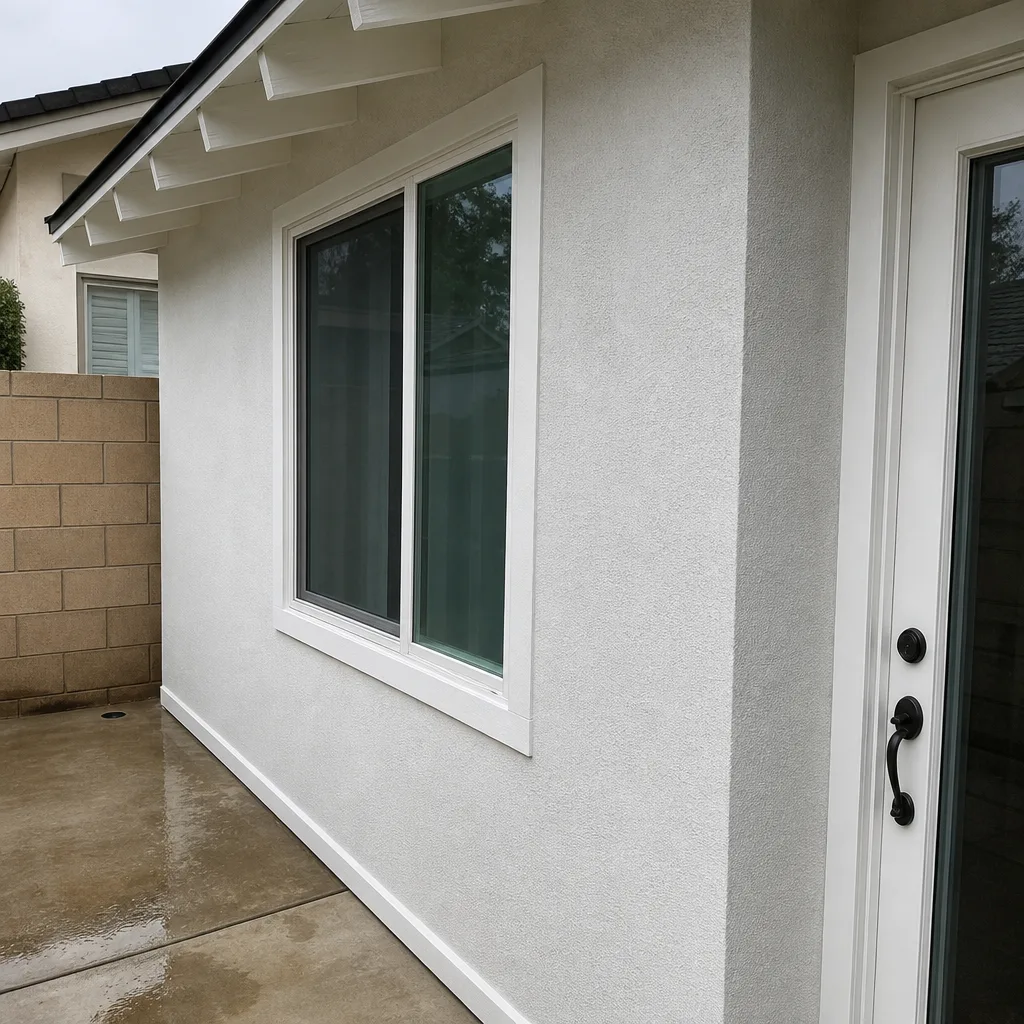 After
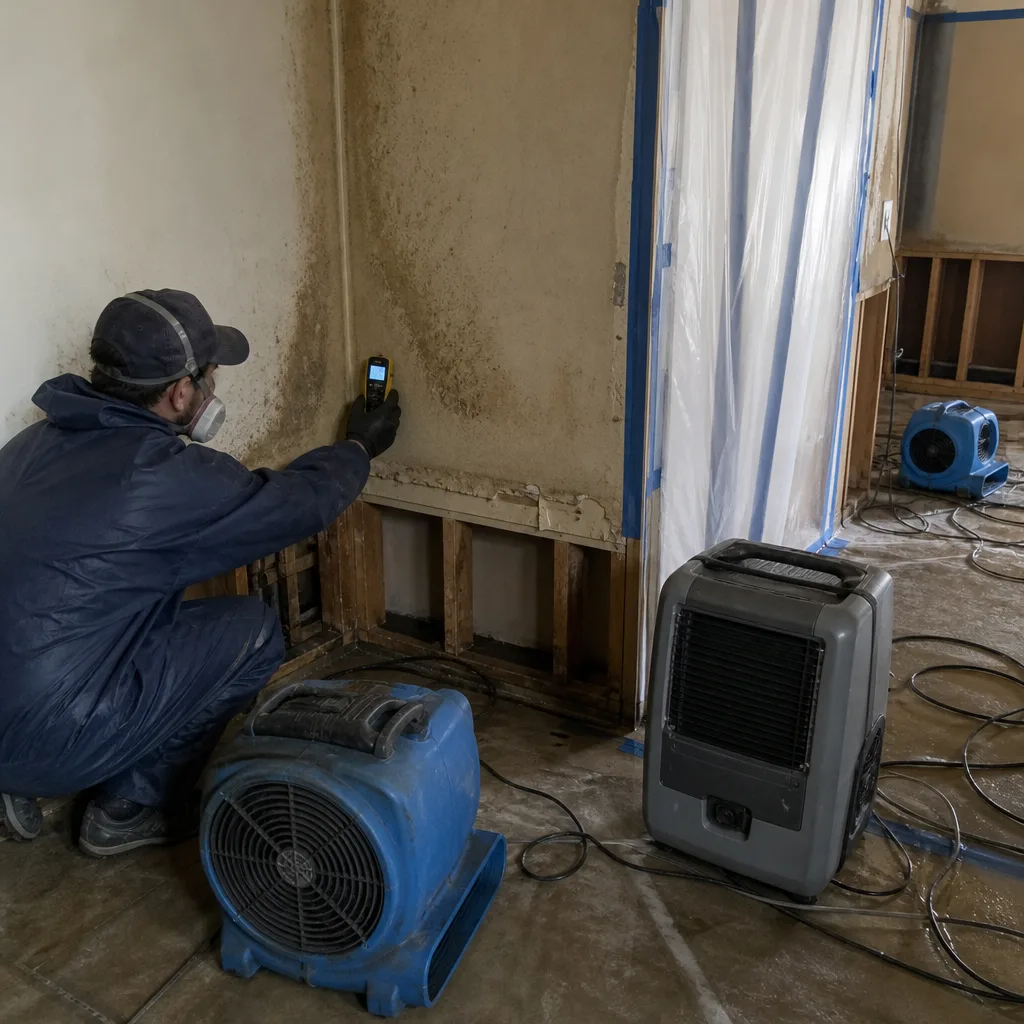 Before
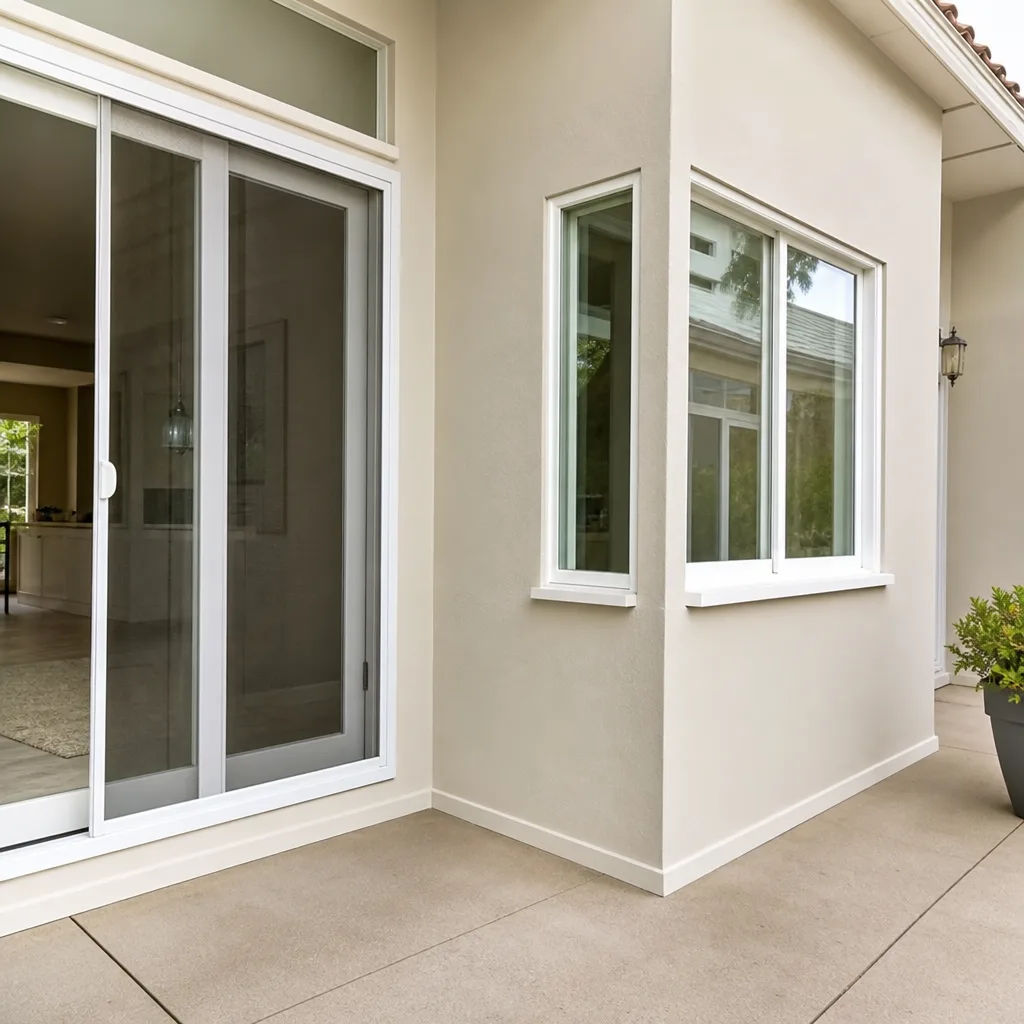 After
Common Mold Remediation Problems We See in Corona Homes
- Wind-sheared roof tiles that don’t leak until the first big rain. The foothill neighborhoods along the 91 east of the 15 see Santa Ana wind events that crack or dislodge concrete tiles. Months later, a monsoon cell stalls against the mountains and water finally finds the gap. By then, mold has been growing in the wall cavity since the first rain after the wind event.
- Category 3 flood silt pushed into garages and patios near arroyos. Canyon runoff carries sewage, pesticides, and animal waste. Treating that silt as anything other than black water is a mistake. It must be removed, not dried in place.
- Galvanized supply-line failures in mid-century 92879/92882 homes. Fifty-year-old plumbing fails from the inside out. A slow pinhole leak behind a wall can run for months before anyone notices. We see this constantly in the historic core.
- False “dry” readings during Santa Ana conditions. The dry winds wick surface moisture out of drywall fast enough to fool a standard moisture meter. Mold keeps growing in the wall cavity behind the dry surface. This is the single most common reason Corona mold problems go undetected until they’re severe.
Pricing for Mold Remediation in Corona, CA
In Corona, mold remediation pricing breaks down like this: a contained removal of 50 – 100 square feet typically runs $1,800 – $3,200. Larger jobs in the 100 – 300 square foot range land between $3,200 and $5,500. Full crawl space remediation, which we see often in older 92879/92882 homes with elevated foundations, runs $4,000 – $8,000 depending on access and whether vapor barrier replacement is needed. Factors that move the number: whether containment is required (it usually is), whether pack-out of contents is involved, and how much structural drying the cavity needs after removal. We give free estimates before any work starts, with a written scope so the number doesn’t drift after demolition gets underway. Call (877) 265-8058 for an exact quote for your Corona property.
We Also Serve Cities Near Corona
Our team handles mold remediation in Home Gardens, El Cerrito Corona, Eastvale, and Norco with the same equipment and the same documented process we use in Corona. If you’re on the edge of 92880 or just across the city line, give us a call. We’ll let you know our next available assessment slot in your area.
Serving Corona, CA — Our Local Coverage Area
We’re based in the Corona area and know this community well. Use the map below to see our service coverage — if you’re nearby, we can almost certainly help.
FAQs About Mold Remediation in Corona
In Corona, a musty smell with no visible leak usually means moisture is trapped behind stucco or tile where the dry air has wicked the surface dry while mold continues growing in the wall cavity. Wind-sheared roof tiles, pinhole galvanized supply-line failures, and sprinkler overspray against exterior walls are the most common sources we find in 92877, 92878, 92879, and 92880. A visual inspection won’t find this. You need moisture mapping with thermal imaging and cavity probes. Call (877) 265-8058 and we’ll schedule an assessment.
Yes. Category 3 water carries sewage, pesticides, and organic waste from canyon runoff. The flood silt pushed into garages and patios near Corona’s arroyos during monsoon storms is contaminated, not just wet. Standard drying protocols and antimicrobial treatment are not sufficient for Category 3 material. It must be physically removed, the affected area disinfected, and the structural materials dried afterward. Skipping this step leaves pathogens and mold food sources in place.
Mold colonization can begin within 24 – 72 hours of a supply-line failure in a 92879 home, especially during summer when interior temperatures in Corona stay in the high 80s and 90s. The older framing in mid-century homes has often been drying and re-wetting for decades, which means the wood already contains dormant spores ready to activate. By the time you smell it, the affected area has likely been wet for two to four weeks. That’s why we document moisture levels on every inspection, not just visual signs.
Most occupied Corona homes do not require a full pack-out. If the affected area is contained to one or two rooms and the contamination is not in the HVAC ductwork, we protect belongings in place with plastic sheeting and run HEPA-filtered negative air throughout the project. Full pack-out becomes necessary when contamination is extensive, when it has spread through multiple rooms, or when contents in the affected area are porous and cannot be decontaminated in place. We’ll tell you in the written scope whether pack-out is warranted.
In Sierra Del Oro and Green River, Santa Ana winds and the proximity to the Santa Ana Mountains create a microclimate where surface moisture evaporates unusually fast, so standard pin-meter readings on drywall and stucco often read dry while the wall cavity behind them holds enough moisture for active mold growth. We never trust surface readings in these neighborhoods. We always pair moisture mapping with thermal imaging and invasive cavity probes. That’s the only way to find the slow-dried pockets a monsoon cell or wind-sheared roof tile leaves behind months earlier.
Written by Noel Carrasco, Owner at Oxford Restoration Co, serving Corona since day one with IICRC-certified mold remediation and structural drying.