
XPOWER Water Damage Restoration in Costa Mesa: A Homeowner’s Guide
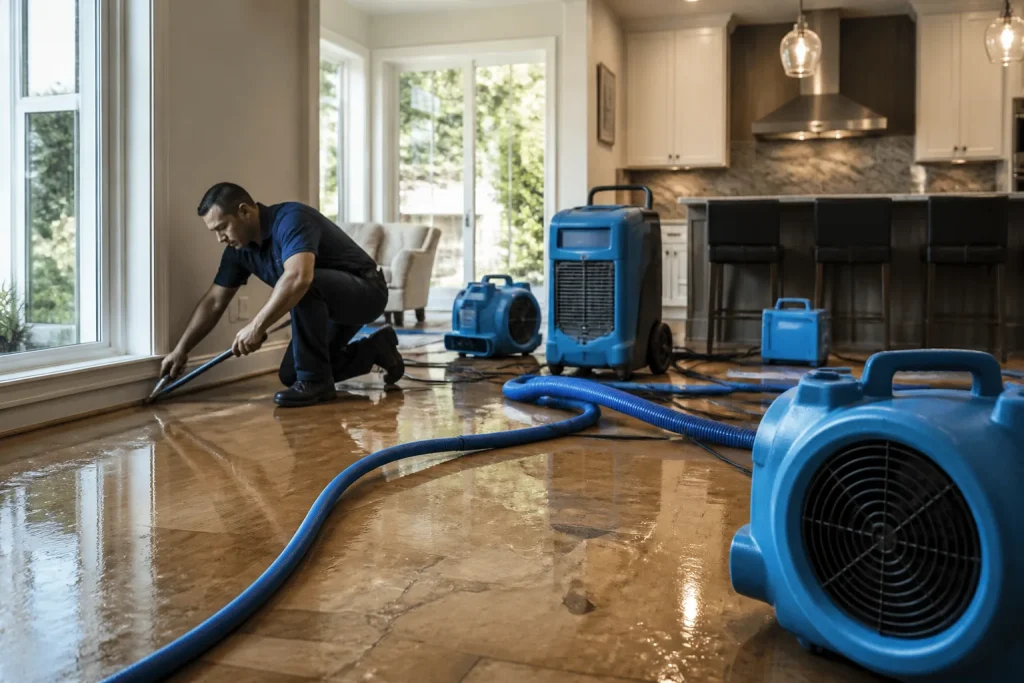
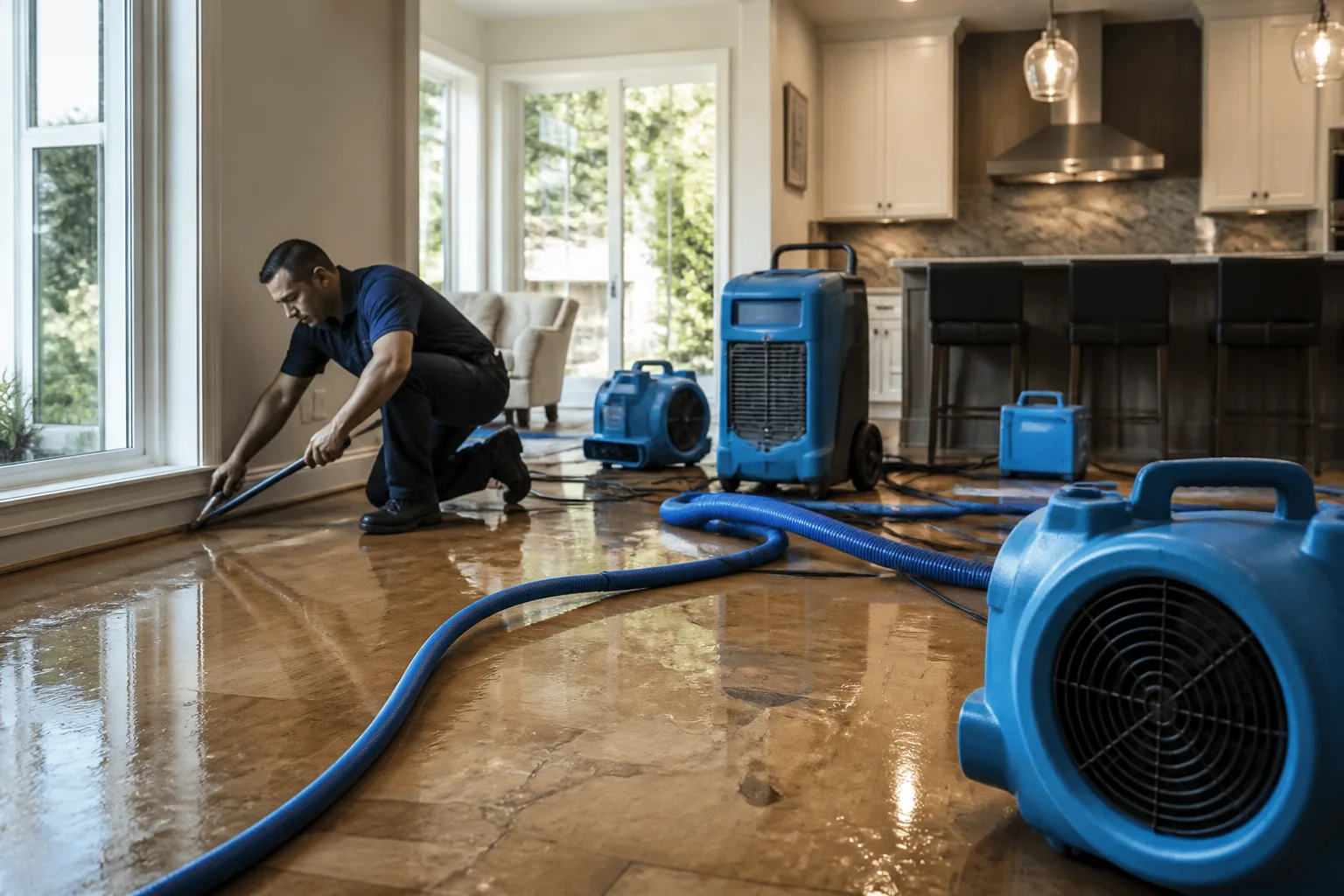
XPOWER is a legitimate professional-grade equipment brand used by restoration contractors across Costa Mesa, but the name stamped on an air mover tells you almost nothing about whether your home will actually dry. What matters is the configuration: how many machines, what type, where they’re placed, and whether anyone is measuring the results. A contractor can park six XPOWER fans in your living room, hand you an invoice, and leave you with hidden moisture behind the drywall that turns into mold in three weeks.
If you’re dealing with water damage right now and don’t want to evaluate equipment configurations while your floors are swelling, call Oxford Restoration Co at (877) 265-8058 for a free estimate. We’ll bring the right equipment, set it up correctly, and prove it’s working with daily moisture readings.
What XPOWER Equipment Actually Does in a Water Damage Job
XPOWER manufactures three categories of equipment you’ll see on professional water damage jobs in Costa Mesa: air movers, dehumidifiers, and air scrubbers. Each serves a distinct function, and none of them work alone.
Air movers are high-velocity fans designed to create turbulence across wet surfaces. That turbulence forces moisture from porous materials like drywall, carpet padding, and hardwood into the surrounding air. A proper drying job uses enough air movers to create continuous airflow across every affected surface, not just the obvious wet spots.
Dehumidifiers pull moisture out of that now-humid air. Without them, air movers simply push damp air around the room until it re-condenses on cooler surfaces, which is why a contractor who shows up with only fans isn’t drying your home. They’re circulating water vapor.
Air scrubbers filter airborne particles, including mold spores that get kicked up when drying begins. In a coastal city like Costa Mesa, where ambient humidity runs high most of the year, scrubbers also help maintain a clean drying environment when containment is compromised.
At Oxford Restoration Co home, we run equipment from XPOWER alongside Dri-Eaz, Phoenix, and B-Air. The brand matters less than whether it’s commercial-grade and correctly deployed.
Air Movers vs. LGR Dehumidifiers: Why the Ratio Matters in Costa Mesa
The most common mistake we see on Costa Mesa job sites is a contractor running plenty of air movers with an undersized or inappropriate dehumidifier. This is a structural failure, not a brand failure.
Here’s what happens when the ratio is off:
- Air movers evaporate moisture faster than the dehumidifier can remove it
- Relative humidity in the drying chamber climbs past 60%
- Evaporation slows dramatically because the air is already saturated
- Drying times stretch from days to weeks
- Secondary damage appears: buckling hardwood, peeling paint, mold growth in cavities
LGR (Low Grain Refrigerant) dehumidifiers solve part of this. Standard refrigerant dehumidifiers work well in warm, moderately humid conditions but lose efficiency as humidity drops. LGR units continue pulling moisture at much lower humidity levels, typically down to 20% relative humidity or lower. In Costa Mesa’s coastal climate, where outdoor air rarely drops below 60% humidity, LGR units matter more than they would in, say, Palm Springs.
XPOWER makes LGR dehumidifiers, as do Dri-Eaz and Phoenix. The IICRC standard for water damage restoration specifies minimum dehumidifier capacity based on the class of water damage and cubic footage of the affected space. A competent contractor calculates this ratio before placing equipment, not after the machines are running.
Ask your contractor this: “What’s your dehumidifier capacity in pints per day at AHAM conditions for this space?” If they can’t answer, they’re guessing.
What a Properly Configured Drying Chamber Looks Like
Equipment is only half the equation. Containment is the other half, and it’s where less rigorous contractors in Costa Mesa cut corners.
A drying chamber is a controlled environment. It’s usually built with plastic sheeting to isolate the affected area from the rest of the home. This does three things:
- It concentrates airflow and dehumidification on the wet materials instead of letting conditioned air leak into unaffected rooms
- It prevents moisture from migrating into dry areas, which can cause secondary damage
- It keeps dust, debris, and airborne mold spores from spreading during demolition and drying
Inside that chamber, air movers should be positioned to create a circular airflow pattern. Each air mover should be angled slightly upward and positioned so its airflow reaches the next surface in sequence, not aimed randomly. Dehumidifiers go in the center or at the return-air point of that circular flow.
In Costa Mesa homes built before 1980, we often find double-wall construction or plaster over lathe that requires a different approach. Water damage restoration in Lakeview has taught us that older coastal construction holds moisture differently than modern drywall assemblies. That’s why our IICRC-certified process includes cavity drying with Injectidry systems, which force air through wall cavities without requiring full drywall removal. Same result, less demolition, lower repair cost.
The Daily Monitoring Log: What Active Drying Looks Like on Paper
A legitimate restoration contractor in Costa Mesa should provide daily moisture readings. Not a verbal “it’s drying fine,” but written documentation showing that specific surfaces are trending downward.
Here’s what those logs should include:
- Initial moisture content of each affected structural material, taken with a moisture meter at the start of drying
- Daily readings from the same locations, documented in writing or digital format
- Relative humidity and temperature inside the drying chamber, taken at the same time each day
- Equipment placement diagram showing where each air mover and dehumidifier is positioned
- Adjustment notes explaining any equipment moves or changes to the setup
A drying curve that flattens out before materials reach their dry standard, typically 12% moisture content or less for most wood, means the equipment configuration isn’t working. A contractor who responds by adding more air movers without checking the dehumidifier capacity doesn’t understand the physics.
We’ve pulled moisture meters out of Costa Mesa homes where the contractor assured the homeowner everything was dry, only to find 25% moisture content behind baseboards on the opposite side of the room from the visible damage. Water migrates. Monitoring has to account for that.
Questions to Ask Before Any Equipment Gets Placed in Your Costa Mesa Home
Before work begins, ask these questions. They’re technical benchmarks, not consumer checklist items, and they separate specialists from generalists who own a few fans.
1. “What’s the calculated drying load for this space?” A competent contractor calculates this using IICRC guidelines based on the class of water damage and affected square footage. If they haven’t calculated it, they’re guessing at equipment counts.
2. “What’s the ratio of air movers to dehumidifier capacity, in pints per day?” There’s no single correct answer, but there is a defensible calculation. A contractor who can explain their reasoning is a contractor who understands drying science.
3. “Will you provide daily moisture readings in writing?” If the answer is no, find another contractor. Verbal reassurances don’t stand up to mold claims later.
4. “How will you dry cavities and subfloor without removing all the drywall?” This is where Injectidry systems come in. If a contractor’s only answer is “we’ll cut out everything wet,” they’re maximizing demolition, not minimizing disruption. Mold remediation in Lakeview follows the same principle: targeted treatment beats wholesale removal when it’s done to standard.
5. “Are your technicians IICRC-certified, and can I see the documentation?” Certification isn’t a piece of paper. It’s evidence that the technician understands the standards we’re describing in this article.
The Bottom Line
XPOWER equipment is professionally built and we run it regularly, but no brand name should be the deciding factor in your Costa Mesa water damage restoration. The configuration, the calculation, and the monitoring are what determine whether your home returns to pre-loss condition or develops a mold problem six months later.
If you’re dealing with water damage and want an IICRC-certified specialist who will show you the drying logs, not just park equipment in your living room, Oxford Restoration Co offers free estimates. We serve Costa Mesa and the surrounding area with industrial-grade equipment from XPOWER, Dri-Eaz, Phoenix, B-Air, and Injectidry, and we’re members of the Restoration Industry Association. For water damage, mold, or fire damage restoration in Lakeview and nearby communities, call (877) 265-8058.
Frequently Asked Questions
Is XPOWER equipment professional-grade? Yes. XPOWER manufactures commercial air movers, LGR dehumidifiers, and air scrubbers that meet professional restoration standards. The equipment itself is capable; the question is whether the contractor deploying it understands drying science.
How many air movers do I need for water damage in a Costa Mesa home? It depends on the affected square footage, the class of water damage, and the type of materials involved. IICRC standards provide a framework, but a competent contractor calculates equipment needs based on your specific situation rather than applying a generic rule. If a contractor gives you a number without measuring anything, keep looking.
How long does professional water damage drying take in Costa Mesa? Three to five days is typical for a properly configured drying chamber. Coastal humidity can extend that timeline if the contractor isn’t using LGR dehumidifiers or adequate containment. If drying stretches past a week, something in the configuration needs adjustment.
How do I know if the drying is actually working? Request daily moisture readings from the same locations using the same type of moisture meter. Active drying shows a consistent downward trend across all affected materials. Flat readings mean the equipment isn’t doing its job. Call (877) 265-8058 if you need a second opinion on a job in progress.
Written by the team at Oxford Restoration Co, serving Costa Mesa since 2011.
Need Damage Restoration Help?
Call Oxford Restoration Co — licensed & insured, here with fast after-hours help in Costa Mesa.
(877) 265-8058