
 Water damage drying
 Fire & smoke cleanup
 Mold remediation
 Storm response
 Sewage cleanup
 Reconstruction
Free visual inspection and a written scope of work before any mitigation begins - photos, moisture readings, and drying logs go in your claim file
The scope we write is the scope we bill. Anything new gets shown to you, in writing, before we touch it.
Get your free estimateFast, Reliable Water Damage Restoration Across March Air Force Base
Water damage restoration in March Air Force Base typically costs between $1,200 and $4,800 depending on the source of the water, the square footage affected, and whether structural drying or full water damage repair is required. Most calls we take in the 92551 ZIP code come from slab foundation leaks, failed polybutylene supply lines, or sudden winter rain intrusion through cracked stucco. Our crews know the housing stock here, and we know how important it is to move fast when water is wicking through drywall and carpet pad. If you’re dealing with active water intrusion anywhere around the base or in adjacent tract neighborhoods, call (877) 265-8058 now and we’ll dispatch a certified technician to March Air Force Base immediately.
Why Oxford Restoration Co Is March Air Force Base’s Preferred Water Damage Restoration Company
Oxford Restoration Co is an IICRC-certified restoration specialist, not a general contractor that occasionally dries out a wet basement. That distinction matters in March Air Force Base, where much of the housing stock dates to the 1980s and 1990s and carries real infrastructure liabilities. Our work is performed to the restoration industry’s highest recognized standard, and every mitigation we run is documented with daily moisture readings that hold up when a property manager or adjuster asks questions.
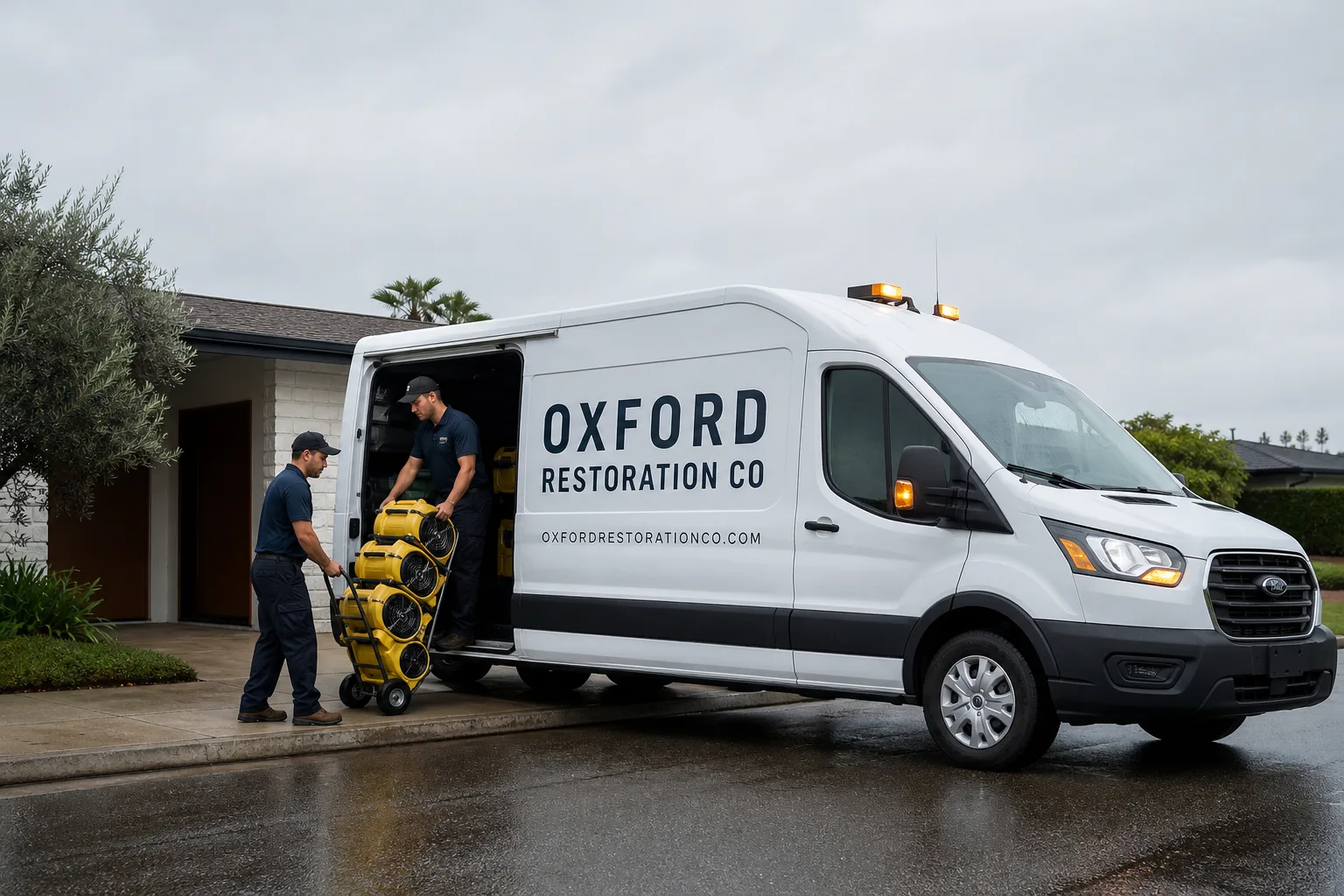
Base personnel, civilian employees, and retirees all rely on us because we understand military schedules and the unique pressure of move-out inspections. We’ve served properties throughout the 92551 corridor, from older military family housing to the tract developments that surround the base. When we arrive, we bring industrial-grade drying systems from Dri-Eaz, Phoenix, and Injectidry, the same professional-grade equipment used by large commercial restoration firms. That equipment, combined with our RIA and IFA affiliations, means the mitigation we run is defensible, measurable, and built for fast, complete structural drying.
Noel Carrasco leads our team with a simple standard: restore, not just repair. That means returning a damaged property to pre-loss condition, not just patching the visible problem and walking away. For March Air Force Base homeowners, that standard translates directly into fewer secondary issues down the line and a scope of work your insurance carrier can review without red flags.
Restoration work we handle
Water Damage Repair in March Air Force Base
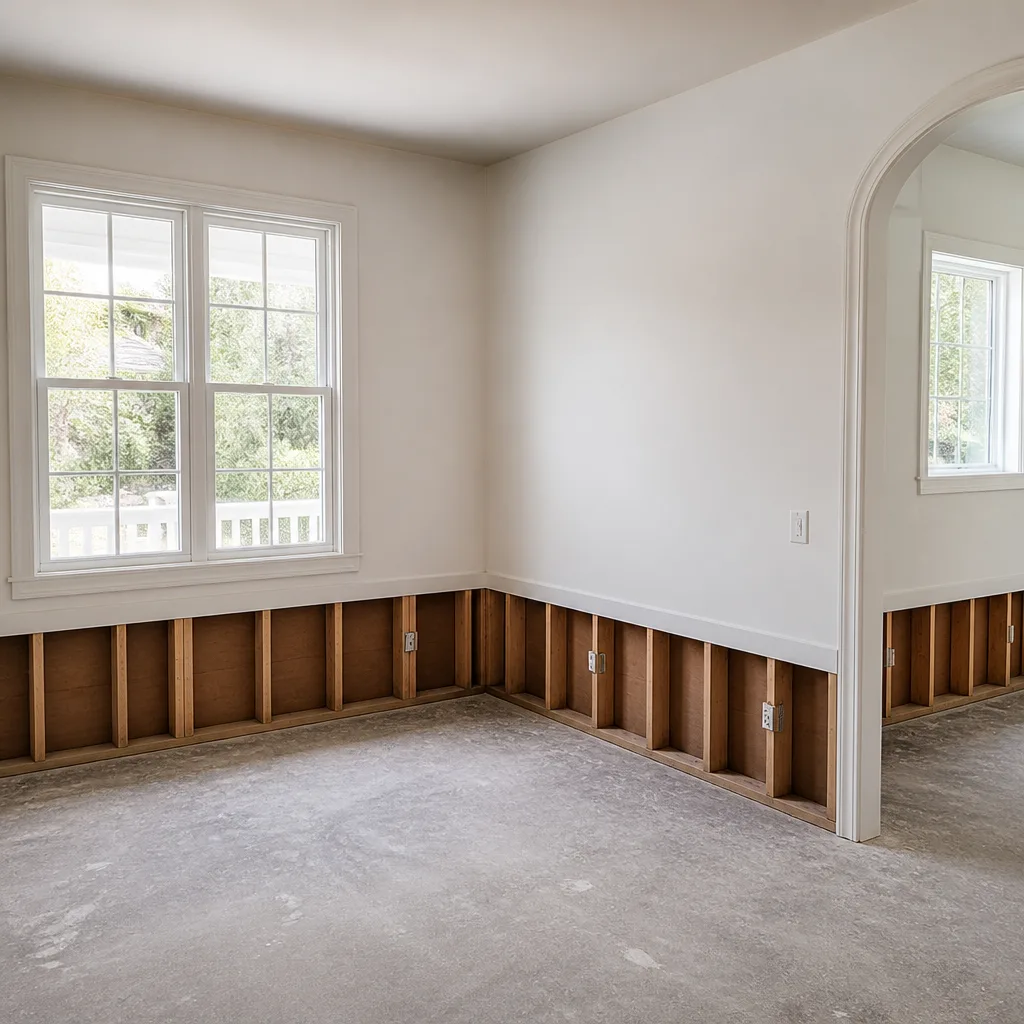
Water Damage Repair in March Air Force Base often begins with a slab leak or a burst polybutylene fitting that has been quietly saturating drywall, baseboards, and carpet padding for days or weeks before anyone notices. When we arrive, we map the moisture, determine the category of water, and build a repair scope that addresses both the cosmetic damage and the underlying plumbing failure. In the 92551 housing stock we see regularly, that means cutting damaged drywall to a clean flood line, replacing affected insulation, and restoring surfaces to pre-loss condition.
Slab Leak and Pipe Failure Repairs
Homes built around March Air Force Base in the 1980s and 1990s frequently have original plumbing that is now past its expected service life. When a supply line fails under a slab, water travels upward through cracks and voids, saturating flooring and wicking into walls before it ever becomes visible on the surface. Our repair process starts with demolition of only what is unsalvageable, followed by professional-grade drying and reconstruction of the affected areas. A significant slab leak repair in this area typically runs $2,800 – $6,500, depending on how far the water traveled and how long it sat.
Ceiling and Wall Water Damage
Winter rainstorms in the Inland Empire are brief but intense, and older stucco exteriors around March Air Force Base do not always shed water the way they did when they were built. Water intrusion through cracked stucco or aging roof penetrations shows up as staining on ceilings and upper walls, often mistaken for a simple roof leak. We dry those assemblies from both sides using cavity drying systems from Injectidry that can pull moisture from wall cavities without tearing out every sheet of drywall. That minimizes disruption and keeps the total repair cost down. Expect ceiling and wall water damage repairs in March Air Force Base to run $900 – $2,400.
Water Mitigation in March Air Force Base
Water Mitigation in March Air Force Base is about stopping the spread of damage in the first 24 to 48 hours. That is the window before mold begins to colonize wet drywall and carpet pad, and it is the window where professional drying equipment makes the biggest difference in the final bill. Our crews arrive with moisture meters, thermal imaging, and a clear plan: extract standing water, set containment if needed, and begin structural drying immediately.
Emergency Extraction and Containment
When a supply line bursts behind a wall in the middle of the night, the water does not wait for business hours. We dispatch to March Air Force Base as soon as you call, and our first task is always the same: remove standing water before it migrates into adjacent rooms and structural cavities. Containment barriers and negative air pressure keep contaminated moisture from spreading through the air while we work. Emergency extraction in this market typically starts at $500 – $1,200, with full mitigation scope determined once we can see the extent of the intrusion.
Structural Drying and Documentation
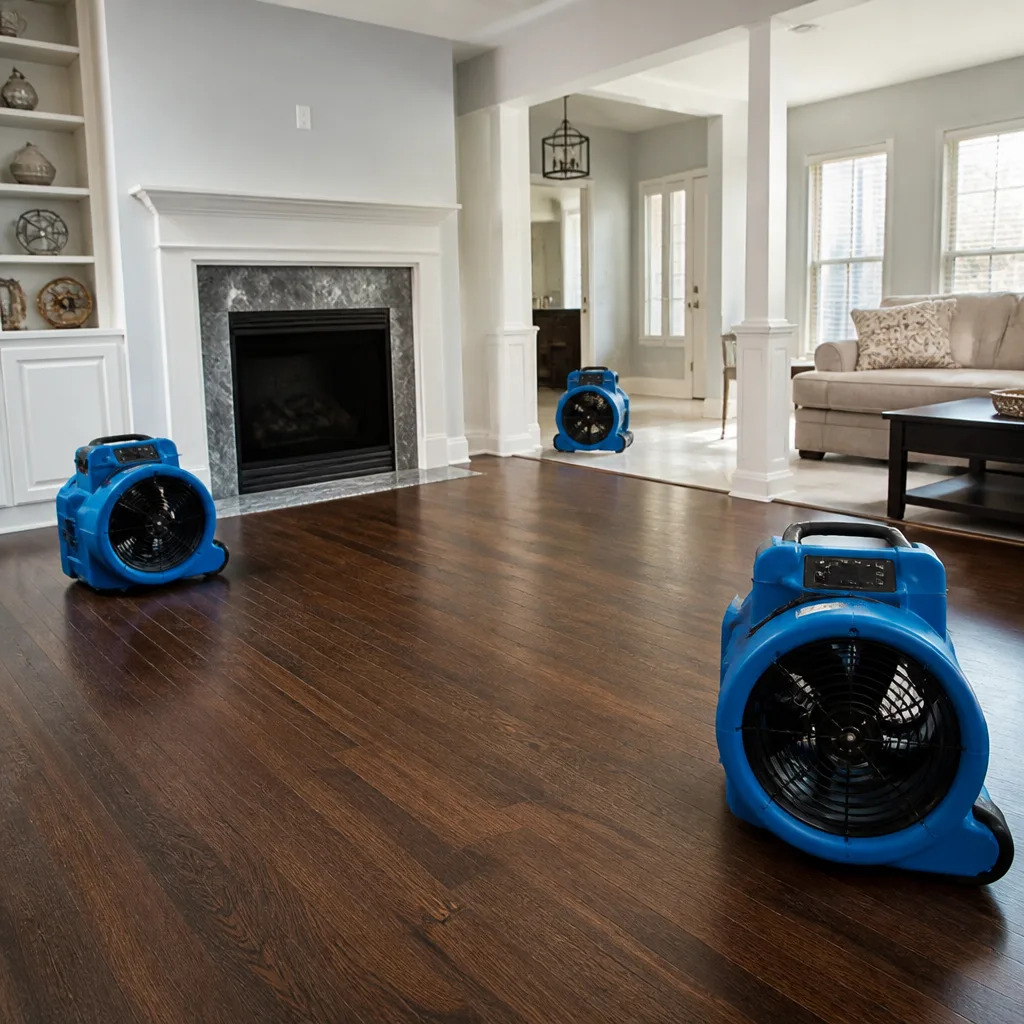
The drying phase is where IICRC-certified process separates a real restoration specialist from a contractor with a shop vac. We use Dri-Eaz dehumidifiers, Phoenix air movers, and B-Air filtration to drive moisture out of studs, subfloor, and concrete at a controlled rate. Every day on site, we log moisture readings with the same rigor a commercial job requires. When a military family is coordinating with a property manager or filing an insurance claim, those drying logs are often the difference between an approved claim and a disputed one. Structural drying in the 92551 area generally runs $1,500 – $3,800 depending on the square footage and drying time required.
Why Polybutylene Plumbing Shapes Water Damage Calls Across March Air Force Base
Much of the base-adjacent housing in ZIP 92551 was built with polybutylene supply plumbing, a material prone to sudden catastrophic failure that turns a small leak into a Category 3 loss and an insurance claim. Our crews treat almost every slab-foundation leak call here as a potential poly failure until moisture mapping proves otherwise. That is not an assumption we make lightly; it is a pattern we have documented across dozens of homes in this specific area. Polybutylene fittings, especially the acetal crimp rings used in 1980s installations, degrade over time and fail without warning. The result is often a high-volume leak behind a wall or under a slab that has already saturated structural materials before anyone notices wet carpet in a hallway. For homeowners and property managers on or around March Air Force Base, the practical takeaway is this: if your home was built before 1995 and you have not verified the supply line material, a water damage event is not a matter of if but when.
We got a call from a military family in the base-adjacent tract housing off the 92551 corridor who came home from a deployment to find wet carpet in the hallway. Moisture readings traced it to a failed polybutylene fitting behind the slab, so we pulled water-damaged drywall to the flood cut, ran containment with Dri-Eaz dehumidification and air movers, and logged daily drying readings until the assembly met dry standard. The drying logs and scope of work went straight to their property manager for the claim. That is the reality of water damage restoration near March Air Force Base: active military families are often away when the failure happens, and the damage has days or weeks to develop before anyone is home to catch it.
Common Water Damage Restoration Problems We See in March Air Force Base Homes
- Polybutylene failures behind walls and under slabs: These go unnoticed until water wicks into baseboards and carpet pad, pushing a Category 1 leak toward Category 2 or 3 before anyone files a claim. If your 92551 home has not had a plumbing repipe, treat any unexplained moisture as an emergency.
- Rental turnover and move-out inspections: The constant turnover of base personnel creates frequent move-in/move-out damage scenarios, and water damage discovered during inspections is often weeks old. Wet drywall that has sat that long may already be growing mold within the 24-to-48-hour window, which drives up the scope of work significantly.
- Hot, dry summers and cracked stucco: The area’s hot, dry summers crack stucco and slab foundations, opening paths for winter rain intrusion that homeowners mistake for a roof leak. That misdiagnosis delays mitigation and structural drying, allowing moisture to travel deeper into the building envelope.
- Slab foundation leaks in aging tract homes: Homes built in the 1980s and 1990s around March Air Force Base often have original plumbing running under the slab, where leaks are invisible until flooring begins to cup or a musty odor develops. These require aggressive drying and often partial slab access for repair.
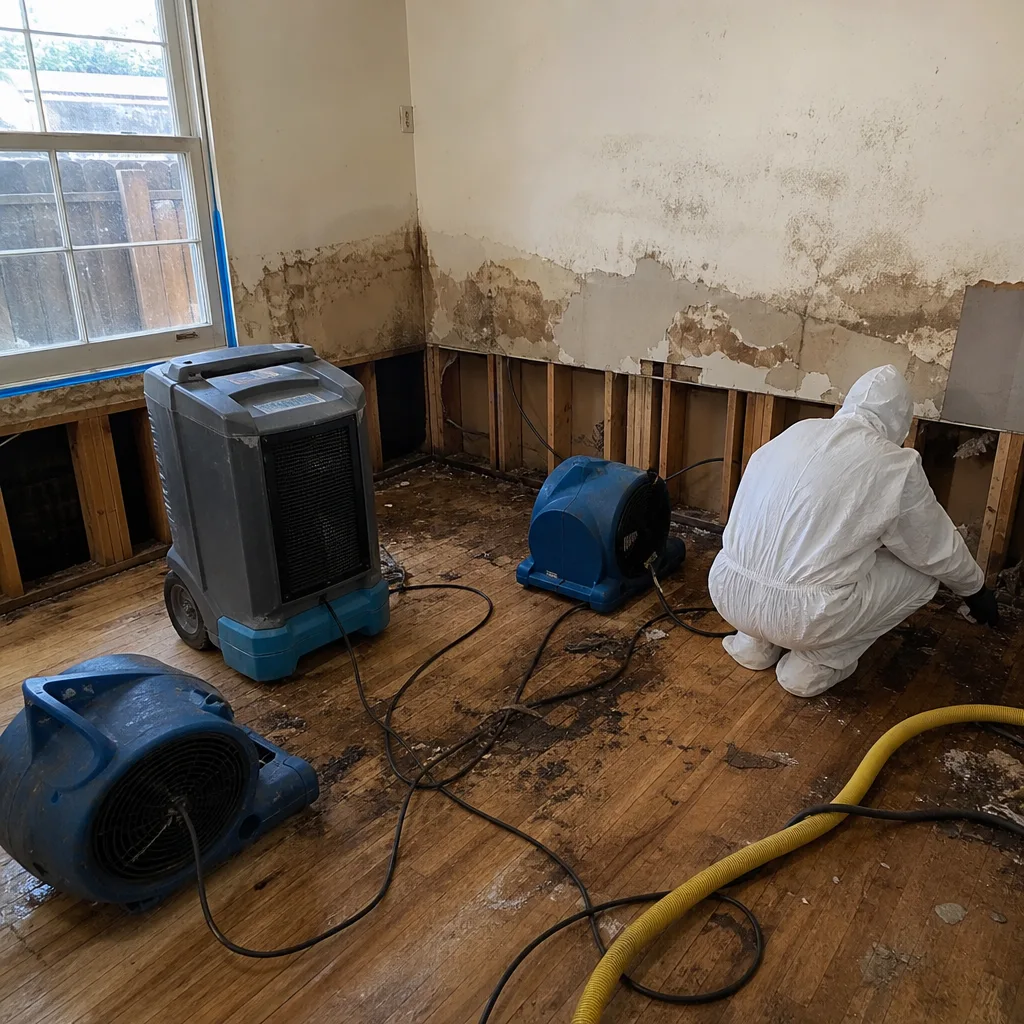
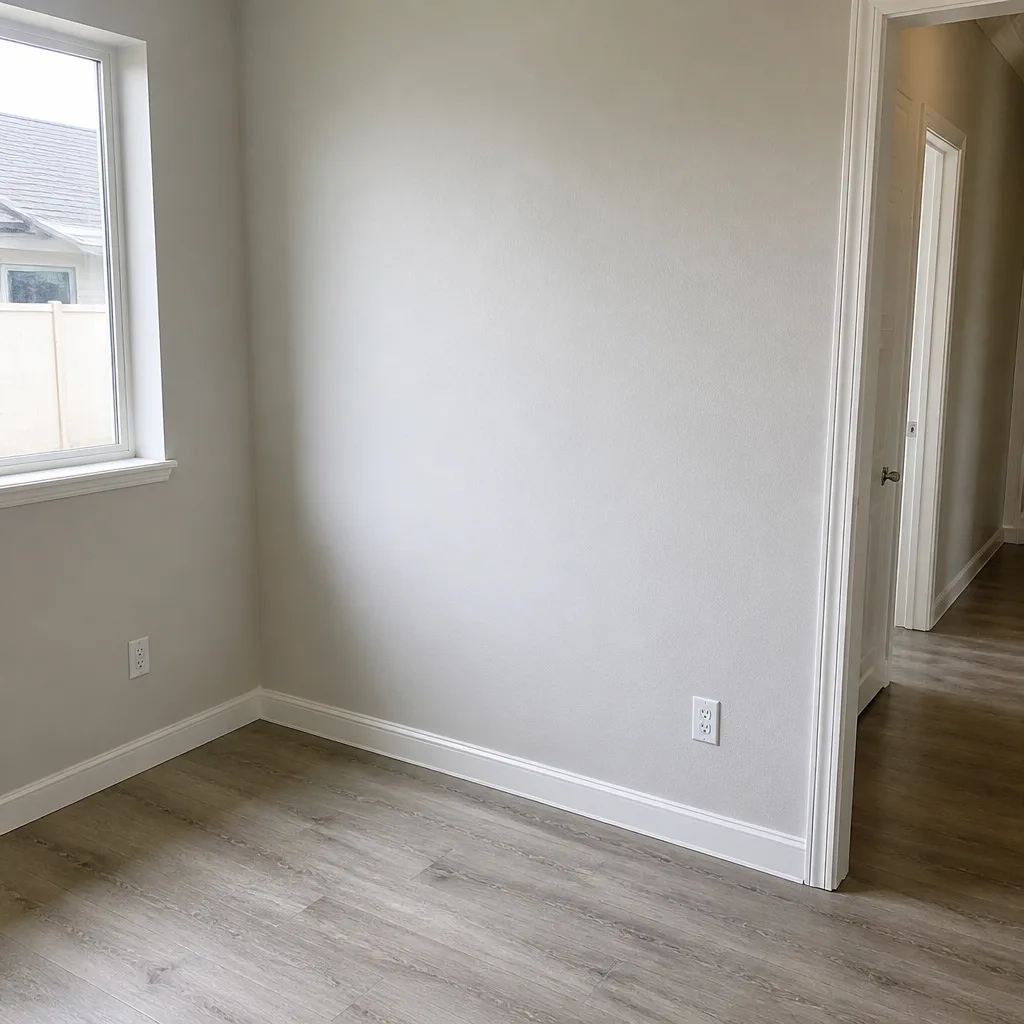
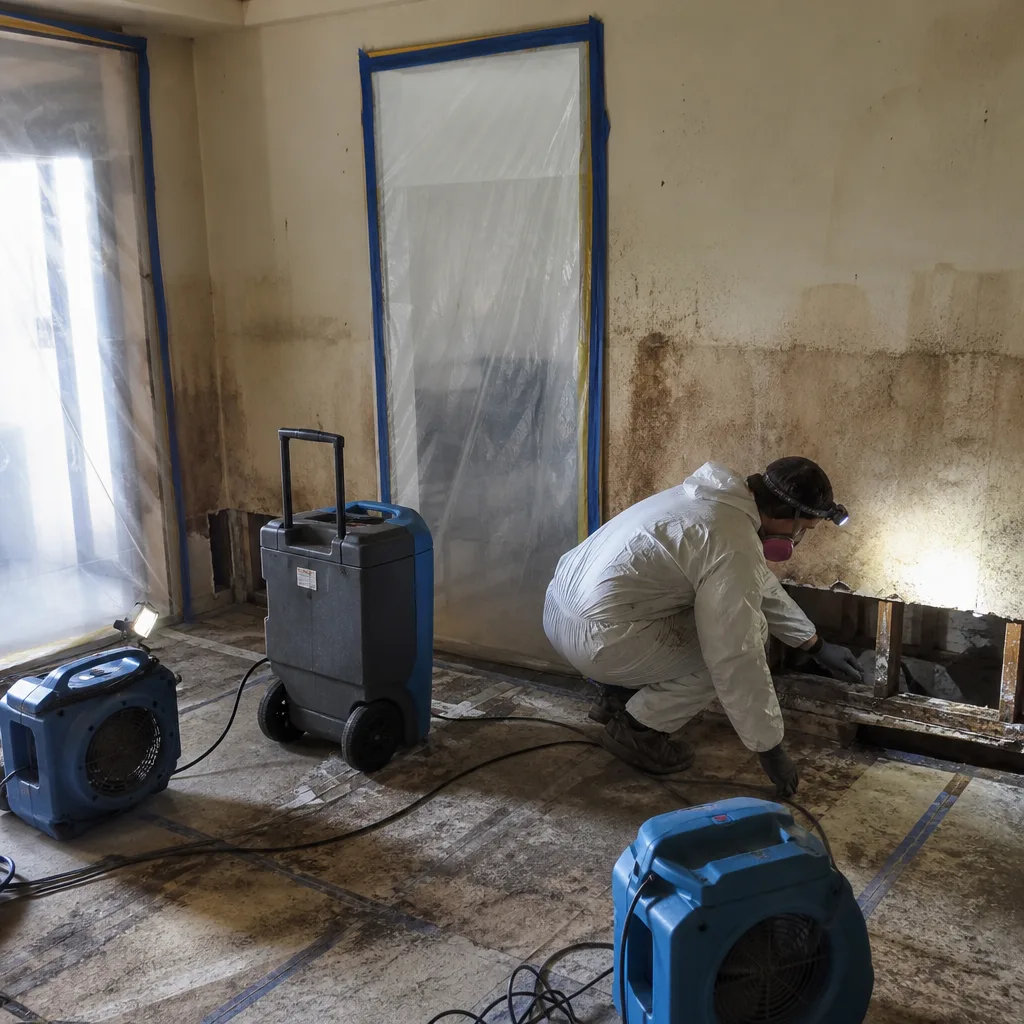
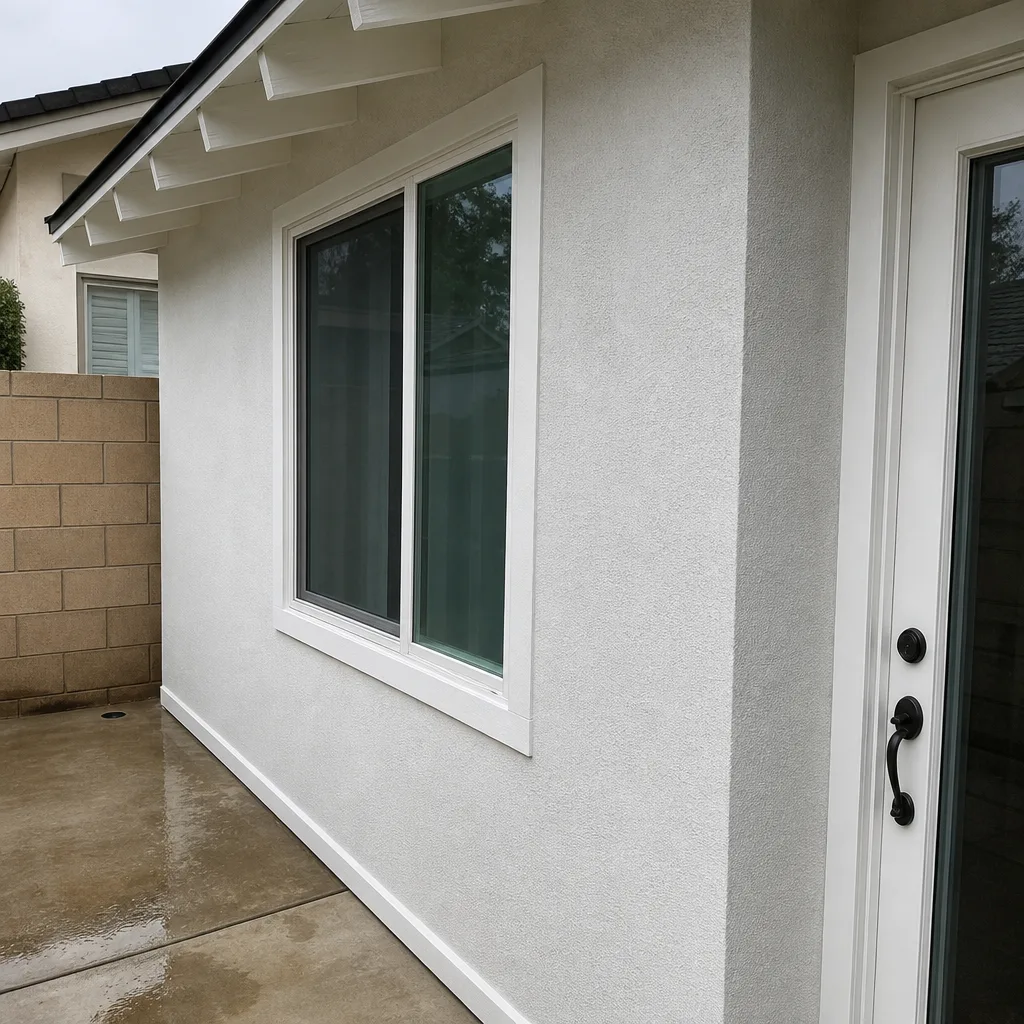
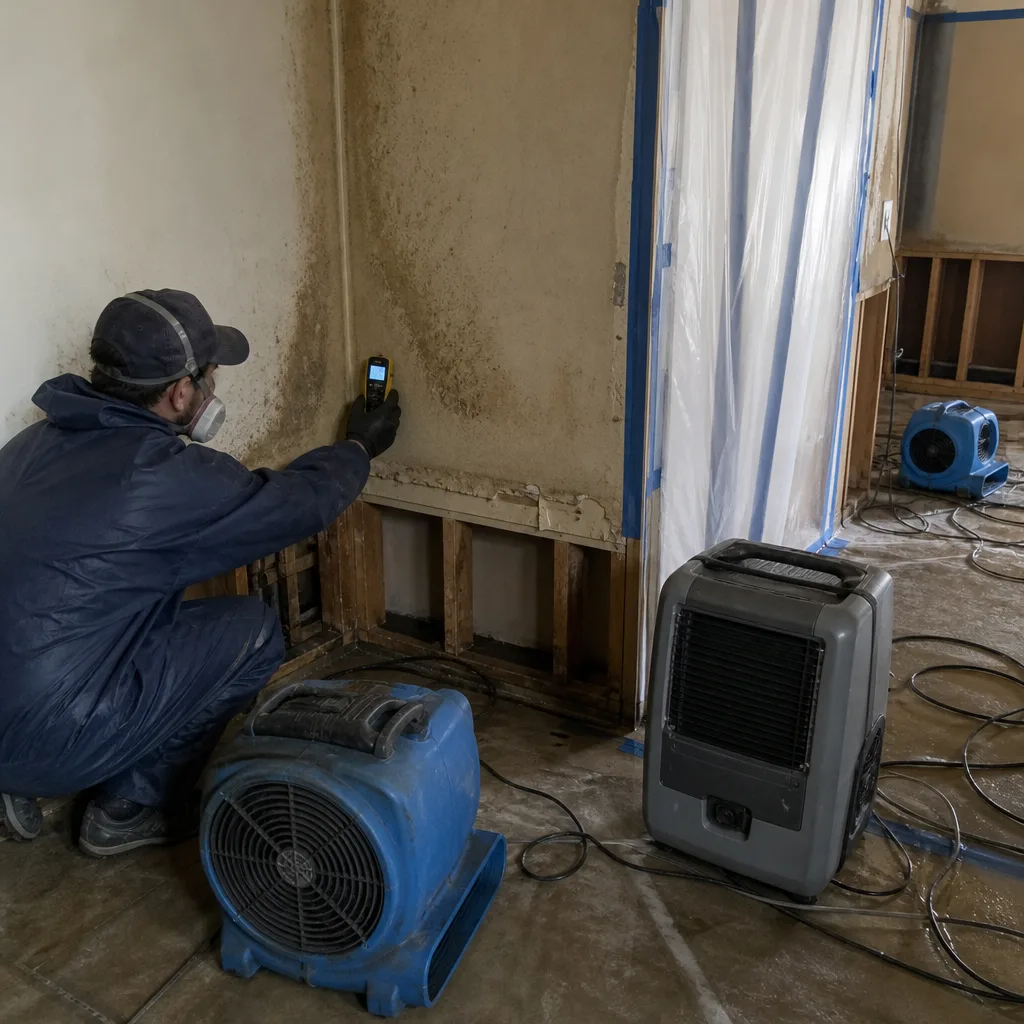
See the difference
 Before
 After
 Before
 After
 Before
 After
Pricing for Water Damage Restoration in March Air Force Base, CA
Expect water damage restoration in March Air Force Base to run between $1,200 and $4,800 for most single-source residential calls. Emergency water extraction alone typically costs $500 – $1,200, while full structural drying with containment runs $1,500 – $3,800. Water damage repair that includes drywall replacement, insulation, and refinishing lands in the $900 – $6,500 range depending on the severity and whether slab access is required. The biggest cost drivers here are plumbing age, how long the water sat before discovery, and whether mold has begun to develop before mitigation starts. We provide a written scope of work before any demolition begins, and our documentation aligns with what insurance adjusters expect to see. Call (877) 265-8058 for a free estimate specific to your property.
How Military Turnover Affects Water Damage Discovery in March Air Force Base
The constant cycle of deployments, permanent change of station moves, and rental turnover around March Air Force Base creates a unique pattern in the water damage work we do. A leak that would be caught in hours in a permanently occupied home can develop for weeks in a property that is empty during a transition. By the time a property manager conducts a move-out inspection or a returning family walks through the front door, the water has had time to wick up drywall, saturate carpet pad, and begin supporting microbial growth. That is why we treat every inspection-discovered water damage call in the 92551 area with the same urgency as an active flood: the clock has already been running. Our documentation process is built for these scenarios, with daily moisture logs, photo documentation, and a scope of work that can go directly to a property manager, a landlord, or an insurance adjuster without revision. For military families who need to relocate on a schedule, that speed of documentation is not a convenience, it is the mechanism that keeps a housing transition on track.
We Also Serve Cities Near March Air Force Base
Oxford Restoration Co provides Water Damage Restoration throughout the Inland Empire. Beyond our work across March Air Force Base, we regularly serve homeowners and property managers in Moreno Valley, Woodcrest, Perris, and Good Hope. If you are in any of these nearby communities and dealing with water intrusion, the same IICRC-certified process and industrial equipment apply. Call (877) 265-8058 to confirm service in your area.
Serving March Air Force Base, CA — Our Local Coverage Area
We’re based in the March Air Force Base area and know this community well. Use the map below to see our service coverage — if you’re nearby, we can almost certainly help.
FAQs About Water Damage Restoration in March Air Force Base
Homes built in ZIP 92551 during the 1980s and early 1990s frequently have polybutylene supply lines, a material that degrades at fittings and fails suddenly. We treat every slab leak call in this area as a potential poly failure until moisture mapping proves otherwise because the failure pattern is that consistent. If your home predates 1995 and has not been repiped, proactive replacement is cheaper than a Category 3 loss. Call (877) 265-8058 to discuss your plumbing material and risk profile.
Turnover means water damage is often discovered days or weeks after the leak began, which gives water time to saturate structural materials and start mold growth before mitigation begins. We document everything with daily moisture logs and photo evidence so the claim holds up whether you are working with a property manager, a landlord, or your own insurer. The longer water sits, the larger the scope becomes, so call us the moment a move-out inspection reveals staining or odor.
Category 1 is clean water from a supply line or faucet. Category 2 carries contaminants from sources like washing machine discharge or sump overflow. Category 3 is grossly contaminated water from sewage, outside flooding, or long-standing leaks where bacteria has had time to multiply. A polybutylene failure that sits for a week often starts as Category 1 but degrades to Category 2 or 3, which changes the scope of demolition and disinfection required. Our team classifies the water before we recommend a path, so you are never paying for more work than the conditions demand.
Yes. We regularly work around deployment schedules, move-out deadlines, and property manager inspection windows in the March Air Force Base area. We show up when the access window opens, complete the mitigation and drying as fast as the structure allows, and deliver documentation on the timeline you need for your housing office or claim. Scheduling around military life is part of the job here, not an exception.
No, it shifts the risk. The dry summers crack stucco and slab foundations, creating channels for winter rain to enter walls and under flooring. That intrusion is often misdiagnosed as a roof leak, which delays structural drying and lets moisture travel further. The climate does not reduce water damage risk, it changes where the water comes from and makes proper diagnosis more valuable. If you see staining after a winter storm, call (877) 265-8058 before the next one arrives.
Written by Noel Carrasco, Owner at Oxford Restoration Co, serving March Air Force Base and the Inland Empire with IICRC-certified water damage restoration.