
 Water damage drying
 Fire & smoke cleanup
 Mold remediation
 Storm response
 Sewage cleanup
 Reconstruction
Free visual inspection and a written scope of work before any mitigation begins - photos, moisture readings, and drying logs go in your claim file
The scope we write is the scope we bill. Anything new gets shown to you, in writing, before we touch it.
Get your free estimateFast, Reliable Water Damage Restoration Across Anaheim
Water damage in Anaheim moves through two very different channels, and which one you’re in changes how we start the job. In the flat western ZIPs like 92801 and 92805, we’re usually chasing a hidden slab leak from original galvanized or cast-iron plumbing. In Anaheim Hills, we’re more often drying a home that never burned but took hundreds of gallons of firefighter water through attic vents. Our IICRC-certified crews reach most Anaheim addresses within 60 to 90 minutes of your call, with industrial extraction and drying equipment loaded and ready. Call (877) 265-8058 for an immediate assessment. We serve all of Anaheim, from the 92812, 92814, 92815, and 92816 ZIPs through the canyon edges above the 91.
What sets Oxford Restoration Co apart on Anaheim jobs is that we understand the city’s split geography before the first moisture reading comes off the truck. Slab-on-grade construction from the 1950s and 60s hides water differently than a two-story stucco home on a hillside cut in the 1980s. We adjust our drying plan for the structure, the water category, and the dry Santa Ana heat that seals moisture into wall cavities if you let it. This is a job for a specialist, not a generalist. Water Damage Restoration is what we do, day in and day out.
Why Oxford Restoration Co Is Anaheim’s Preferred Water Damage Restoration Company
We’ve earned our standing in Anaheim by doing jobs right the first time, usually on insurance claims, and by bringing the same equipment commercial restoration firms run. Homeowners near Loara High School and the Colony District have called us back for second and third projects, and property managers in the 92804 and 92815 apartment blocks know our trucks by sight. The most common comment we hear from Anaheim customers is that we explained the water category and drying plan before we touched anything. That transparency matters on a slab leak where the homeowner’s first question is whether materials can be saved.
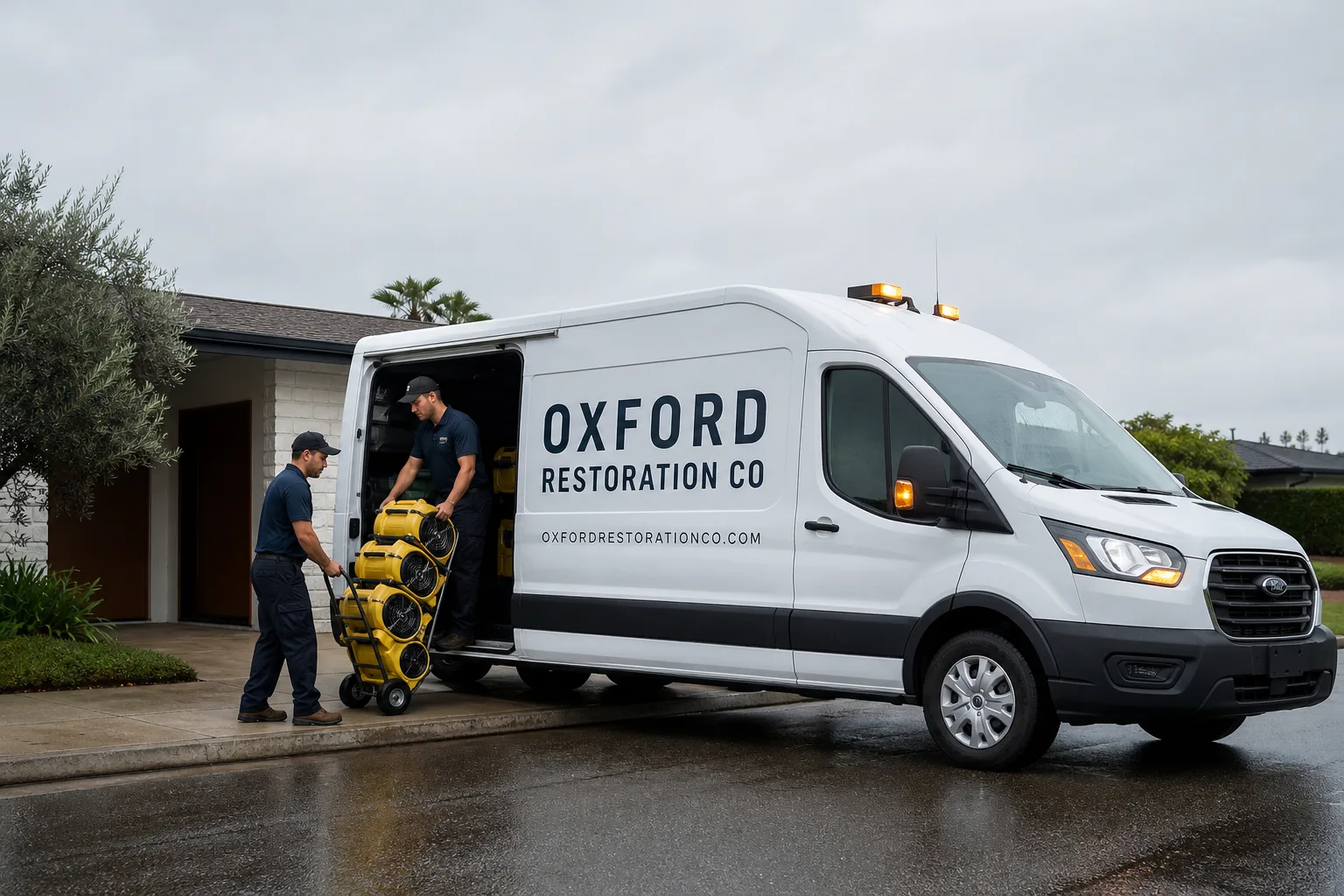
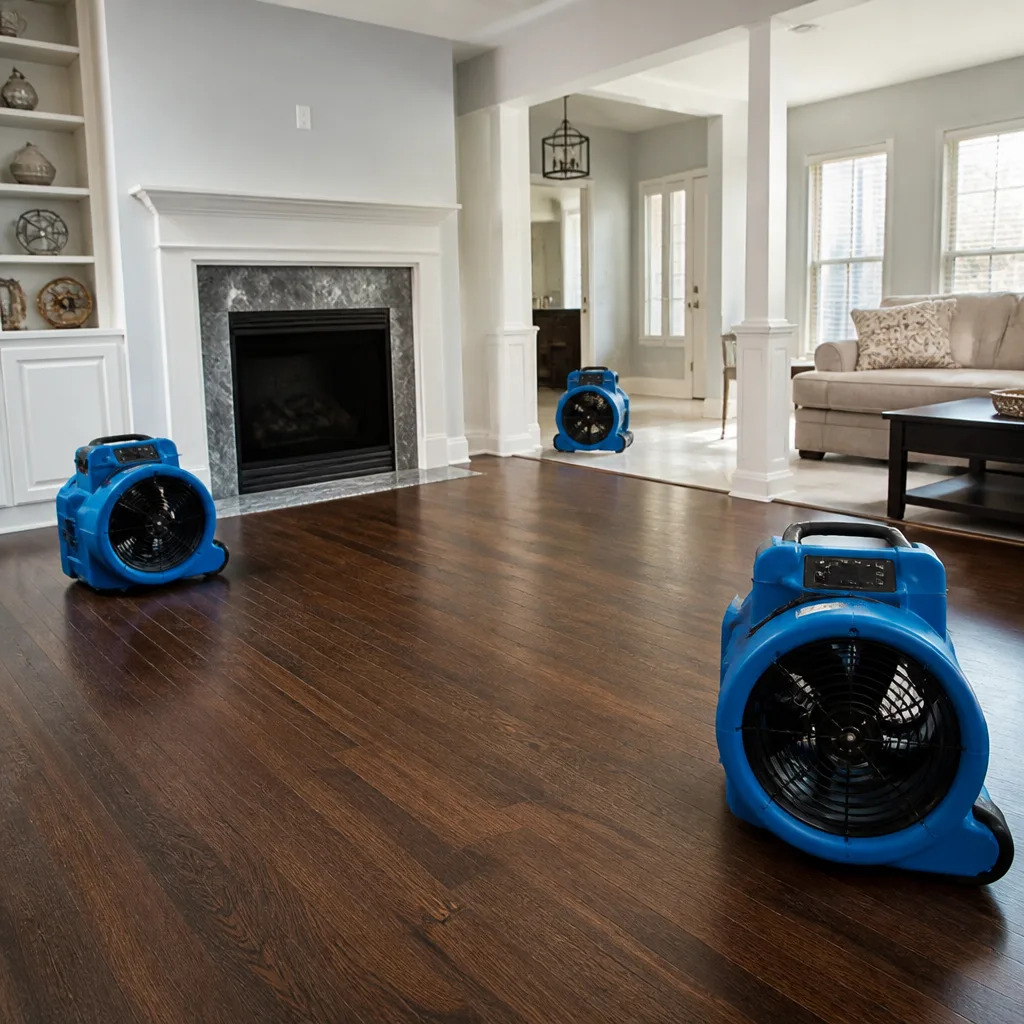
Our response time to most Anaheim neighborhoods runs 60 to 90 minutes for water extraction calls. By the time we arrive, we’ve already reviewed the address, the build year if records are available, and whether the street is slab-on-grade or hillside. That pre-arrival work lets us walk in with the right equipment staged: Dri-Eaz air movers, Phoenix dehumidifiers, and XPOWER extraction units, plus Injectidry cavity-drying panels for walls we can save without demo.
Noel Carrasco leads our restoration operations, and he’s built the Anaheim playbook around one idea: water hidden in a 1960s slab or a chimney chase in Anaheim Hills behaves differently, and the drying log has to prove it’s gone. We document moisture readings daily, not weekly, and we don’t close a wall until the numbers say dry. That’s the standard an IICRC certification demands, and it’s the standard Anaheim homeowners get.
Restoration work we handle
Flooded Basement in Anaheim
Flooded Basement work in Anaheim is rare in the flatland, because most west Anaheim homes sit on slab foundations. Where we do see basements, it’s consistently in split-level Anaheim Hills homes built into the slope, and that changes everything: groundwater from hillside drainage pushes against foundation walls, sump pumps fail during heavy rain after dry months, and the water sits longer because gravity works against you. A typical flooded basement in Anaheim Hills runs $1,800 – $4,200 for extraction, drying, and antimicrobial treatment when caught within the first day. If the water sat for several days or entered through a failed hillside drain, the cost can push toward $6,500 once drywall and insulation replacement are included.
Our crews handle these jobs with a written scope before we cut anything. We map the water’s path, identify the entry point, and confirm whether it’s Category 1 clean water or Category 2 grey water from a failed drain line. On hillside basements, the answer is usually grey, which changes the antimicrobial protocol.
Hillside Drainage and Sump Failures
Anaheim Hills basements collect water from two directions during winter storms: surface runoff moving down the slope and sub-surface groundwater following the natural drainage line. When a sump pump fails, the water rises fast because the hillside is still feeding it. We carry submersible extraction pumps sized for rapid removal, not the small units you’d find at a rental counter.
Slab-Split Basement Drying
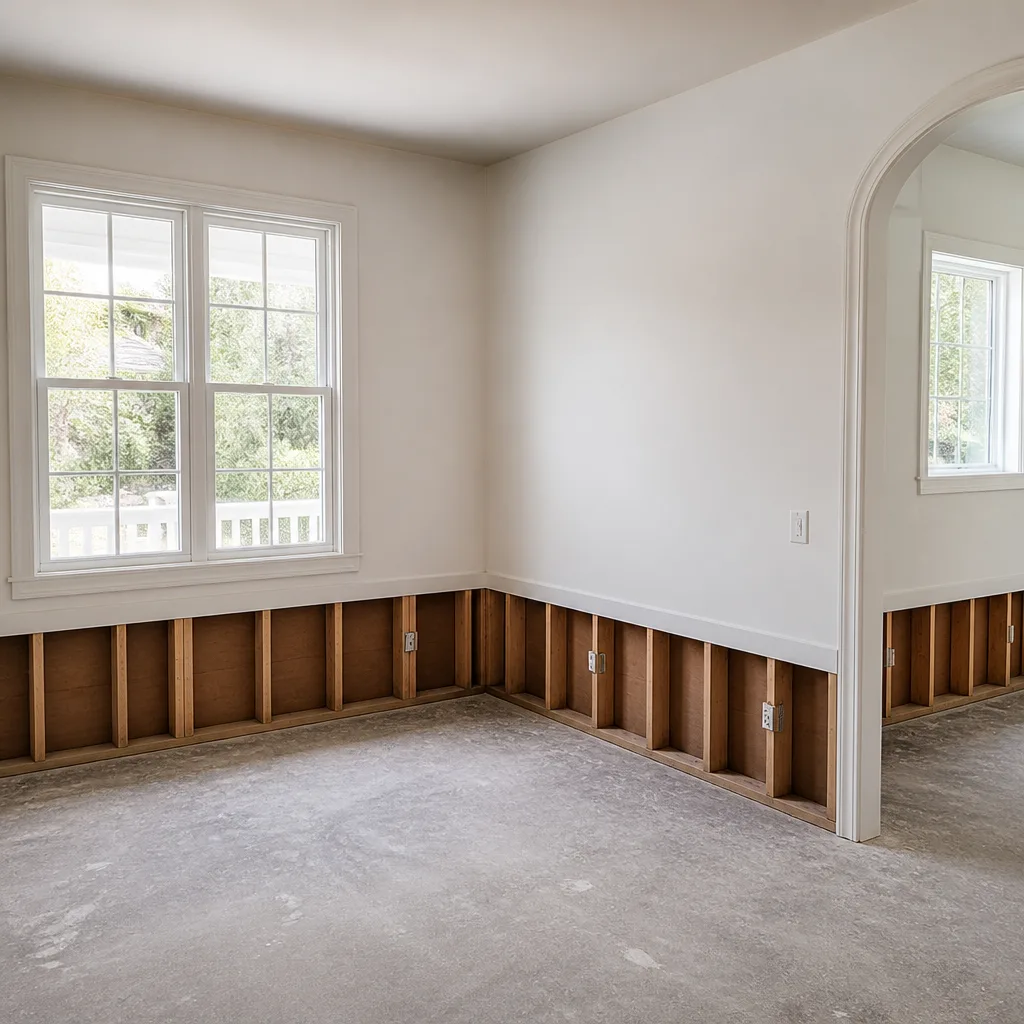
Many Anaheim Hills split-levels have a finished lower level set into the hill. Drying these spaces after a flood means removing baseboards, drilling small ports in wet wall cavities, and running Injectidry panels to force air through the stud bays without tearing out all the drywall. That approach saves Anaheim homeowners thousands in reconstruction costs.
Water Extraction in Anaheim
Water Extraction in Anaheim almost always follows one of two scripts. In the western flatland, it’s a burst washing machine supply line or a water heater failure flooding carpet, pad, and baseboards in minutes. In Anaheim Hills, it’s firefighter water that’s been sitting in an attic and dripping down through ceilings for hours before anyone notices. A standard water extraction for a flooded room in Anaheim runs $700 – $1,900, which includes source-stopping, extraction, and the first placement of drying equipment. Full structural drying with moisture mapping typically adds another $1,200 – $2,800 depending on square footage.
Speed matters more here than almost anywhere in Southern California. Anaheim’s semi-arid heat pulls moisture into wall cavities and subfloor spaces fast, but once the dry heat seals it behind stucco, it stops evaporating and starts breeding mold. We arrive with XPOWER extraction units that pull standing water down to the subfloor, then switch to Phoenix dehumidifiers and Dri-Eaz air movers for the vapor phase. Each piece of equipment is tracked and logged.
Slab Leak Extraction
When a slab leak in a 1960s west Anaheim tract home finally breaks through the flooring, the water is never clean. Weeks of weeping under the slab means Category 2 grey water at minimum, and often Category 3 if sewage lines are involved. The extraction plan has to account for that, including containment, antimicrobial application, and removal of saturated pad and carpet rather than attempting to salvage it.
Post-Fire Suppression Water
After a Santa Ana wind event pushes brush fire toward Anaheim Hills, crews respond to homes that never had a flame touch them. Firefighters put hundreds of gallons through attic vents and eave gaps to protect the structure. That water soaks insulation, drywall, and framing, and it’s usually mixed with smoke particulate. Extraction here means pulling visible water while simultaneously planning for odor remediation, because the two problems share the same attic space.
Trusted Brands We Service in Anaheim
We run industrial equipment across Anaheim that most homeowners will never see outside a commercial restoration fleet: Dri-Eaz air movers, Phoenix dehumidifiers, and XPOWER extraction units. We also deploy Injectidry cavity-drying systems on Anaheim Hills ceilings and west Anaheim wall cavities where we can avoid unnecessary demolition. Because we stock replacement filters, hoses, and HEPA cartridges for these brands locally in our Costa Mesa facility, we don’t lose time waiting on parts. That’s the advantage of a specialist who sleeps 20 minutes from your front door rather than a franchised crew dispatched from two counties over.
See the difference
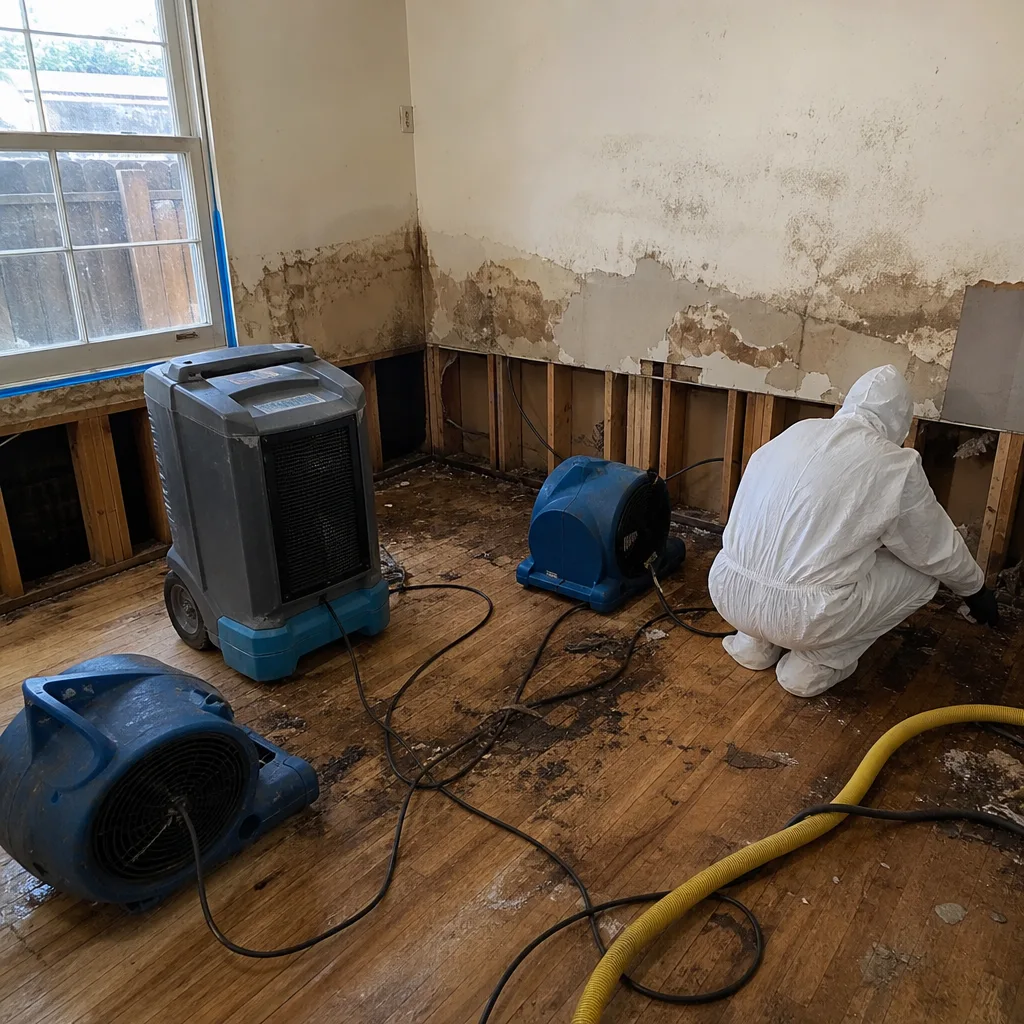 Before
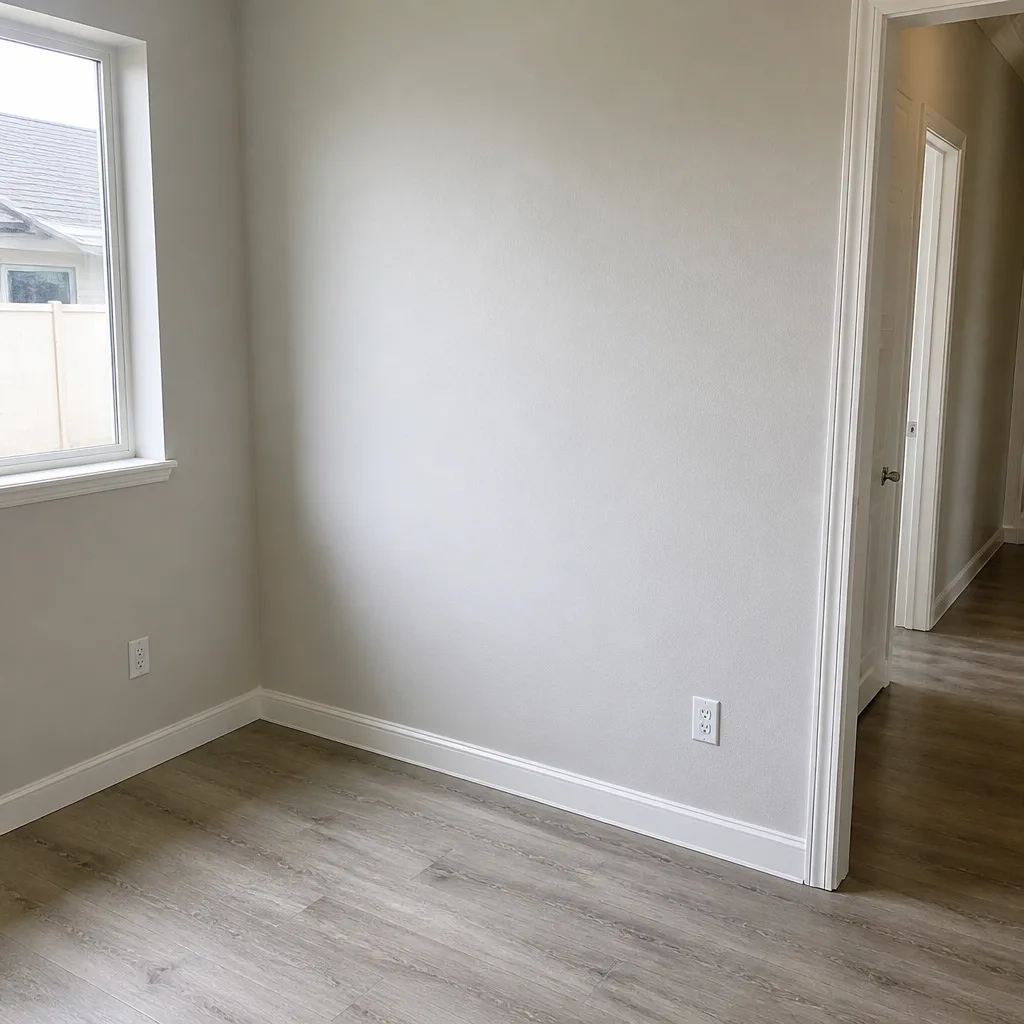 After
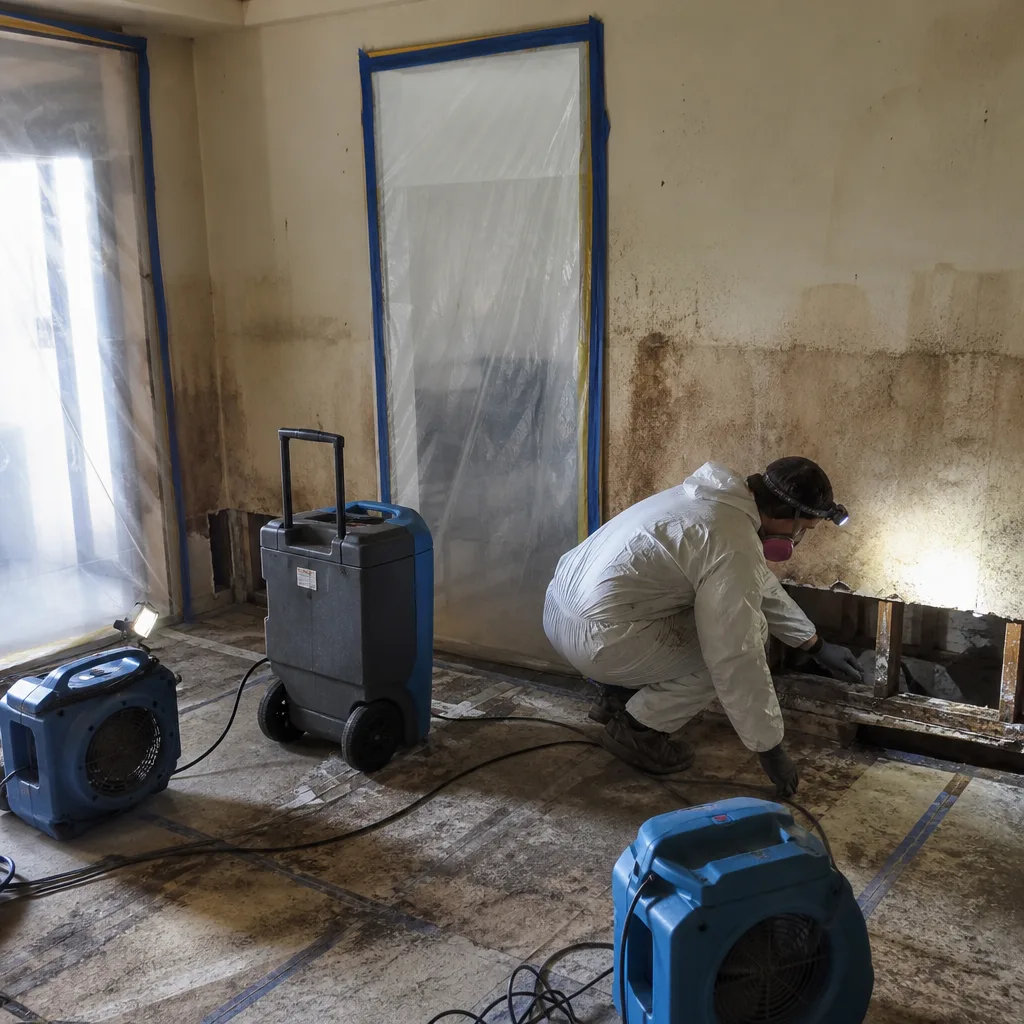 Before
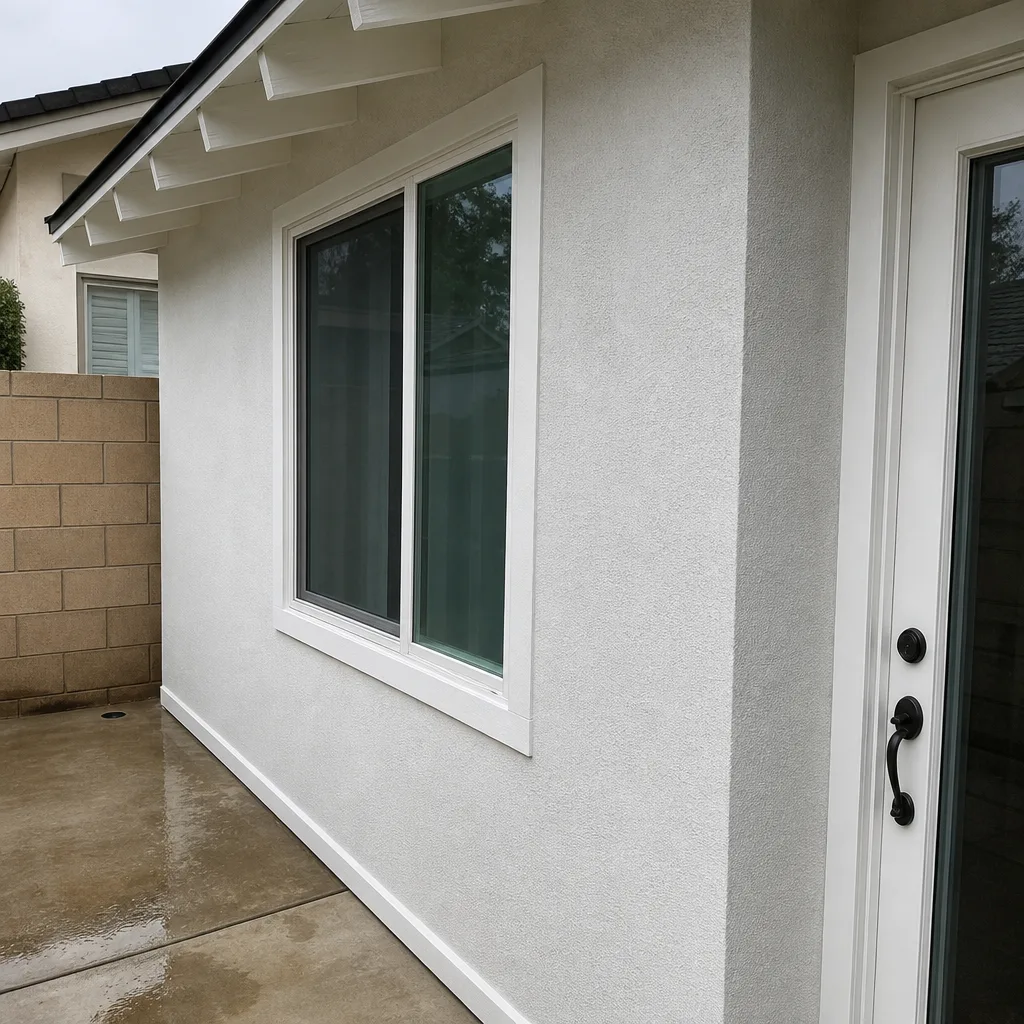 After
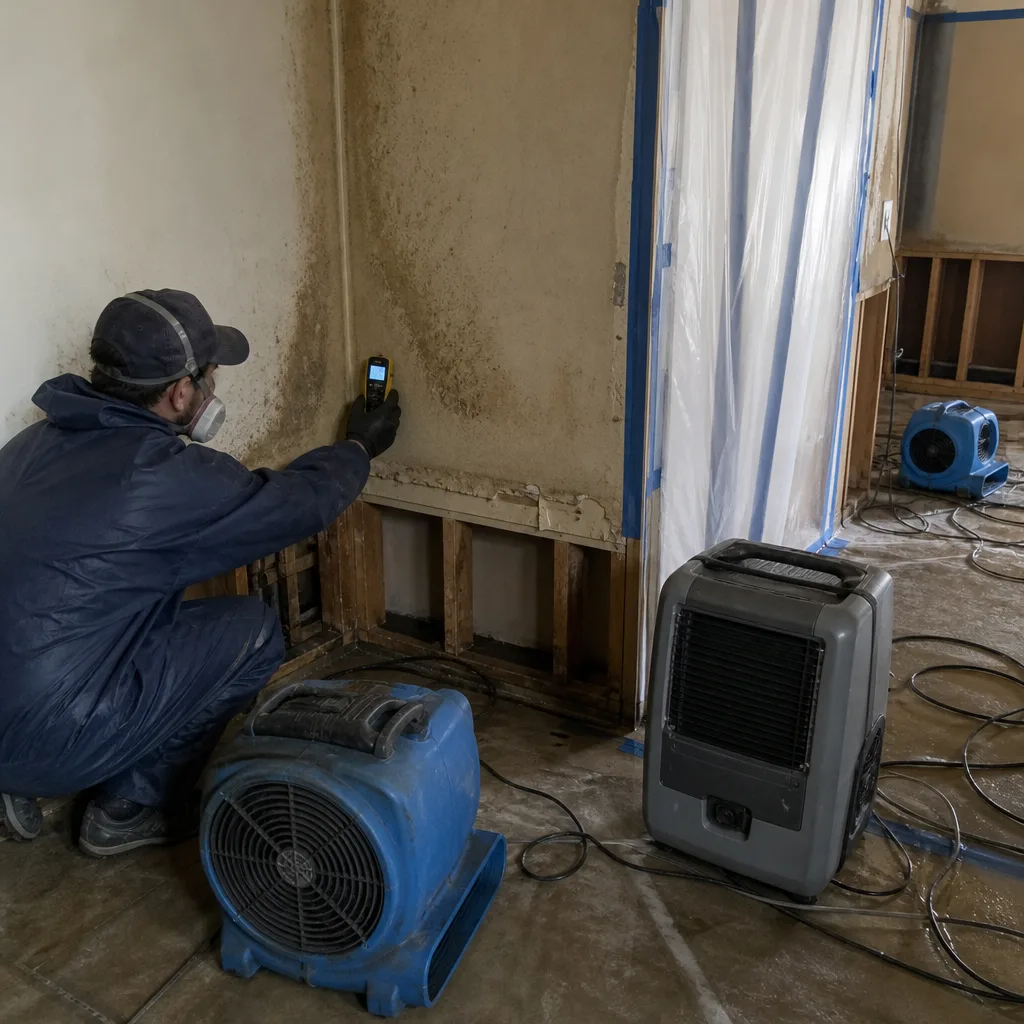 Before
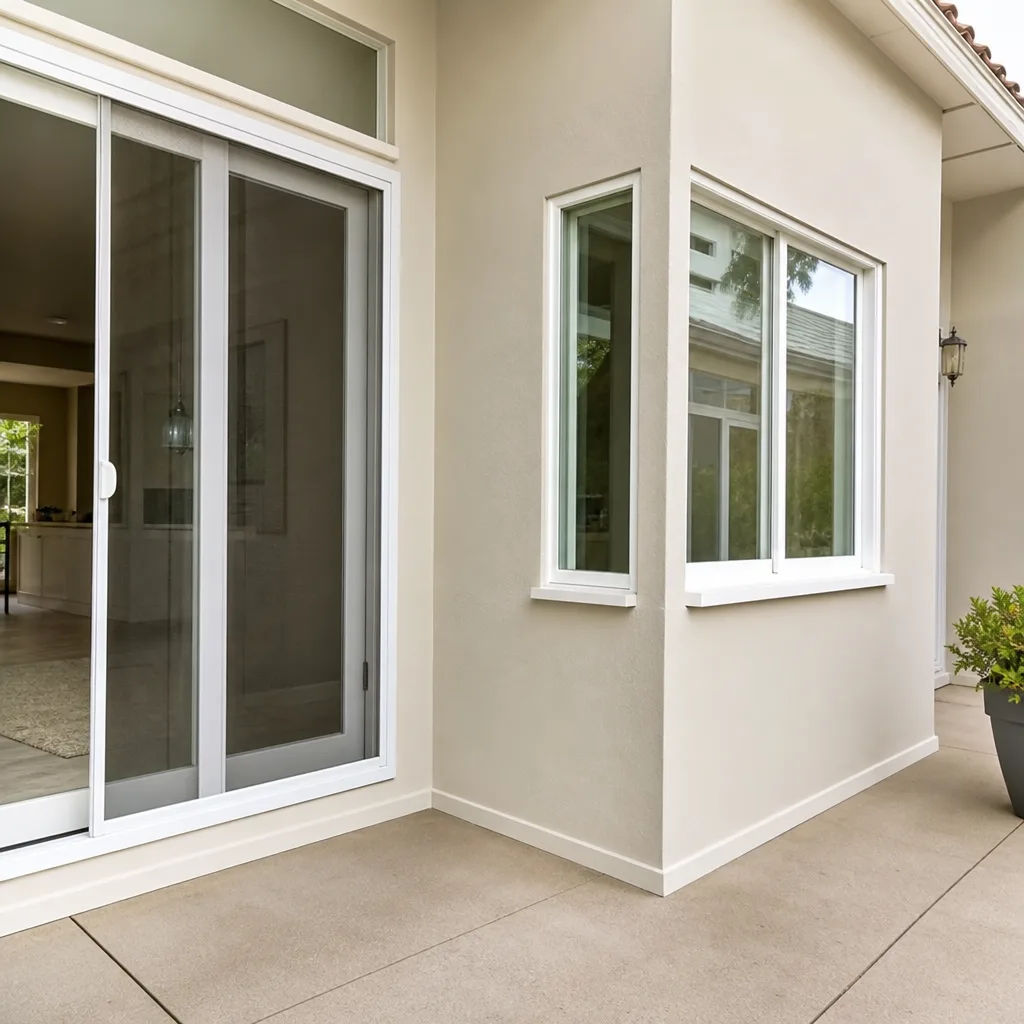 After
Common Water Damage Restoration Problems We See in Anaheim Homes
- Original galvanized supply lines failing under slab. West Anaheim tracts built in the 1950s and 60s used galvanized pipe that corrodes from the inside, eventually developing pinholes that weep for weeks before breaking through the floor. By the time the stain is visible, the subfloor and wall cavities are already holding moisture.
- Cast-iron drain lines cracking under shifting slab. Older cast-iron under slab can crack from ground movement, and the resulting slow sewage leak is Category 3 water that no amount of drying will make safe. The floor must be removed, the area sanitized, and the affected materials carted off.
- Firefighter water in Anaheim Hills attics after Santa Ana wind events. Homes that never burned absorb hundreds of gallons through attic vents and eave gaps, where it saturates insulation and drywall overhead. Trapped moisture plus smoke particulate in the same cavity requires a combined water and odor protocol.
- Slow ceiling leaks from older Anaheim Hills roofs. Two-story stucco homes from the 1980s and 90s often have original roofing underway. When a leak develops, water travels along the roofline and pools in a downstairs ceiling far from the entry point, and the first sign is a soft spot or drip in an unexpected room.
Pricing for Water Damage Restoration in Anaheim, CA
Anaheim pricing is shaped by the city’s split housing stock and how recently the damage occurred. Water extraction from a single flooded room on a slab in 92801 runs $700 – $1,900. Structural drying of that same room, with moisture mapping and daily documentation, runs $1,200 – $2,800. A full slab leak restoration in west Anaheim, including flooring removal, drying, and antimicrobial treatment, commonly lands between $3,500 – $7,500. Post-fire suppression water in Anaheim Hills, with the combined smoke and moisture protocol, typically runs $4,000 – $9,000 depending on the attic’s size and whether insulation must be replaced. The single biggest cost variable is time: water found on day one is usually a drying job. Water found on day five is usually a demolition and rebuild job, and that’s a different number altogether. We provide a written scope before work begins, and estimates are free.
We Also Serve Cities Near Anaheim
Oxford Restoration Co is based in Costa Mesa and regularly works throughout northern Orange County. If your property is in Fullerton, Placentia, Orange, or Villa Park, we run the same IICRC-certified process with the same industrial equipment. You can see our full Anaheim coverage and local expertise on the Water Damage Restoration in Anaheim page, or call us for a property-specific assessment. Our response times to neighboring cities run 90 to 120 minutes depending on traffic.
Serving Anaheim, CA — Our Local Coverage Area
We’re based in the Anaheim area and know this community well. Use the map below to see our service coverage — if you’re nearby, we can almost certainly help.
FAQs About Water Damage Restoration in Anaheim
No. A slab leak from original galvanized or cast-iron plumbing is almost always Category 2 grey water or Category 3 black water, because the water has been sitting in a dark, oxygen-poor environment under the slab for days or weeks before it surfaced. Category 1 is water from a clean source like a supply line that’s never touched soil. By the time a slab leak wets your carpet in 92801, it’s picked up mineral content, corrosion byproducts, and possibly sewage bacteria. That means the pad and carpet typically can’t be salvaged, and the area needs antimicrobial treatment before drying begins. Call (877) 265-8058 and we’ll classify the water before making any removal decisions.
Because firefighters put water into attics through vents and eave gaps to protect structures from embers, and that water soaks insulation, drywall, and framing, then sits trapped. The homeowner sees smoke odor and assumes that’s the whole job. The moisture meter tells a different story: saturated ceiling cavities, wet insulation, and the early stages of microbial growth. On Anaheim Hills calls after a Santa Ana fire event, we routinely run water extraction and dehumidification alongside smoke remediation. The two problems share a roof. If you skip the water side, the odor comes back because the source is still wet.
Mold germination typically begins within 24 to 48 hours once moisture, warmth, and an organic food source are present. In Anaheim, the dry heat that follows a Santa Ana event accelerates the cycle by raising wall-cavity temperatures into the ideal growth range, while the dry outside air slows surface evaporation once the drywall develops a skin. The wall looks dry on the surface, but the cavity behind it is cooking. That’s why we drill test holes and run moisture probes, not just infrared scans. If you suspect a wall got wet, even days ago, call (877) 265-8058 for a moisture assessment before drywall gets closed back up.
Yes, when the water category or the extent of the damage justifies it. In older Anaheim apartment blocks, a flood from a failed second-floor water heater or a burst supply line in one unit often runs down through walls into neighboring units. We handle pack-out, content cleaning, and documented inventory for each affected unit. The property manager’s insurance generally covers pack-out when the water is Category 2 or higher and the contents would be exposed to further damage if left in place during drying. We coordinate directly with adjusters to get the pack-out approved and scheduled without slowing the drying plan.
For a flooded basement in Anaheim Hills, we bring submersible extraction pumps sized for high-volume removal, then switch to XPOWER extraction units for low-profile surface water. Once standing water is gone, we place Phoenix dehumidifiers and Dri-Eaz air movers, and we set up Injectidry panels where wall cavities need drying without demolition. Every unit has a serial number and gets logged on the drying plan. We also bring moisture probes, thermal imaging, and a hygrometer to track relative humidity. Equipment placement is calculated by cubic footage, not guesswork. Call (877) 265-8058 for a free estimate on any Anaheim flood or water damage job.
Written by Noel Carrasco, Owner at Oxford Restoration Co, serving Anaheim and Orange County with IICRC-certified water damage restoration.