
 Mold remediation
 Water damage drying
 Fire & smoke cleanup
 Storm response
 Sewage cleanup
 Reconstruction
Free visual inspection and a written scope of work before any mitigation begins - photos, moisture readings, and drying logs go in your claim file
The scope we write is the scope we bill. Anything new gets shown to you, in writing, before we touch it.
Get your free estimateFast, Reliable Mold Remediation Across Orange
Mold remediation in Orange typically costs $1,800 – $6,500 depending on the affected square footage, the material being treated, and whether historic-preservation rules apply. Most jobs we handle in Orange are completed within 3 – 7 days. If you’re seeing black spotting on walls, a persistent musty odor near baseboards, or recent water damage that never fully dried, call (877) 265-8058 now. We’re based in Costa Mesa and respond to Orange homes within 60 – 90 minutes for emergency assessments.
Orange is not a generic suburb. The housing stock here spans 120+ years of building methods, and the difference between a 1920s Craftsman bungalow and a 1970s tract home changes how mold should be treated. That’s why we don’t run a template playbook. We map moisture, classify the water source, and make a judgment call on what can be saved versus what must go, always with an eye toward Orange’s historic-district review triggers.
Why Oxford Restoration Co Is Orange’s Preferred Mold Remediation Company
Oxford Restoration Co has specialized in water, mold, and fire damage in Orange for years, and the pattern is consistent: homeowners here value the original fabric of their homes in a way you don’t see in newer cities. That aligns with how we work. We’re an IICRC-certified firm, which means our mold remediation follows the restoration industry’s recognized standard, not an internal guess. Noel Carrasco, who leads our Orange projects, has walked more Old Towne crawl spaces and mid-century attics than most contractors see in a career.
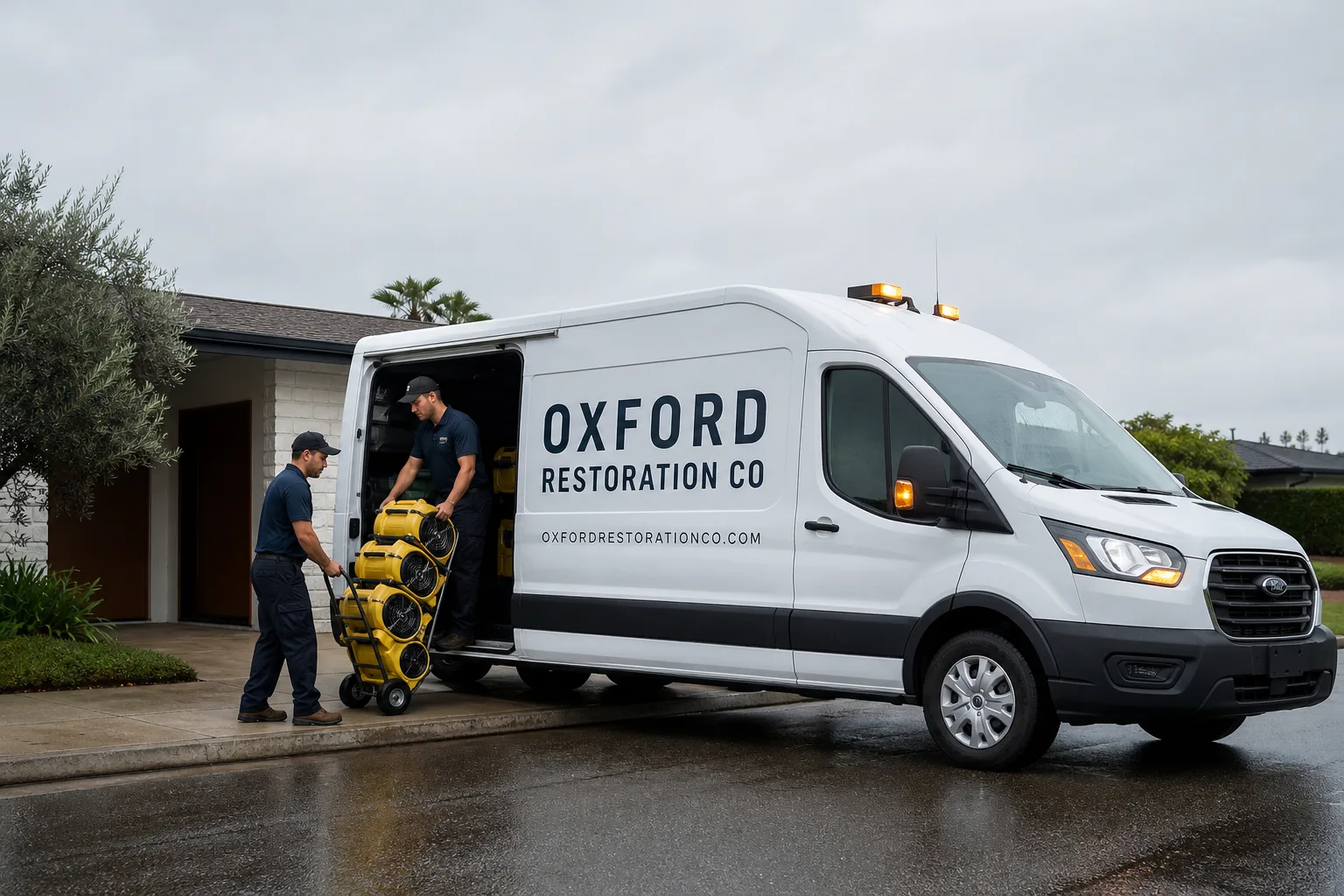
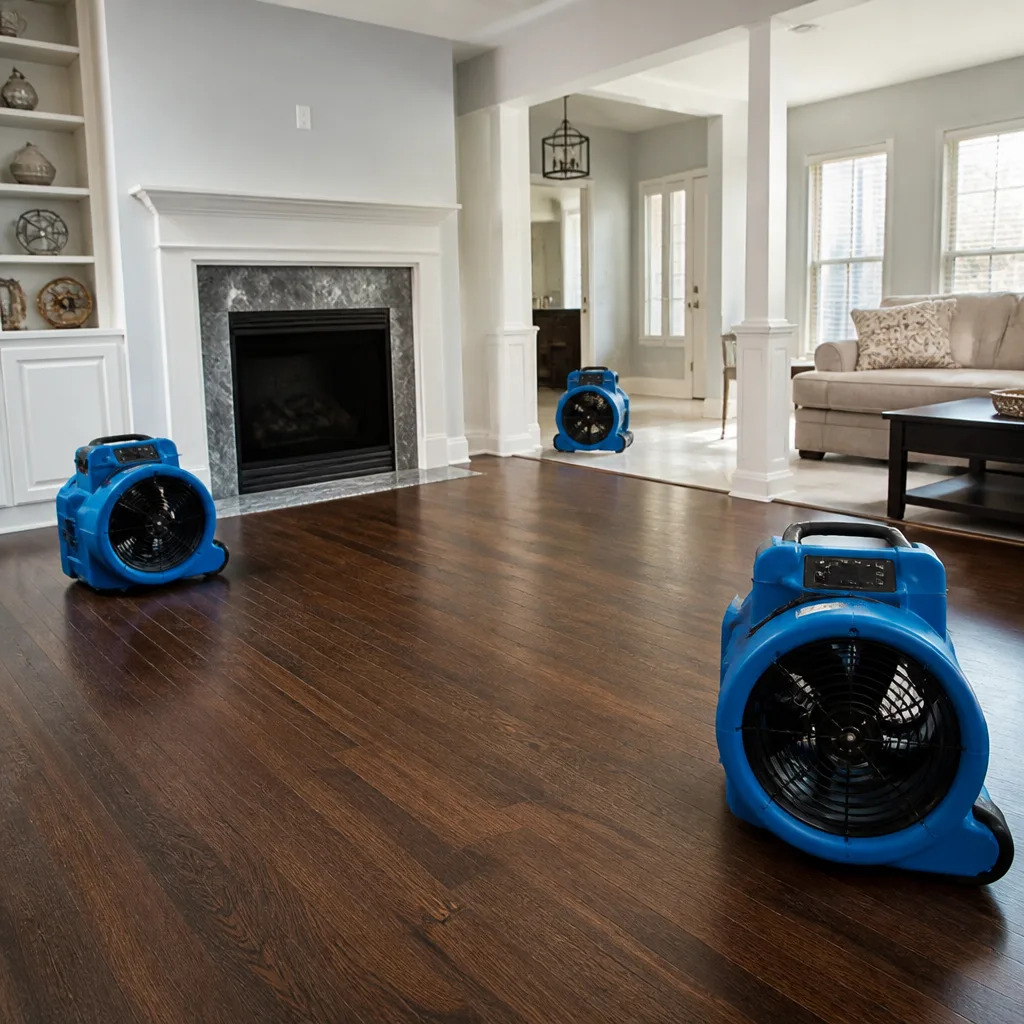
We hold dual professional affiliations through the RIA and IFA, and we run industrial-grade drying equipment from Dri-Eaz, Phoenix, and Injectidry on every Orange job. That equipment matters when you’re trying to save original plaster rather than tear it out. Our process is “restore, not just repair.” The goal is returning your home to pre-loss condition, which in Orange often means preserving materials a general contractor would have ripped out in an afternoon.
Response time to Orange is a real number for us: we can typically have a technician on site within 90 minutes of your call, and we always begin with moisture mapping and a written scope before any demolition happens. No surprises, no overselling. Just a clear plan you approve first.
Restoration work we handle
Mold Removal Specialist in Orange
A Mold Removal Specialist in Orange is doing a different job than the same title in Irvine or Fountain Valley. Here, the specialist has to answer one question on every older property: can this material be saved, and will saving it trigger a historic-preservation review? In Old Towne’s designated historic districts, even interior work can require documentation of pre-loss condition and material matching. We handle that paperwork and photo documentation as part of the remediation scope.
When a homeowner calls us about visible mold or a musty smell, the first step is an inspection and moisture assessment. We use thermal imaging and moisture meters to map how far the intrusion spread. From there we classify the water category, because that determines whether materials can be dried or must be removed. Category 1 water from a supply line gives us far more options than Category 3 water from a sewage backup.
Inspection and moisture mapping
We never start mold removal without knowing exactly where the moisture boundary sits. In Orange’s older homes, hidden wall cavities and plaster-over-lath construction hide moisture in ways drywall doesn’t. Moisture mapping with industrial sensors gives us a documented, measurable baseline.
Containment and air filtration
Mold spores spread fast during demolition. We set up negative air containment and run HEPA-filtered air scrubbers before removing anything. This matters even more in Orange’s smaller bungalows, where living space is tight and cross-contamination can happen quickly.
Black Mold Removal in Orange
Black Mold Removal in Orange is the most urgent version of this work, and it’s especially common in the older core where original plumbing lines are reaching the end of their service life. A slow slab leak or a failed galvanized pipe behind a plaster wall creates exactly the dark, humid, low-oxygen environment where Stachybotrys thrives. Homeowners in the 92866 ZIP and surrounding Orange neighborhoods call us most often after noticing black staining at the base of walls or a smell they describe as “damp earth.”
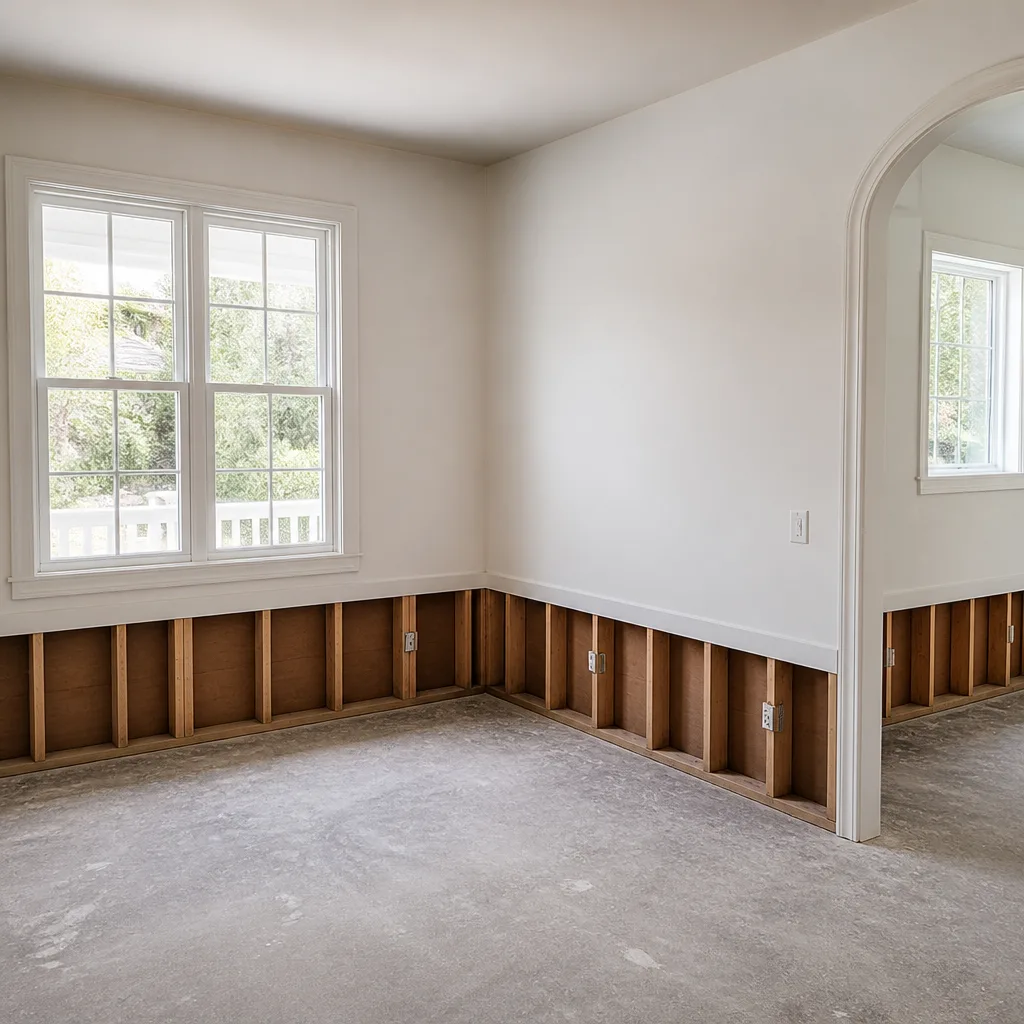
Black mold requires full containment, HEPA air scrubbing, proper PPE, and antimicrobial treatment after the affected material is removed or dried. In Orange’s historic homes, we frequently treat and dry plaster rather than replace it, but only when moisture readings confirm the material isn’t compromised. If category 2 or 3 water is involved, those materials typically come out regardless.
What black mold removal costs in Orange
Black mold removal in Orange generally runs $2,500 – $7,000 for the remediation itself, plus any water mitigation and structural drying that has to happen first. A full rebuild of removed drywall or plaster adds more, and historic material matching in Old Towne adds a planning layer that newer homes don’t face.
Trusted Brands We Service in Orange
We service and work with the equipment and material brands Orange homeowners and property managers already know. Our drying fleet includes Dri-Eaz, Phoenix, XPOWER, and B-Air units, and we use Injectidry systems specifically for cavity and wall drying in Orange’s older construction where you cannot simply cut open a plaster wall. For Orange customers, we stock the consumables, HEPA filters, and containment materials needed to start work immediately, no waiting on supply orders from out of state. That local stocking means a 1920s Craftsman near Old Towne and a 1960s ranch in the 92867 ZIP get the same fast turnaround.
Common Mold Remediation Problems We See in Orange Homes
- Old plaster and lath soaked by slab leaks. In the 1920s – 1940s homes concentrated near Old Towne and the surrounding historic districts, a leaking pipe under the slab wicks moisture up through the wall. The plaster and lath hold that moisture for weeks, and mold develops inside the wall cavity where no one sees it until the smell gives it away. Tearing out the plaster triggers historic review, so injecting drying channels and treating the material in place is often the better path.
- Crawl space mold from Orange’s clay-rich soil. Many pre-1960s Orange homes sit over dirt crawl spaces, and Orange’s winter rains raise ground moisture significantly. Without a proper vapor barrier, that moisture migrates into floor joists and subflooring. We regularly find surface mold and wood rot that homeowners only discovered during a termite inspection or a remodel.
- HVAC condensate and irrigation leaks during Orange’s dry season. Orange’s warm, semi-arid summers mean air conditioners run hard between May and October. When a condensate drain clogs or an irrigation line leaks near the foundation, the water sits in a dark, warm wall cavity. Mold forms fast, often before anyone notices water pooling.
- Flat-roof leaks on mid-century tract homes. The 1960s and 70s homes across Orange’s eastern neighborhoods often have low-slope or flat roof sections over room additions. Winter rain pools on those roofs, finds a seam, and drips into ceiling cavities for days or weeks before a stain appears. By the time we’re called, the mold is already established in the insulation and framing.
See the difference
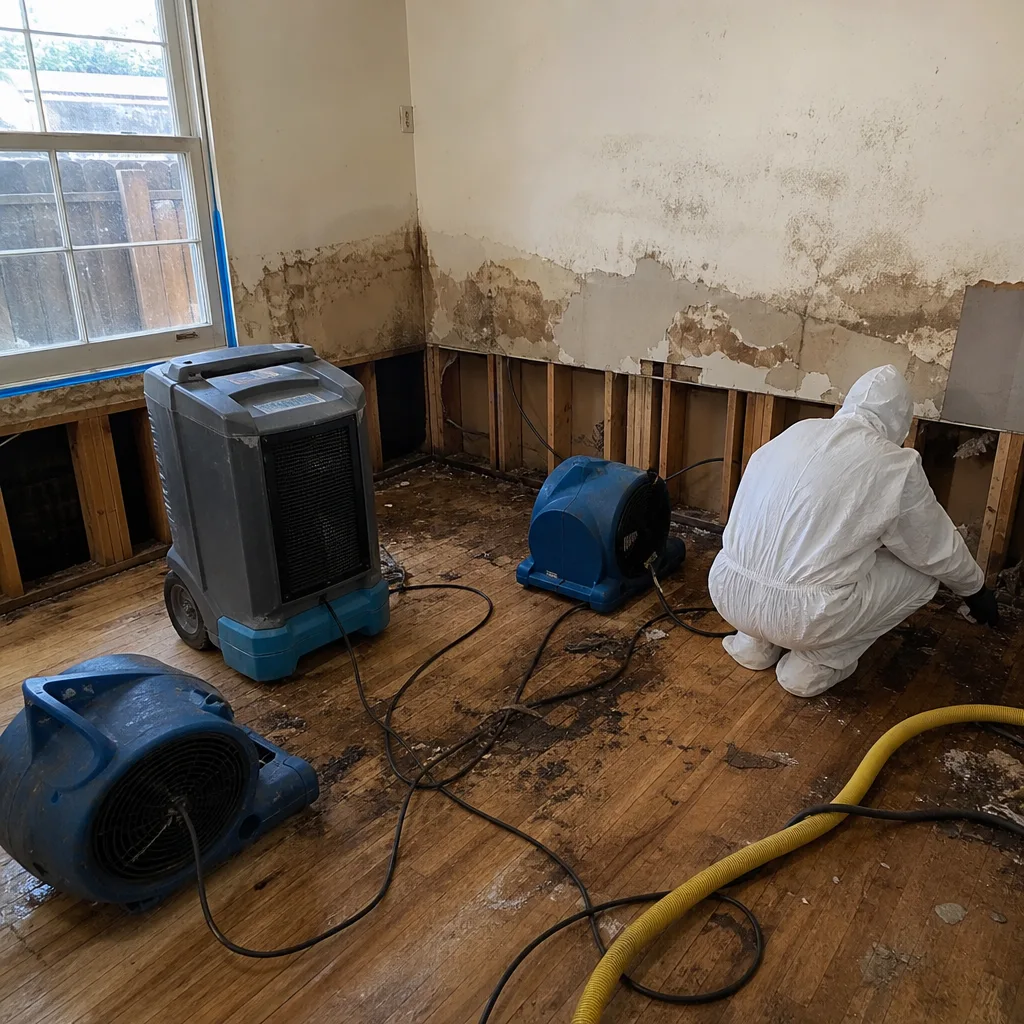 Before
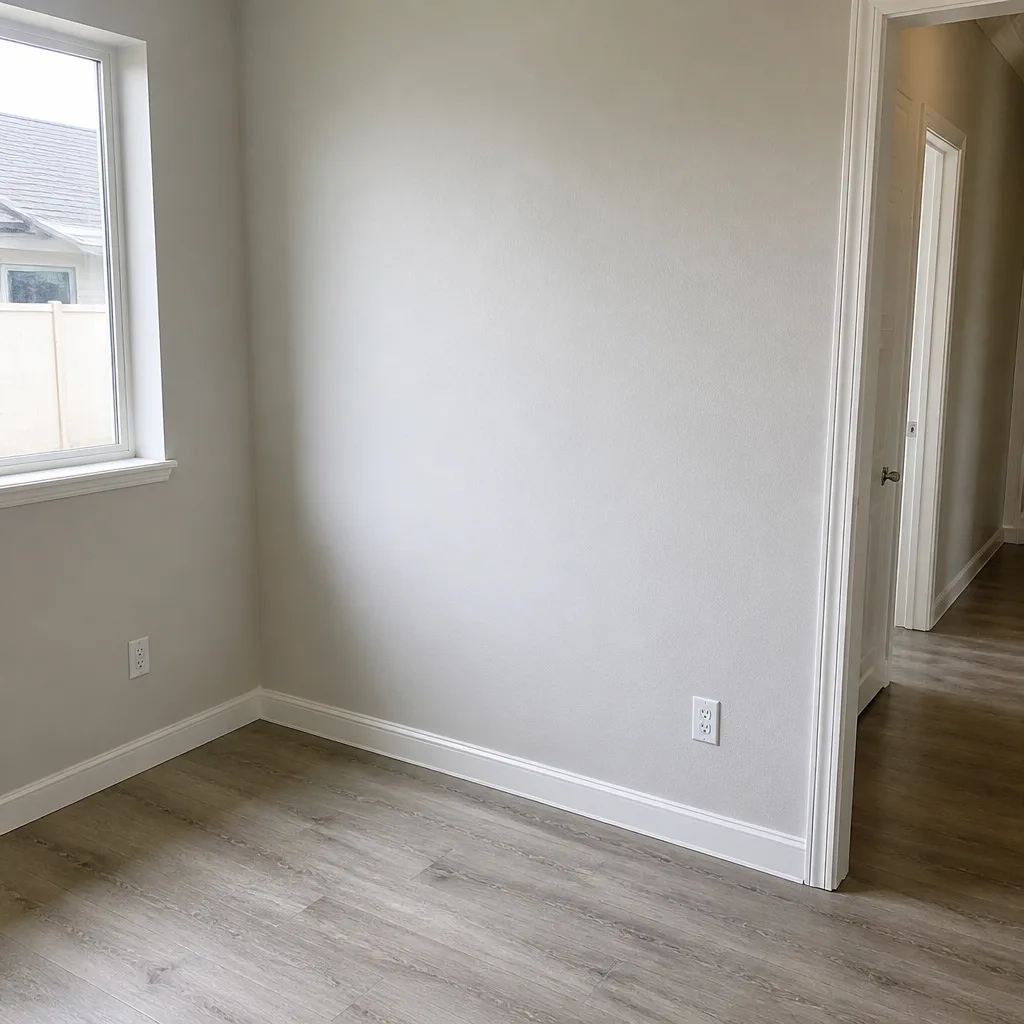 After
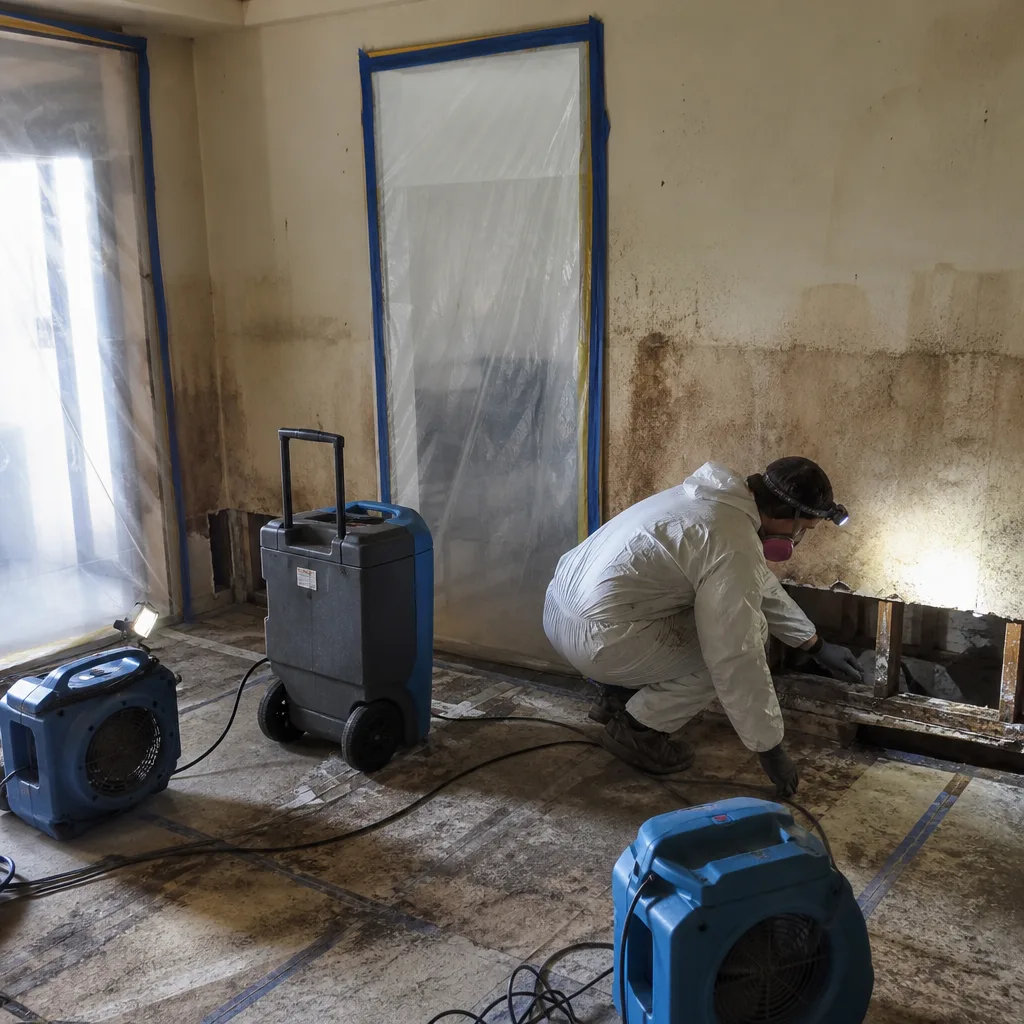 Before
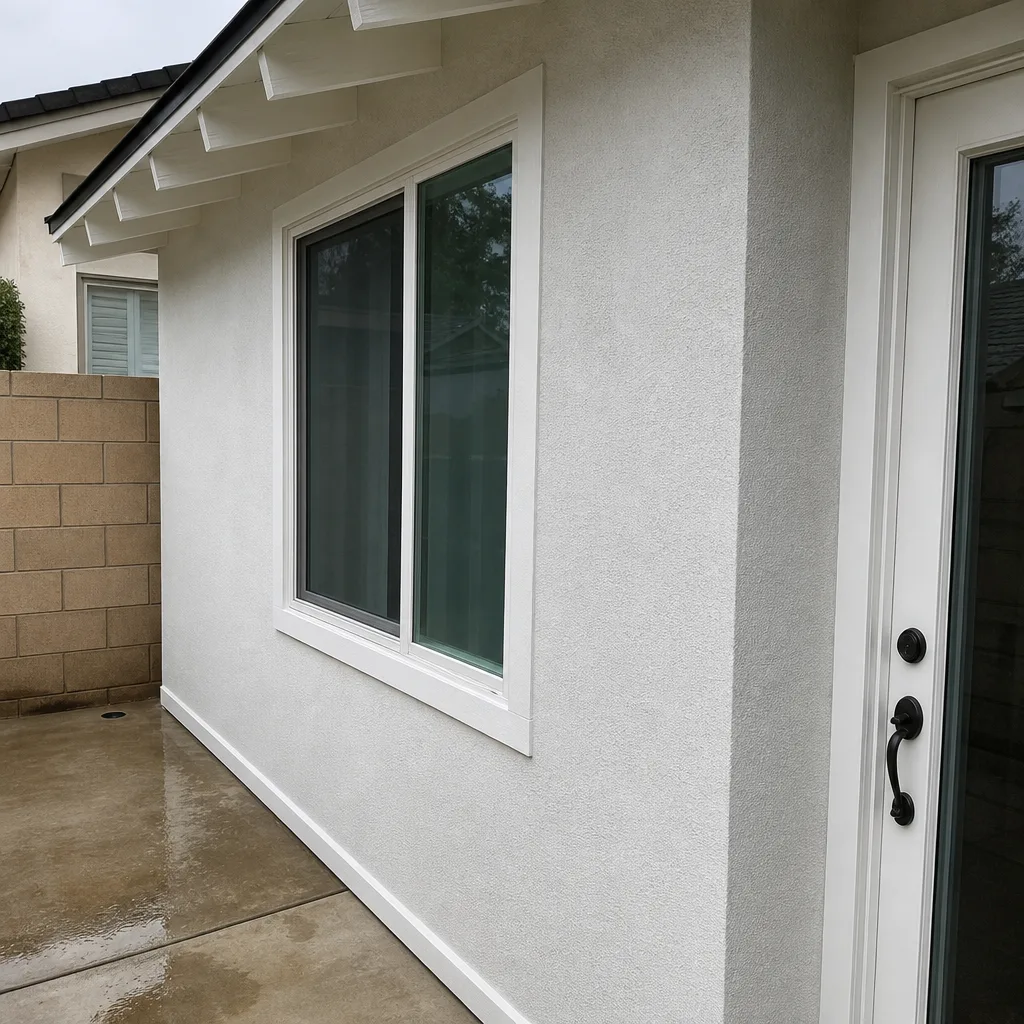 After
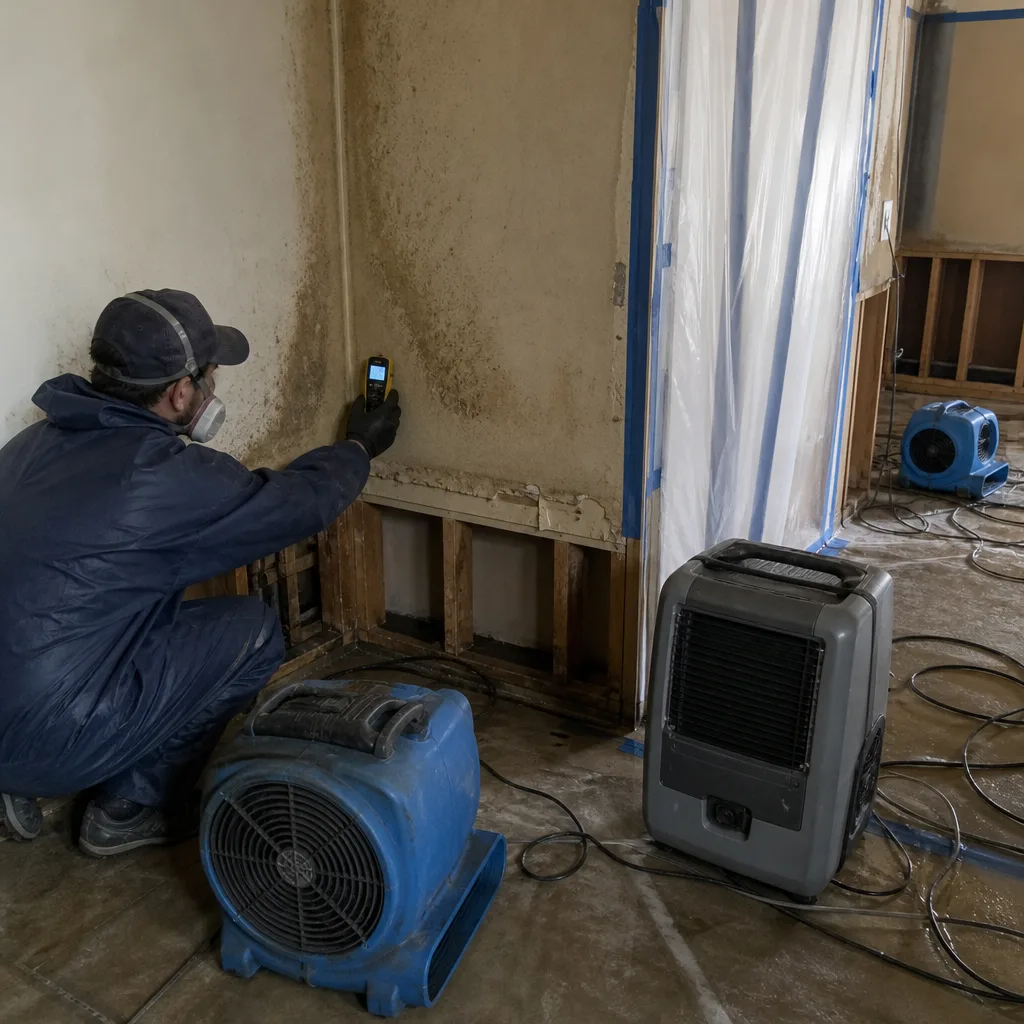 Before
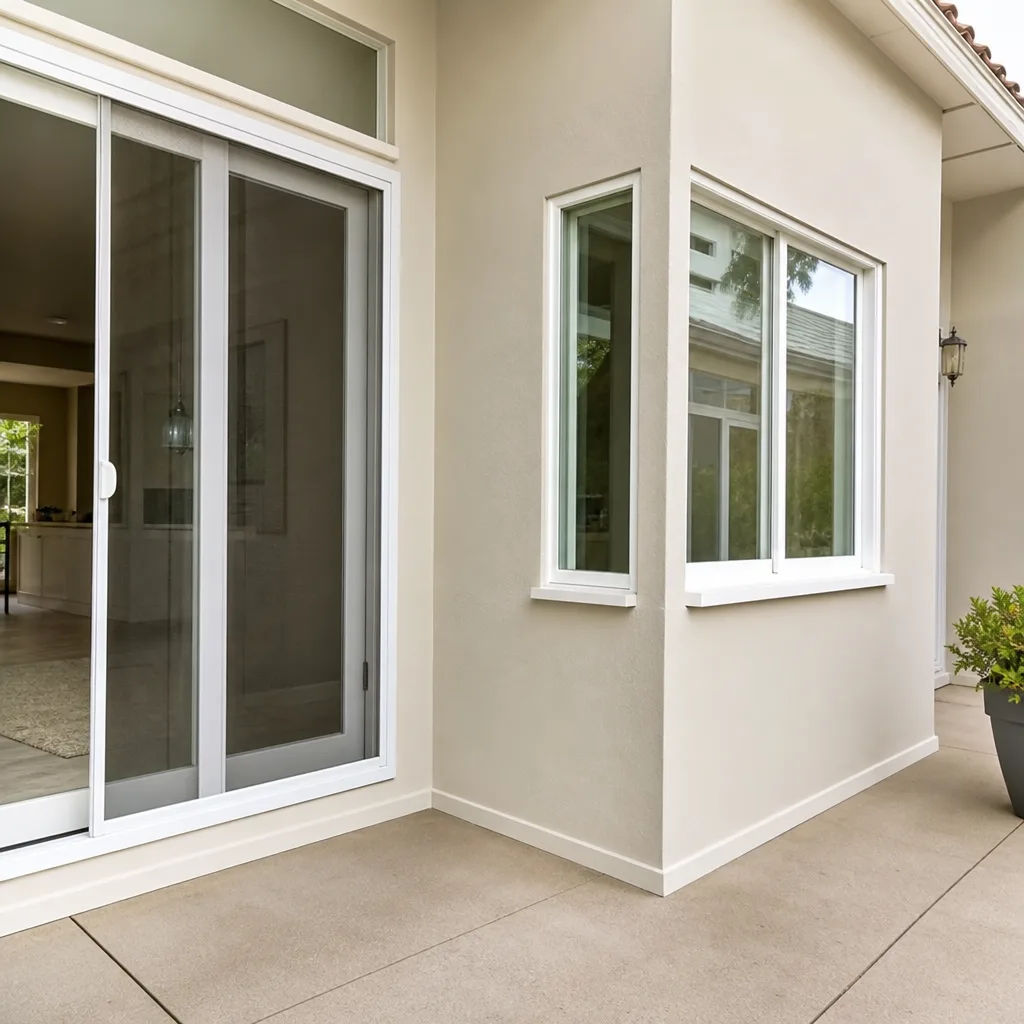 After
Pricing for Mold Remediation in Orange, CA
Here are the numbers we quote most often in Orange. A small, contained mold issue like a bathroom ceiling stain from a slow fan failure runs $900 – $1,800. Visible mold on a larger wall section or in a crawl space, with containment and antimicrobial treatment, lands at $2,000 – $4,500. A full black mold remediation job with structural drying, plaster or drywall removal, and air quality restoration usually runs $5,000 – $9,500 depending on affected square footage and whether historic material matching is needed. Older Orange homes with plaster walls trend toward the upper end because drying and treating in place is labor-intensive. We provide a written scope and a fixed quote before any work starts, and most Orange insurance policies we work with cover remediation after a covered water loss. Estimates are free. Call (877) 265-8058 to get exact numbers for your Orange property.
We Also Serve Cities Near Orange
Our Orange customers come from Villa Park, North Tustin, Tustin, and Anaheim as well, and our Costa Mesa base puts us within a short drive of all of them. If you’re in one of those neighboring cities and need Mold Remediation, same-day assessment applies. Read more about our full service area on the Mold Remediation in Orange page.
Serving Orange, CA — Our Local Coverage Area
We’re based in the Orange area and know this community well. Use the map below to see our service coverage — if you’re nearby, we can almost certainly help.
FAQs About Mold Remediation in Orange
Yes. If your home sits within one of Old Towne Orange’s designated historic districts, exterior and interior work can both trigger historic-preservation review, including some mold remediation that requires removing original materials. We document pre-loss conditions, match materials where replacement is unavoidable, and coordinate with the city’s preservation requirements before demolition starts. That documentation often saves Orange homeowners weeks of delay and protects their property’s historic status. Call (877) 265-8058 if you’re unsure whether your Orange home falls inside the review boundary.
In many cases, yes, but only if the moisture source is corrected and the plaster and lath are structurally sound. We use Injectidry drying systems to pull moisture from wall cavities without opening the plaster, then apply antimicrobial treatment to the affected surfaces. If moisture readings come back within a safe range and the lath hasn’t rotted, the plaster can often stay. That’s a big deal in Orange’s historic core, where replacing plaster with drywall can require historic review and lowers the home’s material authenticity. Call for a moisture assessment and we’ll tell you honestly whether your walls are savable.
Under Orange’s warm climate conditions, mold spores can germinate and start colonizing within 24 – 48 hours of a water intrusion, and visible growth often appears within 3 – 5 days. The semi-arid air helps evaporate surface moisture quickly, but that evaporation also drives moisture deeper into wall cavities and plaster, which is why hidden mold is so common in Orange homes. If you’ve had a leak, don’t wait for visible staining. Call (877) 265-8058 and we’ll map the moisture before mold gets established.
Category 1 water is clean, from a supply line or a condensation drain. Category 2 has significant contamination, like sump pump water or dirty aqueduct water. Category 3 is grossly contaminated, from sewage or floodwater. The category determines whether materials can be dried and treated or must be removed entirely. In Orange’s older homes, a failed cast-iron pipe can introduce Category 2 or 3 water behind plaster walls, which changes the remediation scope dramatically. We classify the water on every job and document that classification in the written scope.
Yes, we apply antimicrobial and fungicidal treatments to all affected surfaces after removal or drying, as part of our IICRC-certified process. The treatment is not a substitute for moisture correction, but it’s a necessary step in returning the property to a safe condition. In Orange’s older homes we’re careful about which products we use on original plaster and wood, because the wrong chemical can damage historic finishes. Call (877) 265-8058 if you want a specific answer about your Orange home’s materials.
Mold Remediation in Orange: Why the Old House Changes Everything
We recently handled a mold job in a 1920s Craftsman near Old Towne Orange where a slab leak had soaked the original plaster walls. After water extraction and moisture mapping, we set up containment and used Injectidry to dry the lath in place, avoiding demolition that would have required historic review. Our antimicrobial treatment and structural drying saved the original material, and the homeowner avoided a costly retrofit. That vignette captures the whole philosophy of our work in Orange.
In Old Towne’s historic districts, mold remediation often requires preserving original plaster and wood lath instead of defaulting to drywall replacement, because exterior and some interior work can trigger historic-preservation review. A restoration generalist would likely have opened those walls, pulled the plaster, and hung new drywall, and the review process would have started after the damage was done. We plan for it before it happens. That’s the advantage of working with a restoration specialist who knows Orange’s preservation landscape.
Orange’s climate swings between long dry stretches and concentrated winter rain, which means water intrusion here doesn’t follow a single seasonal pattern. Summer losses come from irrigation and HVAC condensate. Winter losses come from roof, window, and slab breaches. Both paths lead to hidden moisture in the same place: the wall cavities and crawl spaces of Orange’s older homes, where the building materials are unlike anything in a modern subdivision. That’s not a generic problem, and it doesn’t get a generic fix.
Written by Noel Carrasco, Owner at Oxford Restoration Co, serving Orange and surrounding communities with IICRC-certified restoration since 2018.